Choosing the right Livestock Truck is a practical decision, not a simple buying exercise. The vehicle must protect animals, support drivers, and remain dependable across changing routes. A poorly matched truck can create heat stress, unstable loading, difficult cleaning, or unnecessary maintenance costs. These problems often appear after purchase, when corrections become expensive.
This guide presents seven practical tips for evaluating a Livestock Truck with greater confidence. It considers animal space, airflow, flooring, loading access, body materials, payload capacity, and service support. Experienced operators usually inspect door movement, ventilation openings, drainage points, and ramp grip before discussing appearance. Small details matter. A smooth interior surface may look ideal, yet it can become slippery when wet. Likewise, a larger body is not automatically better if weight distribution remains poor.
Reliable selection also requires evidence. Buyers should compare manufacturer specifications, maintenance records, warranty terms, and feedback from farms or transport professionals. Local climate and road conditions deserve attention too. A truck designed for short regional journeys may perform poorly on long routes or rough roads. Not every advertised feature delivers real value. That is worth questioning.
There is no perfect configuration for every operation. Budget limits, animal species, loading frequency, and fleet experience all influence the final choice. These seven tips provide a clear starting point, while careful inspection and professional advice should guide the final decision.
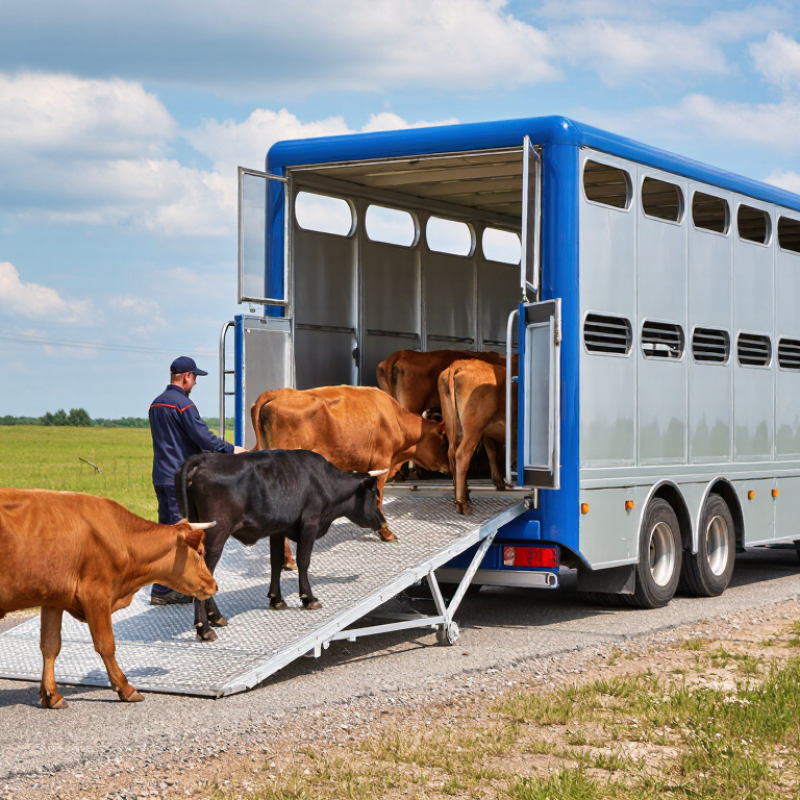
7 Tips to Choose the Right Livestock Truck?
Defining transport needs starts with the animals, not the truck. List species, average weight, group size, route length, loading frequency, and seasonal weather. European Commission transport data reports that about 1.6 billion live animals move within the European Union each year. That scale shows why capacity planning matters. A crowded vehicle can increase slipping, heat stress, and handling problems. EFSA’s 2022 scientific assessment also identifies space, ventilation, journey duration, and loading methods as major welfare factors.
Measure the heaviest realistic load, then compare it with payload and axle limits. Do not rely on volume alone. A truck may look spacious but still overload its floor or suspension. I normally add a modest operating margin, often around 10–15 percent, but this is a planning method, not a legal allowance. Check local regulations and certified weight data before purchase. Small details matter. Measure ramp width, internal height, door clearance, and cleaning access. Uneven floors deserve attention.
Ventilation needs practical testing. Stand inside the empty body and inspect airflow paths, blind corners, and drainage points. WOAH guidance recommends designs that support balance, protection, and adequate air movement. A perfect calculation is impossible. Animals vary, and weather changes quickly. I would rather choose a slightly flexible layout than a maximum-capacity design that becomes stressful on a hot afternoon. Recheck capacity after adding partitions, water systems, or bedding. Those “minor” additions can reduce usable space and payload.
| Selection Dimension | Key Question | Typical Planning Data | Recommended Truck Consideration | Why It Matters |
|---|---|---|---|---|
| 1. Animal Type | Which livestock will be transported? | Cattle, pigs, sheep, goats, and poultry have different body sizes, weight ranges, and handling requirements. | Choose a body layout, deck height, floor design, and partition system matched to the species. | Different species require different space allowances, ventilation patterns, loading gates, and floor surfaces. |
| 2. Payload Capacity | What is the maximum live weight per trip? | Approximate planning weights: adult cattle 450–700 kg each, market pigs 100–130 kg each, and sheep or goats 40–80 kg each. | Select a legal payload rating that covers the heaviest expected load without exceeding the vehicle’s gross vehicle weight rating. | Overloading can increase braking distance, tire stress, vehicle wear, and the risk of regulatory non-compliance. |
| 3. Stocking Density | How much usable floor area is needed? | Common planning ranges vary by animal size, weather, journey length, and local regulations. Adult cattle often require about 1.0–1.7 m² per head; market pigs commonly require about 0.35–0.55 m² per head. | Calculate capacity from usable floor area rather than from the advertised body volume alone. | Animals need enough room to stand and maintain balance, while excessive crowding increases heat stress and injury risk. |
| 4. Truck Dimensions | Will the vehicle fit the route and loading facilities? | Typical livestock bodies may be approximately 6–12 m long, 2.4–2.6 m wide, and 2.5–4.0 m high, depending on the vehicle class and number of decks. | Check road limits, bridge clearances, turning radius, farm entrances, loading ramps, and unloading-site access before purchase. | A truck with adequate capacity is unsuitable if it cannot safely reach loading or unloading locations. |
| 5. Ventilation and Climate Control | What weather and journey conditions are expected? | Livestock compartments need continuous airflow; hot, humid conditions generally require more ventilation capacity than cool, short-distance trips. | Prioritize adjustable side openings, protected air inlets, roof ventilation, and temperature monitoring where appropriate. | Good airflow helps control heat, humidity, carbon dioxide, and moisture without exposing animals to excessive drafts. |
| 6. Loading, Unloading, and Interior Safety | Can animals be moved with minimal stress? | Useful features include non-slip flooring, secure partitions, rounded internal edges, suitable ramp angles, and wide access doors. | Choose adjustable gates and partitions that support orderly movement and separate animals when necessary. | Safe interior design reduces slipping, falls, bruising, escape risk, and handling time. |
| 7. Journey Length and Cleaning | How often and how far will the truck operate? | Short local trips may need a simpler configuration, while frequent or long-distance work benefits from stronger flooring, drainage, bedding control, and easier sanitation. | Match chassis durability, suspension, water drainage, wash-down access, and maintenance support to the operating schedule. | Efficient cleaning helps maintain hygiene, reduce disease transmission, and keep the truck available for the next trip. |
| Capacity Check Example | How can a practical load be estimated? | A truck with 30 m² of usable floor area and an allowance of 1.2 m² per adult animal provides a theoretical capacity of 25 cattle before legal weight limits and welfare adjustments are considered. | Use the lower result from floor-area capacity, legal payload capacity, and route restrictions. | Truck capacity is determined by both available space and permitted live weight; the two limits should always be checked together. |
Match the body design to the animal, not the driver’s preference. Cattle need strong partitions and high headroom. Sheep need secure sidewalls. Pigs need smooth floors and steady airflow. Poultry needs stable crates, shade, and temperature control.
Measure usable floor space and internal height. Do not rely on advertised truck height. Cattle need room to stand without sliding or hitting overhead structures. Strong partitions should separate groups safely.
No. A longer body may have poor airflow or wasted space. Ramps, partitions, and equipment reduce usable capacity. Test the layout with real crates, bedding, or realistic animal weights.
Choose strong, non-slip flooring with drainage channels. Wet bedding and manure can become dangerously slippery. Check the surface by walking across it carefully. It should provide grip without sharp edges.
Check airflow near the roof, center, and lower compartments. Warm air can remain trapped around tightly grouped animals. Adjustable side openings help manage changing weather. More openings are not always better.
The ramp should have a gentle slope, solid grip, enough width, and suitable lighting. Animals move better when the surface feels stable. Quiet movement matters, too.
Inspect gates, latches, partitions, and emergency access before purchase. Sidewalls should prevent escapes without blocking normal movement. Narrow gates may cause hesitation. I underestimated that once.
Select smooth interior walls, rounded edges, washable surfaces, and accessible wash points. Dirt can remain behind poorly designed fittings. Easy cleaning supports safer repeated journeys.
Ask for a practical loading demonstration. Test gates, ramps, bedding, ventilation, suspension, and driver visibility. Check every compartment. Capacity figures alone can mislead you.
Trained handling, weather awareness, regular inspections, and suitable rest periods all matter. Good equipment cannot fix careless loading. Small omissions become costly.
Choosing the right Livestock Truck begins with clearly defining your transport needs, including the animal species, average load size, travel distance, and loading frequency. Truck capacity should match the animals’ space requirements without causing overcrowding. Different species may require different body layouts, partitions, floor designs, and loading systems, so compare available truck types carefully. Animal safety should remain a priority, with reliable ventilation, secure doors, non-slip flooring, adequate shade, and features that reduce stress during loading and transport.
You should also evaluate the truck’s construction materials, ease of cleaning, maintenance requirements, and overall durability. Confirm that its design meets applicable transport, animal welfare, road safety, and registration requirements in your operating area. Finally, compare the purchase price with fuel use, repair costs, service support, expected working life, and resale value. A dependable supplier should provide clear specifications, practical guidance, replacement parts, and responsive after-sales service. The best choice is not always the cheapest option, but the one that offers safe operation, efficient performance, and strong long-term value.

