Engineered for multi-temperature preservation, rigorous biosecurity washdowns, and zero microbial payload retention across critical food and livestock supply paths.


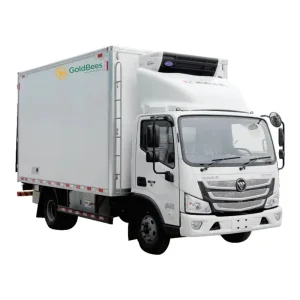




Analyzing how integrated automotive clusters, specialized metallurgy, and industrial automation empower China-built refrigerated units to dominate the global cold chain landscape.
Our manufacturing utilizes high-pressure polyurethane foaming presses coupled with pre-cured glass fiber reinforced polyester (GFRP) skin laminations. This continuous thermo-bonding process achieves a thermal conductivity (K-value) below 0.35 W/m²·K, reducing refrigeration workload by 28% and ensuring structural integrity against thermal expansion cycles.
Equipped with dual-evaporator architectures and automated airflow baffling, our refrigerated bodies facilitate simultaneous deep-freeze (-25°C) and fresh-chill (+4°C) configurations. Microcontroller-guided PID algorithms ensure temperature deviation limits within ±0.3°C, fully aligning with pharmaceutical GSP and fresh protein HACCP safety norms.
Incorporating aerospace-grade 6000-series aluminum alloys for internal flooring systems and high-tensile Q700 cold-rolled structural steel for chassis subframes. This metallurgy reduces tare weight by 15-20% compared to conventional steel configurations, directly expanding permissible payload and optimizing gross revenue per ton-kilometer.
China's modern cold chain engineering sector has transitioned from simple reefer assemblies to highly integrated smart transport platforms. Backed by the industrial ecosystem of Xinbaiqin Special Vehicle Co., Ltd. (CP M&E), specialized vehicle fabrication combines Tier-1 automotive chassis (FAW, Sinotruk, Foton, Isuzu) with localized modular cooling systems (Carrier, Thermo King, or proprietary inverter-driven high-efficiency compressors). This integrated manufacturing foundation provides global enterprise procurement officers with scalable production speed, rigorous component traceability, and cost-to-performance metrics unattainable in decentralized markets.
Bridging the operational gaps across inter-facility pharmaceutical logistics, biosecure poultry transport, and zero-carbon urban perishable distribution.
Moving live animal cargo demands continuous environmental regulation. GoldBees vehicles feature positive-pressure biological filtration, automated multi-stage ventilation, and internal thermal heating units. Smooth, non-porous floorboards survive harsh chemical disinfections, curtailing PRRS and avian influenza transmission vectors across hatchery networks.
With corporate ESG directives and municipal emissions regulations expanding globally, our factory produces direct-electric refrigeration architectures. Utilizing lithium iron phosphate (LFP) high-density battery packs with dedicated electric scroll compressors, these units maintain continuous cooling while parked, eliminating engine idling emissions.
Sourcing cold chain fleets involves calculating fuel-burn degradation, refrigerant leaks, and electrical harness corrosion. GoldBees designs feature IP67/IP69K-rated sealed wiring looms, anti-corrosive electrophoretic dip coating on undercarriage structures, and hermetic cargo door multi-lip sealings to maximize residual resale value.
Addressing the technical, regulatory, and topographical demands faced by fleet managers across diverse geographic territories.
Operating in Southeast Asia, the Middle East, or equatorial Africa requires oversized evaporative condensers and enhanced thermal insulation. Our tropical-spec refrigerated bodies incorporate moisture-barrier aluminum exterior skins and dual-zone airflow floors that mitigate hot air infiltration during frequent door-opening cycles.
Urban low-emission zones (LEZ) call for maneuverable, ultra-quiet, short-wheelbase refrigerated trucks. GoldBees urban series incorporates low-noise electric standby cooling plug-ins, rear roll-up insulated thermal curtains, and integrated side access doors to streamline rapid multi-drop operations in tight municipal hubs.
For long-haul logistics spanning 2,000+ kilometers, GoldBees refrigerated semi-trailers provide 85m³+ internal cube capacities. Supported by aerodynamic cab-to-trailer fairings, multi-leaf air suspensions, and digital satellite telematics, operators track air temperature, cargo core metrics, and GPS traces in real-time.
Complementing cold chain fleets with pneumatic feed discharge trucks, sorting rigs, and industrial farming support infrastructure.

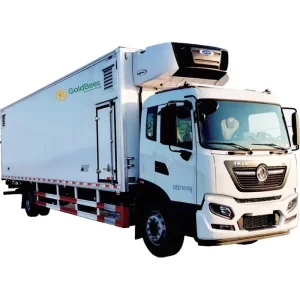

Comprehensive technical guidance addressing regulatory compliance, thermal insulation efficiency, and chassis matching for international distributors and logistics fleets.
