Direct-from-factory deployment engineered with aerospace-grade alloys, automated augers, and multi-climate biosecurity protections for high-throughput livestock farming.


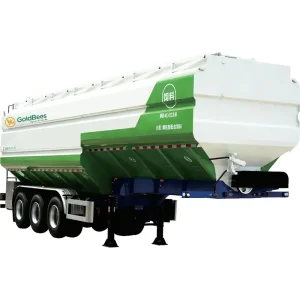
The intensification of livestock breeding and the demand for absolute biosecurity are transforming bulk grain movement and farm infrastructure worldwide.
Global outbreaks of African Swine Fever (ASF) and Avian Influenza have escalated vehicle biosecurity from a secondary consideration to the primary engineering metric. Modern chassis and superstructures must withstand intense thermal bake-out (Thermo-Assisted Drying and Decontamination - TADD), caustic misting, and total germicidal isolation. Smooth, crevice-free internal geometry prevents particulate nesting, ensuring zero cross-farm pathogen vectors.
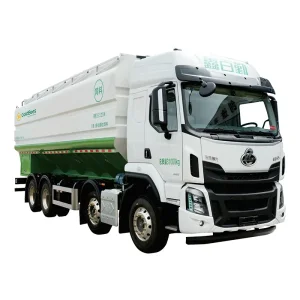
Industrial livestock producers face stringent Scope 1 and Scope 2 emission targets. Electrification of bulk transport replaces diesel-dependent auxiliary PTO (Power Take-Off) drives with direct battery-electric drive systems. The GoldBees NEV Electric Bulk Feed platform provides completely silent, emission-free offloading directly adjacent to delicate poultry housing, preventing acoustic distress that degrades layer yield.
Pelleted feed structural disintegration during pneumatic or auger discharge costs integrators millions annually. When pellets shatter into fines, bird intake drop-offs directly impact Feed Conversion Ratios (FCR). Modern equipment incorporates fluid dynamics simulation and slow-speed, high-torque hydraulic augers to protect crumb integrity and micro-ingredient uniformity from mill bin to livestock trough.
Tier-1 integrators require more than catalog units; they mandate engineered durability, strict regulatory certifications, and measurable reductions in Total Cost of Ownership (TCO).
Strict axle-load limits globally dictate that transport profitability hinges on tare weight reduction. Utilizing extruded aerospace-grade aluminium (6000-series) and ultra-high-strength micro-alloyed structural steels, GoldBees trailers strip 1,200kg to 1,800kg off standard kerb weights. This directly translates into higher legal payload per shipment, saving thousands of liters of fuel annually over multi-farm routes.
Livestock and day-old chick mortality hinges on microclimate stability. Modern enterprise procurement teams require IoT-linked environmental systems delivering continuous telemetry for temperature, relative humidity, CO2 ppm levels, and static pressure differentials. Automatic airflow modulation and HEPA intake scrubbing protect unfeathered chicks from thermal shock and toxic gas pockets.
Fleet uptime depends upon rapid maintenance cycles. Enterprise buyers reject proprietary single-source components that immobilize fleets during breakdown. GoldBees vehicles integrate internationally certified commercial hardware (hydraulic valves, electrical controllers, pneumatic compressors) paired with modular wiring harness architectures to enable fast roadside swaps anywhere across the globe.
Backed by CP M&E (Charoen Pokphand Group), our engineering encompasses the entire bio-production loop: feed grain intake, precision rearing, live transport, and processing cold chain.
CP M&E executes turnkey feed production mills capable of processing thousands of tons daily. Our specialized silo-loading pneumatic towers and high-capacity bucket elevators integrate seamlessly with GoldBees bulk trucks, eliminating spillage, ambient moisture absorption, and manual operator handling while safeguarding formula recipe precision.
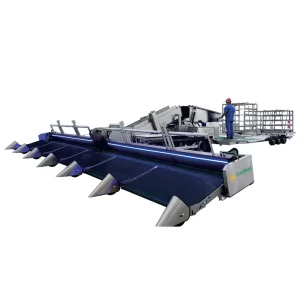
Our farming automation encompasses computerized feeding spirals, climate curtains, and automated chicken harvesters. The GoldBees chicken harvester machine gathers upwards of 8,000 broilers per hour with gentle silicone-tipped paddles, transferring birds smoothly to crate conveyors, curtailing wing hematomas and muscle damage prior to crate transit.
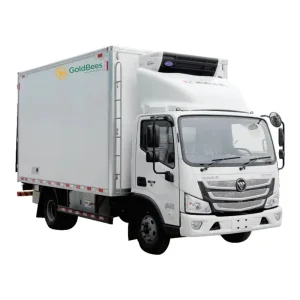
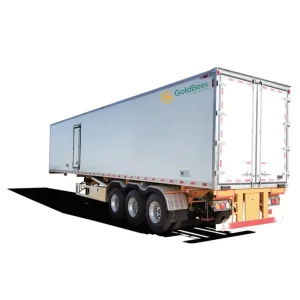
The journey finishes with our cold-chain semi-trailers, featuring high-density polyurethane sandwich panels and precision multi-zone cooling evaporators. Maintaining steady internal temperatures from -20°C to +4°C, they carry fresh broiler meat, boxed shell eggs, or pork primals to retail fulfillment centers without thermal breakages.
Operating across Europe, the Americas, Southeast Asia, and Africa requires versatile chassis adaptation, localized type approvals, and robust on-site engineering coverage.
Every GoldBees vehicle is engineered to meet or exceed regional legal safety standards. For the European Union, bulk tankers and trailers carry complete CE conformity declarations and ADR hazardous transport alignments where applicable. North American configurations observe DOT/FMVSS braking and lighting standards, enabling turnkey registration with local transportation authorities.
Whether your fleet relies on European prime movers (Scania, Volvo, MAN, Mercedes-Benz), Japanese commercial platforms (Isuzu, Hino), or domestic chassis options (FAW, Sinotruk, Foton), our engineers tailor mounting sub-frames, electrical CAN-bus interfaces, and hydraulic hookups to ensure factory-level integration without structural compromise.
Xinbaiqin deploys multilingual commissioning field teams to assist customers with fleet integration. We provide intensive technician training covering hydraulic auger valve maintenance, seal replacement cycles, electronic control recalibration, and automated biosecurity sanitation routines, guaranteeing zero operational friction from delivery day.
Our ongoing multi-year R&D investments bridge physical mechanical engineering with artificial intelligence, cloud automation, and zero-carbon mobility.
Sensor-guided pressure modulation matching auger RPM to feed density, drastically curtailing pellet micro-cracking and silo backpressures.
Vibration analysis on gearboxes and hydraulic fluid sensors alert dispatchers to bearing wear before a roadside breakdown occurs.
Computer vision tracking livestock postural stress inside the trailer, auto-adjusting fan speeds, water misters, and heating duct dampers in real time.
Self-docking bulk trailers coupling automatically with biosecure silo intake ports without requiring human drivers to step onto farm territory.
Answers to common operational, regulatory, and engineering questions posed by enterprise buyers and farm integrators.
Complementing bulk transport with specialized live broilers, breeding herd carriers, pneumatic discharge trucks, and advanced farm harvesting automations.