A Cold Chain Truck is a temperature-controlled vehicle designed to move chilled or frozen goods while limiting exposure to heat. It may carry fresh produce, dairy products, seafood, or medicines that need stable conditions. Thick insulated walls slow heat transfer, while a refrigeration unit removes heat from the cargo space. The system helps maintain a suitable temperature; it does not make every load safe by itself.
How does it work on a real delivery? Before loading, operators check the unit and often pre-cool the cargo area. Goods are packed to allow air to circulate, then loaded without blocking vents. A thermostat monitors the temperature and signals the refrigeration system when cooling is needed. Many trucks also use sensors or data loggers to record temperature changes during transit. Those records can help teams identify problems, such as a door left open or a unit that is struggling.
Details matter. A cold truck can still have warm spots if cargo is stacked too tightly. Frequent stops, poor seals, and delays can also affect conditions. Drivers may inspect readings and doors during the route, but they cannot always see what is happening inside every package. That limitation is worth remembering. Understanding the truck’s equipment, loading practices, and monitoring process makes it easier to judge how well a cold chain is being maintained.
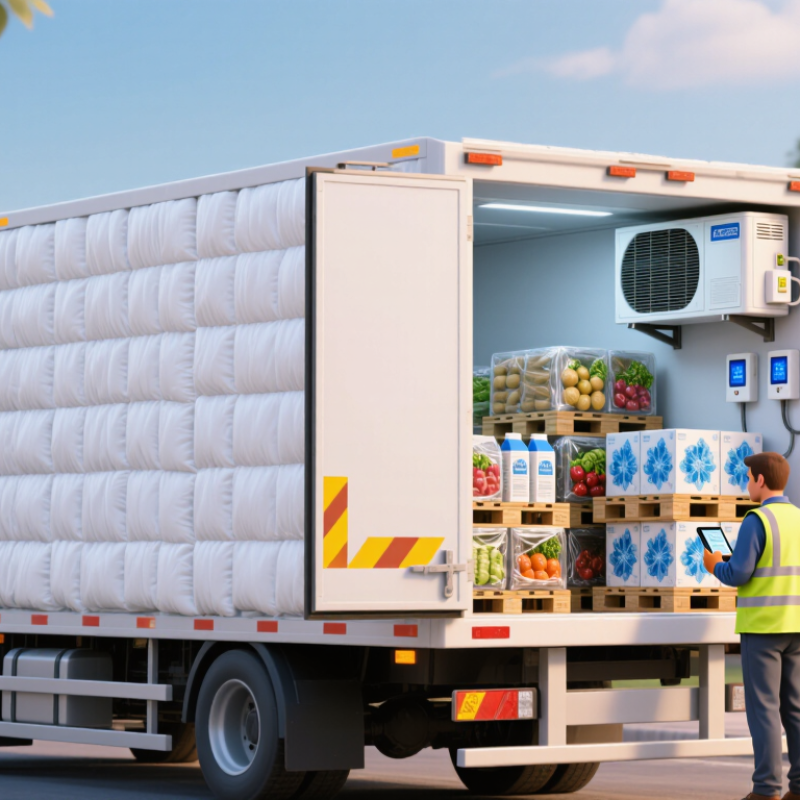
A cold chain truck is an insulated vehicle with a refrigeration unit that keeps cargo within a specified temperature range during transit. It carries fresh produce, meat, seafood, dairy products, frozen foods, and some temperature-sensitive medicines. Inside, chilled air moves around pallets of cartons or sealed totes. The truck does not make warm cargo cold quickly; goods should be pre-cooled before loading. Small gaps matter.
Temperature needs vary by product. The Food and Agriculture Organization’s 2019 report estimated that 14% of food is lost between post-harvest and retail worldwide. Reliable refrigerated transport helps limit spoilage, but temperature control alone cannot prevent damage from poor handling or delays. A digital logger can record temperatures throughout a trip, helping operators spot excursions and review delivery conditions.
Tips: Check the cargo’s required range before loading, and leave space around air vents. Keep doors closed during stops. A displayed setpoint is not proof that every carton stayed within range; check the recorded data and inspect the load.
The main parts of a cold chain truck work together to keep cargo within a chosen temperature range. Its insulated cargo body slows heat entering through the walls, roof, and floor. Thick panels help, but damaged insulation can create warm spots near seams or corners. The refrigeration unit removes heat from inside the body and releases it outside. Often mounted at the front, it circulates refrigerant through components that absorb and reject heat. Inside, an evaporator cools the air, while fans move it around the load. Air needs room.
Temperature sensors measure conditions in selected areas, and a control panel lets the driver check readings and adjust settings. A single sensor may not show every variation, especially when tightly stacked goods block airflow. Door seals limit warm air entering during stops, while insulated doors reduce temperature swings during loading. Small details matter. A clean floor and clear air channels help cold air circulate; overpacking can defeat an otherwise capable system. Even good equipment has limits: it can struggle if warm cargo is loaded or doors stay open too long. Regular checks of seals, fans, sensors, and refrigeration components help reveal problems before a long trip.
| Main Part | What It Does | How It Works in the Cold Chain |
|---|---|---|
| Insulated cargo body | Slows the transfer of heat between the outside environment and the cargo space. | Insulated walls, floor, roof, and doors help the refrigeration system maintain the selected conditions. Insulation reduces heat gain but does not actively cool the load. |
| Refrigeration unit | Removes heat from the cargo space to maintain the required transport temperature. | The unit circulates refrigerant through a cooling cycle. It is generally used to maintain the temperature of properly pre-cooled goods, rather than rapidly cooling warm cargo. |
| Compressor | Pressurizes and circulates refrigerant through the refrigeration system. | The compressor raises the refrigerant’s pressure and temperature, enabling it to release heat at the condenser. Its drive may be supplied by the truck engine or an electric system, depending on the vehicle design. |
| Condenser | Releases heat from the refrigerant to the outside air. | As the refrigerant passes through the condenser, it gives off heat and changes from a high-pressure vapor into a liquid. Clear airflow across the condenser helps the system reject heat effectively. |
| Expansion device and evaporator | Cool the air inside the cargo body. | The expansion device lowers the refrigerant’s pressure before it enters the evaporator. The evaporator absorbs heat from the cargo-space air, and fans circulate the cooled air through the body. |
| Temperature controller | Lets the operator set and monitor the target temperature. | The controller uses temperature readings to regulate cooling operation. The correct set point depends on the cargo and its handling requirements; different products may need different conditions. |
| Temperature sensors | Measure conditions at selected locations in or around the cargo space. | Readings can help the operator check whether the space is staying within the required range. Sensor placement and airflow matter, because one reading may not represent every location in a loaded truck. |
| Air distribution fans and clear air paths | Move cooled air around the cargo space. | Fans circulate air from the evaporator. Loading should leave the designed air outlets and return paths unobstructed so that cooling can reach the cargo more evenly. |
| Doors, seals, and latches | Limit warm-air entry and cold-air loss when the cargo body is closed. | Sound seals and securely closed doors reduce unwanted air exchange. Frequent or prolonged door openings can raise the cargo-space temperature and increase the refrigeration load. |
| Power source and standby connection | Supplies energy to operate the refrigeration system. | Depending on the truck, the unit may run from an engine-driven system, a separate power source, or an electric standby connection while parked. The available setup varies by vehicle and operating conditions. |
| Data logger or monitoring system | Records temperature information during transport. | Records can help document temperature conditions and identify deviations for review. Monitoring does not replace correct pre-cooling, loading practices, equipment checks, or cargo-specific procedures. |
A refrigerated truck protects cargo through insulation, controlled airflow, and a temperature-regulating unit. The refrigeration system usually maintains a chosen temperature; it is not designed to quickly chill warm goods. So cargo should be cooled before loading. A truck set to 4°C cannot reliably bring warm pallets down to that temperature during a short journey.
Cold air needs room to circulate. Workers leave space around pallets and avoid blocking vents with cartons or shrink wrap. The truck’s insulated walls slow heat entering from outside, but they cannot stop it completely. Small details matter. A door left open during loading can raise the interior temperature, especially on a hot day.
During transport, sensors monitor conditions inside the cargo area. Drivers can check readings and respond to unusual changes, while temperature records help identify when and where a problem occurred. Still, one sensor may not show every warm or cold spot. Airflow varies, and readings depend on sensor placement and calibration. A steady display is useful, but it is not proof that every carton stayed at the same temperature. Careful loading, short door openings, and properly checked equipment all help keep cargo within its required range.
A cold chain truck protects temperature-sensitive cargo through a controlled handoff, not refrigeration alone. Before loading, staff check the cargo space, set the unit to the product’s required range, and pre-cool when needed. Chilled produce, frozen food, and medicines do not share one universal temperature. Pallets should leave air channels around walls and vents; blocking airflow can create warm pockets. A door-side probe may miss them. The UNEP and FAO report Sustainable Food Cold Chains (2022) estimates that 12% of food production is lost because of inadequate refrigeration, making careful handling more than a technical nicety.
During transit, calibrated sensors record air or product temperatures, while drivers watch alarms and door openings. For many routine vaccines, WHO guidance specifies +2°C to +8°C, but product instructions govern each shipment. A truck’s display alone is not proof that every pallet stayed within range. At delivery, staff compare logger records with the agreed limits, inspect seals and packaging, and note any excursion before accepting the load. Small details matter. A logger can be accurate, yet a door left open during unloading still changes the story. Records help trace the cause, though busy docks do not always capture every delay perfectly.
A cold chain truck keeps temperature-sensitive goods within a controlled range from loading through delivery. Sensors can record temperatures during transit so operators can spot changes and take action.
Illustrative monitoring example: Temperatures stay below the 4.4°C (40°F) reference line throughout this sample journey. Actual safe limits depend on the product and applicable food-safety requirements.
Cold chain trucks serve places where temperature can change product quality before it reaches the customer. Grocery stores depend on them for chilled milk, fresh meat, frozen vegetables, and ice cream. A truck may collect produce from a farm before sunrise, then deliver it to a distribution center while its refrigerated compartment holds a steady setting. Timing matters. Loading docks can be warm, so crews often move pallets quickly and check that doors seal properly between stops.
Hospitals and medical suppliers use temperature-controlled vehicles for items such as vaccines, diagnostic materials, and certain medicines. These loads may need tighter monitoring than ordinary groceries, with temperature records reviewed at delivery. Restaurants, school kitchens, and catering services also rely on cold chain trucks to bring ingredients safely to local sites. In rural areas, a vehicle might travel long distances between farms, storage facilities, and small shops. That route is not always predictable. Traffic, weather, and repeated door openings can affect conditions, so drivers and logistics teams need clear procedures and working temperature sensors. Even with good equipment, small handoff delays can happen; they deserve attention, not guesswork.
It is an insulated vehicle with a refrigeration unit. It keeps cargo within a set temperature range during transit.
They carry fresh produce, meat, seafood, dairy, frozen foods, and some temperature-sensitive medicines. Cartons or sealed totes often travel on pallets.
Not quite. Goods should be pre-cooled before loading. The truck is meant to maintain conditions, not rapidly chill warm products.
A digital logger records temperatures during the trip. Review its data and inspect the load at delivery. A setpoint alone is not proof.
Chilled air needs room to circulate around pallets. Blocked vents may create uneven conditions, even when the display shows the target setting.
Grocery stores, hospitals, medical suppliers, restaurants, and school kitchens use them. Rural routes may connect farms, storage facilities, and small shops.
Warm loading docks, traffic, weather, and repeated door openings can affect conditions. Keep doors closed during stops and check that seals fit properly.
No. It can limit spoilage, but poor handling and delays can still damage goods. Small handoff delays happen, and they deserve attention rather than guesswork.
A Cold Chain Truck is a temperature-controlled vehicle designed to transport perishable goods while keeping them within a suitable temperature range. It may carry fresh produce, dairy products, frozen foods, medicines, or other temperature-sensitive cargo. Its main components typically include an insulated cargo compartment, a refrigeration unit, temperature sensors, and controls that allow operators to set and check conditions inside the truck.
During a journey, the refrigeration system removes heat from the cargo area, while insulation helps limit temperature changes from outside air. Before loading, goods are prepared and arranged to allow air to circulate, and the doors are kept open only as long as needed. Sensors and monitoring systems can track temperatures during transit, helping drivers respond if conditions shift. At delivery, cargo is checked and unloaded promptly. Cold chain trucks are used across food distribution, healthcare, agriculture, and other industries where maintaining product quality and freshness from pickup to destination is essential.

