Explore frontline factory-certified heavy machinery and automated vehicles engineered for zero-contamination transport and bulk silo offloading.

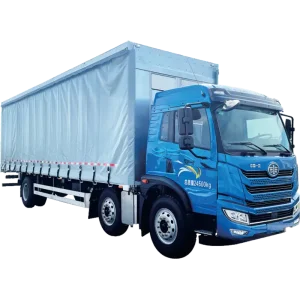




In modern animal husbandry, commercial feed logistics represents an estimated 60% to 70% of total operational expenditure for livestock integration enterprises. Historically, bagged feed transportation caused significant friction: severe labor dependencies, pallet handling costs, micro-tears resulting in moisture ingress, and high cross-contamination vulnerabilities during biosecurity outbreaks. The transition to specialized 20-tonne (20t) bulk feed transport vehicles represents an essential engineering milestone that solves the throughput bottlenecks of modern megascale farming.
A specialized 20t configuration operates at the intersection of regulatory bridge formula compliance, optimal axle load geometry, and maximum payload economics. By transitioning from bagged logistics to an automated, sealed 20t pneumatic or auger discharge truck, an enterprise moving 120,000 tonnes of compound feed annually reduces bag disposal waste to zero, eliminates manual pallet handling injuries, and achieves a direct 14% to 22% reduction in overall freight logistics cost per ton-kilometer (TKM).
Evaluating regional operational requirements, biosecurity mandates, and regulatory standards across worldwide agricultural supply chains.
Characterized by stringent axle-load limits (DOT / EU Directive 96/53/EC) and intense carbon accounting. Fleet managers mandate high-strength aluminium 5083-H111 tank shells, lower tare weights, electronically monitored tire pressures (TPMS), and zero-dust sealed pneumatic couplings to satisfy ISO 14001 and local clean air mandates.
The consolidation of vertical mega-farms across China, Thailand, Vietnam, and Indonesia has generated high demand for multi-compartment 20t vehicles. GoldBees (Xinbaiqin / CP M&E) designs multi-chamber partitions (4 to 6 compartments) that transport diverse dietary formulas (pre-starter, grower, lactating) within a single transit route without formula cross-mixing.
Navigating rough terrain and unpaved arterial farm roads requires heavy-duty tri-axle chassis integration, high approach/departure angles, reinforced steel subframes (Q345R / 700L), and dual-power discharge capabilities (auxiliary diesel engines combined with direct electric PTO plug-ins) for unstable rural electric grids.
A granular side-by-side engineering evaluation between Hydraulic Auger Systems, Pneumatic Dense-Phase Blowers, and Traditional Bag Logistics.
When selecting a 20t feed transport vehicle, mechanical conveying engineers must balance pellet integrity (fines prevention), silo discharge elevation height, and tare-weight optimization. For fragile pelleted feeds containing high fat content or heat-labile vitamins, excessive shear force inside poorly engineered mechanical augers leads to severe fines accumulation, degrading Feed Conversion Ratios (FCR). GoldBees utilizes variable-pitch progressive flighting and ceramic-lined pneumatic bends to minimize degradation.
| Performance Indicator | GoldBees 20t Intelligent Pneumatic | GoldBees 20t Hydraulic Auger | Legacy Bagged Flatbed Logistics |
|---|---|---|---|
| Discharge Speed / Throughput | 1.2 – 1.8 Tonnes / Min Continuous | 1.0 – 1.5 Tonnes / Min Auger Drive | 0.08 Tonnes / Min (Manual / Forklift) |
| Max Vertical Discharge Reach | Up to 28 Meters (Tall Silos) | 8.5 – 11.0 Meters (Hydraulic Boom) | Ground Elevation Only |
| Pellet Breakdown Rate (Fines) | < 0.6% (Low-velocity air flow) | < 0.9% (Variable pitch screw) | Variable (> 2.5% drop impact) |
| Biosecurity Seal Rating | Hermetic closed-loop piping Class 1 | Sealed hydraulic top hatches | Open air; high contamination vector |
| Structural Metallurgy | Al-Mg Alloy 5083-H111 or High-Yield 700L | Q345R Weathering Steel / Al Alloy | Structural Carbon Steel Q235 |
| Internal Tank Compartments | 4 to 6 Independent Isolated Cells | 3 to 5 Independent Compartments | Manual pallet segregation |
| Driver / Operator Requirement | 1 Single Driver (Radio Remote Control) | 1 Driver (Hydraulic Joystick Control) | 1 Driver + 3 to 4 Unloading Laborers |
Engineered to mitigate African Swine Fever (ASF), Highly Pathogenic Avian Influenza (HPAI), and cross-regional viral vectors.
Chassis wiring harnesses and electronic sensor nodes are rated for IP69K high-pressure steam cleaning and thermal bake stations (75°C for 30 minutes) at farm biosecurity checkpoints.
Precision robotic laser welding eliminates dead zones, micro-pockets, and internal crevices where moist feed residues ferment and host mycotoxins, bacteria, or mold spores.
Superstructures are engineered for plug-and-play mounting on tier-1 global truck chassis including Scania, Volvo, Mercedes-Benz Actros, MAN, FAW J6P/J7, Sinotruk HOWO, and Shacman.
Full homologation documentation including European CE machinery directives, Australian Design Rules (ADR), GCC standardization, and South American CONTRAN dimensional compliance.
Reviewing how GoldBees 20t vehicles interface directly with automated silo networks and breeding centers.
Breeder complexes require uncompromising biosecurity zoning. The 20t bulk pneumatic truck pulls up to the perimeter disinfection barrier (Red Zone) and discharges feed via an extended pipeline into internal farm silos 25 meters away (Green Zone), ensuring the vehicle never contacts internal farm pathogens.
Modern layer complexes housing 1 to 3 million birds consume hundreds of tonnes of feed daily. Equipped with high-speed hydraulic screw augers, the 20t carrier achieves automated, single-operator discharging into tall 15-meter grain bins in under 18 minutes, eliminating downtime across intense supply schedules.
Extruded floating fish and shrimp feeds are brittle and costly. Traditional augers crush extruded pellets, reducing feed efficiency and contaminating water with fines. GoldBees dense-phase low-pressure pneumatic systems transport aquatic feed with a particle attrition rate below 0.4%.
The next-generation horizon for bulk feed transport vehicle technology (2025 – 2030).
Real-time load-cell weight telemetry integrated directly into every compartment. Wireless transmission tracks formula drop weights, prevents overload, and provides cloud-based audit trails for feed mills.
Dedicated high-capacity lithium iron phosphate (LiFePO4) battery packs drive the discharge blower or hydraulic pump independently, allowing quiet, zero-emission silo offloading while the main diesel engine remains shut off.
Using ultrasonic proximity arrays and optical machine vision, automated booms align with silo intake ports with millimeter accuracy, reducing physical driver climbing and eliminating silo fall hazards.
Fully electric heavy commercial vehicles (BEV / Hydrogen Fuel Cell) integrated with composite carbon-fiber tank shells, lowering unladen tare weights by 28% and maximizing commercial payload capacity.
In-depth technical answers addressing specifications, maintenance routines, and cross-border delivery logistics.
A standard 20-tonne vehicle utilizes an effective volumetric capacity between 40 m³ and 48 m³, tailored to bulk feed densities ranging from 0.50 to 0.65 t/m³. Depending on regional axle load regulations (6x4 rigid chassis or 4x2 tractor with tandem-axle semi-trailer), tare weight is engineered between 9,800 kg and 11,500 kg using high-strength aluminium or low-alloy high-tensile steels.
Each compartment is segregated by double-welded bulkheads with airtight sealing gaskets. In pneumatic models, each chamber utilizes dedicated fluidization slide valves and non-return check valves. In auger models, bottom slide gates with dual limit switches prevent concurrent formula discharge, ensuring zero cross-contamination between medication-treated and standard formulas.
Pneumatic blowers require synthetic gear oil replacement every 1,000 operational hours and air intake filter inspection every 200 hours. Hydraulic auger systems require planetary gearbox fluid replacement every 2,500 hours, hydraulic filter changes every 1,000 hours, and weekly grease lubrication on upper swivel bearings.
Yes. For international clients seeking to avoid high chassis import duties or maintain local fleet commonality, GoldBees delivers fully tested 20t superstructures in Semi-Knocked-Down (SKD) or Completely-Knocked-Down (CKD) configurations with subframes, hydraulic assemblies, electronic panels, and installation manuals for rapid local chassis assembly.
Complete your supply chain with specialized poultry, livestock, cold chain, and electric logistics machinery built by Xinbaiqin / CP M&E.