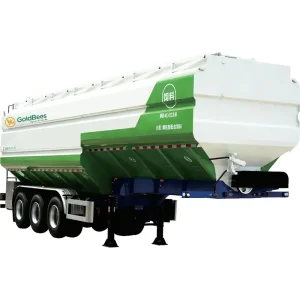
Explore our certified commercial vehicles engineered for industrial integrators, ensuring animal welfare, pathogen containment, and high thermal efficiency.

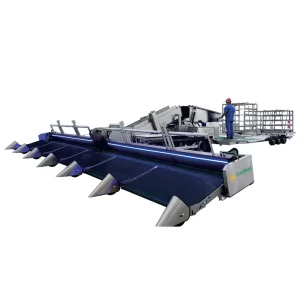

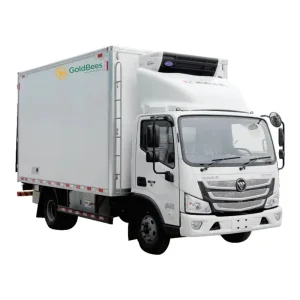
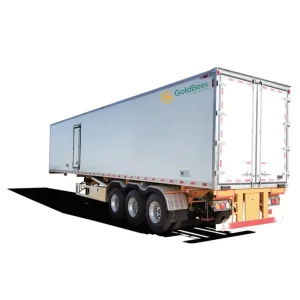

Moving day-old chicks (DOC) from the industrial incubation facility to remote grow-out farms is the most vulnerable phase of poultry production. Understanding poikilothermic metabolic vulnerability is the foundation of our manufacturing philosophy.
During the first 72 to 96 hours post-hatch, day-old chicks behave as poikilotherms; they lack fully operational homeostatic thermoregulation. If the ambient micro-environment deviates outside 31.5°C to 33.5°C at bird level, their rectal internal body temperature rapidly diverges from the optimal 40.0°C–40.5°C, causing severe metabolic acidosis or fatal dehydration.
A chick transpiring at excessive airspeeds loses up to 0.35g of moisture per hour, triggering premature yolk-sac crystallization. This directly impedes maternal antibody assimilation, resulting in a persistent 4-8% depression in entire-life Feed Conversion Ratio (FCR) and heightened 7-day mortality across integrated farm facilities.
High packing densities in 60,000 to 120,000-chick truck configurations emit substantial CO₂ loads (often exceeding 0.08 liters/hr/chick). Without high-volume, pressure-balanced laminar exchange maintaining cabin levels below 1,500 ppm, systemic hypoxia manifests, suppressing organogenesis and vitality before arrival.
Modern commercial genetics (Ross 308, Cobb 500, Hubbard, Hy-Line, Novogen) demand zero biological compromise. As hatcheries consolidate into multi-million-egg super-facilities, haul radii have expanded from 80 km to over 1,200 km.
Historically, converted standard refrigerated boxes or curtain-sided open trucks were utilized for chick transit. The results were disastrous: cold drafts near front bulkheads caused hypothermia, while static thermal bubbles in center aisles induced hyperthermia and suffocative piling. In commercial scale production, a 1% spike in Day-7 mortality over an annual throughput of 40 million broilers destroys hundreds of thousands of dollars in profit. GoldBees engineered solutions eliminate dead air zones via precision-modeled CFD airflow distribution.
International animal protection regulations, such as EU Council Regulation (EC) No 1/2005 and national biosecurity standards regarding Avian Influenza (HPAI) and Salmonella transmission, have rendered traditional natural-ventilation trucks obsolete. Modern transport bodies must operate as hermetically sealed, positive-pressure cleanrooms equipped with multi-stage filtration, real-time cabin environmental telemetry, and fail-safe dual redundant climate modules.
Information Gain Insight: The true cost of chick transport is never measured in fuel consumption alone. It is determined by broiler weight uniformity, flock livability, and antibiotic-free viability at slaughter. A GoldBees climate-controlled carrier pays for its capital expenditure within 14 to 18 months solely through FCR preservation and mortality suppression.
Xinbaiqin Special Vehicle integrates industrial HVAC engineering directly into the chassis body, creating an active biological incubator on wheels.
Dual supply plenum chambers push conditioned air horizontally through chick box perforations at a gentle, non-stressing velocity of 0.2 m/s, avoiding convective draft chills while continuously washing away metabolic heat.
Dedicated auxiliary diesel gensets (Kubota/Yanmar powered) provide autonomous energy for refrigeration compressors, water-glycol heating matrices, and extraction blowers, independent of the truck drivetrain.
Multi-stage G4 pre-filtration combined with electrostatic precipitation filters ambient road dust, pollen, and airborne pathogen vectors, ensuring sterile intake air during inter-regional highway runs.
Continuous 64-point wireless sensor arrays track temperature, relative humidity, and CO₂ in real time. Proprietary predictive algorithms adjust thermal output prior to ambient weather spikes.
Hatchery logistics face wildly contrasting challenges across geography. Xinbaiqin configures body insulation, thermal capacities, and filtration arrays specifically for regional climates.
Regions: Middle East (GCC), North Africa, Central Australia.
Challenge: Ambient temperatures exceeding +50°C, direct solar radiance, severe dust storms.
Engineering Solution: 100mm vacuum-bonded polyurethane panels with UV-reflective gelcoats, high-capacity Bitzer/Carrier dual condensing units, multi-cyclone air pre-cleaners, and automated mist humidification systems.
Regions: Southeast Asia (Thailand, Indonesia, Vietnam), Latin America.
Challenge: Ambient 35°C paired with 90%+ Relative Humidity, stifling natural heat transfer.
Engineering Solution: High-efficiency dehumidification coils integrated into the main airflow ducting, high-velocity exhaust fans preventing vapor saturation, and stainless-steel anti-corrosive chassis fasteners.
Regions: Northern Europe, North America, Central & Northern Asia.
Challenge: Arctic temperatures down to -35°C, causing lethal hull-to-air cold bridge penetration.
Engineering Solution: Auxiliary diesel-fired hydronic glycol heating networks, pre-heated fresh air intake dampers, insulated pneumatic floor valves, and heated water plumbing.
Backing the GoldBees brand is an electromechanical powerhouse combining multinational agribusiness pedigree with China's rapid industrialization advantage.
Unlike generic vehicle retrofitters, Xinbaiqin operates under the CP M&E engineering arm of the Charoen Pokphand Group. Our technical prototypes are tested inside real-world CP hatcheries delivering billions of birds annually, ensuring that real biological feedback dictates manufacturing blueprints.
Located in Cixi, Zhejiang, our modern manufacturing facility features multi-axis fiber laser cutting tables, automated robotic welding gantry systems, and an integrated high-pressure polyurethane foaming chamber capable of building over 2,000 special agricultural vehicles per year.
We construct bodies seamlessly onto domestic and international chassis platforms, including Volvo, Scania, MAN, Mercedes-Benz Actros, Isuzu, Dongfeng, Sinotruk HOWO, and Foton, guaranteeing compliance with local axle weight restrictions and emission norms (Euro 3 through Euro 6, EPA).
As sustainable energy and artificial intelligence transform fleet mobility, Xinbaiqin is pioneering next-generation architectures for global agribusiness operations.
Transitioning to zero-emission battery electric commercial vehicle (NEV) chassis with 800V silicon-carbide architecture. High-voltage battery systems power the entire HVAC system directly, eliminating secondary diesel generators and dramatically cutting on-farm carbon footprints.
Deploying onboard edge-computing microcontrollers that run localized digital twin simulations. The system measures real-time crate resistance and chick respiration variations, dynamically re-routing air dampers to prevent localized microclimate stagnation before it occurs.
Developing automated pressurized docking ports that seal directly against hatchery loading bays. Combined with automated trolley conveyor mechanisms, external air exposure is reduced to zero, mitigating cross-contamination risk during crate transfer.
A chick transport vehicle is only as dependable as its biosecurity compliance and operational uptime. We build every unit for continuous sterilization and international road homologation.
Every GoldBees interior features seamless, food-grade glass-reinforced plastic (GRP) or marine-grade aluminum surfaces, fully sealed IP69K wiring harnesses, and floor drains equipped with chemical-resistant check valves. The body is engineered to withstand daily caustic disinfection sprays, high-pressure 85°C hot washdowns, and automated thermal baking room sterilization up to 70°C without panel delamination or sensor failure.
Our engineering documentation conforms to global chassis and trailer standards, facilitating local vehicle registration in Southeast Asia, the Middle East, Africa, Europe, and the Americas. Through our international logistics centers, we supply plug-and-play HVAC modules, genset components, PLC control cards, and structural spares with expedited international dispatch to ensure maximum uptime.
In-depth answers covering critical biological thresholds, payload engineering, and fleet customization.
Our automated PLC control system continuously regulates the cargo space to maintain air temperature between 31.5°C and 33.5°C, relative humidity between 55% and 65%, and carbon dioxide (CO₂) concentrations strictly below 1,500 ppm under full chick loading density. Air velocity at chick box level is capped at 0.2 m/s to prevent evaporative chilling.
Standard box trucks suffer from thermal buoyancy where warm air rises and stagnates at the ceiling. GoldBees utilizes a forced-air positive-pressure displacement system: pressurized conditioned air is supplied via vertical duct channels along the walls and expelled through precision perforated false floors or dedicated exhaust plenums, ensuring uniform air movement across every box from top to bottom.
Every GoldBees vehicle features triple redundancy. If the primary auxiliary generator experiences a fault, an automatic transfer switch (ATS) immediately switches critical ventilation fans to the secondary alternator and heavy-duty chassis battery bank. Simultaneously, hydraulic emergency intake louvers spring open to allow ram-air ventilation while visual and audible alarms alert the driver and telematics control center.
Yes. Xinbaiqin provides CKD (Complete Knock Down) and SKD (Semi Knock Down) body kits or completed superstructure boxes engineered with universal subframe brackets compatible with your regional chassis choices—including Scania, Volvo, Mercedes, Isuzu, Hino, Foton, and Sinotruk. We provide comprehensive CAD mounting guidelines and technical remote or on-site engineering oversight.
Capacities range from rigid 4x2 trucks carrying 30,000 to 45,000 chicks, up to 6x2 and 8x4 rigid chassis holding 60,000 to 80,000 chicks. Our multi-axle semi-trailers carry up to 120,000 to 140,000 day-old chicks per trip, fully compliant with international highway axle load regulations without sacrificing airflow efficiency.
All internal box surfaces are bonded with seamless, anti-microbial gel-coated fiberglass panels with zero exposed organic materials. Floorings are constructed with anti-slip aluminum or marine stainless steel with fully tig-welded radiused corners. Electrical connectors utilize IP69K waterproof seals, enabling full high-pressure steam cleaning and quaternary ammonium/glutaraldehyde chemical sanitization.
Complete your agricultural supply chain with our specialized bulk feed, refrigerated logistics, and automated poultry equipment.