Explore our industrial-grade, climate-stabilized transport vehicles designed for live poultry, breeding swine, and bulk agricultural supply chains.
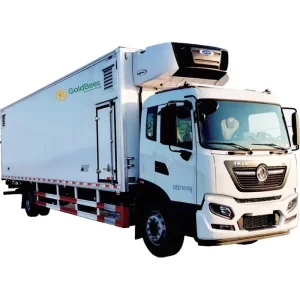


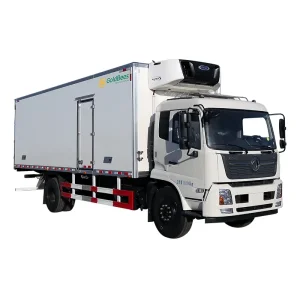
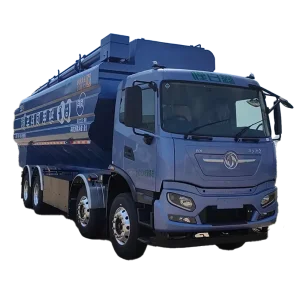


Modern intensive livestock operations can no longer treat transportation as an inert shipping variable. In industrial pork and poultry integration, transportation represents the most vulnerable intersection of cross-contamination vectors, hyper-acute stress responses, and commercial yield degradation. Pathogen incursions such as African Swine Fever (ASF), Porcine Reproductive and Respiratory Syndrome (PRRS), and High Pathogenicity Avian Influenza (HPAI) have transformed livestock vehicle engineering into an epidemiological barrier.
Traditional open-slat or rudimentary ventilated trailers expose valuable animals to environmental extremes, atmospheric road aerosols, and vehicle exhaust fumes. When core internal body temperatures exceed thermoneutral zones, pigs experience immediate respiratory alkalosis, metabolic lactic acid accumulation, and rapid live-weight shrinkage exceeding 4% over an 8-hour transit cycle. For integrators moving millions of animals annually, each 1% in transport loss or post-transit carcass trim degrades operating EBITDA by tens of millions of dollars.
GoldBees by Xinbaiqin Special Vehicle (affiliated with CP M&E) approaches livestock transit as an enclosed, mobile biocontainment cleanroom. Our automated positive-pressure filtered airflow, independent deck lifting hydraulics, and full-spectrum sanitization protocols establish an uncompromised defensive perimeter for high-value breeding stock and slaughter herds.
Evaluating commercial livestock vehicles requires analyzing structural tare weight, cleaning turnaround speed, mortality incidence, and corrosion resistance over a 10-to-15 year asset lifecycle.
A granular breakdown of mechanical, electrical, and biosecurity systems engineered into GoldBees livestock and bulk transport superstructures.
Every GoldBees closed livestock transporter is equipped with multi-stage primary, secondary, and HEPA H13 filtration matrices capable of capturing 99.97% of airborne particulate matter down to 0.3 microns, neutralizing pathogen vectors before air enters animal decks.
Integrated environmental management units counter ambient spikes up to 45°C. High-pressure ceramic adiabatic misting nozzles flash-evaporate micro-droplets without dampening bed litter, dropping ambient compartment heat by 5°C to 8°C in minutes.
Patented floor designs utilize continuous robotic longitudinal seam welding on high-tensile anti-skid ribbed aluminum. Each deck is actuated via synchronized hydraulic rams with mechanical safety lockouts to eliminate crush risks during loading.
How the Cixi, Zhejiang mega-campus delivers tier-one engineering with significant procurement and lead-time advantages for global agribusiness integrators.
From initial uncoiling and 10,000-watt fiber laser cutting to robotic CNC hydraulic press braking and modular jig assembly, all superstructure metalworking is performed under one roof without outsourced delays.
Every structural steel subframe undergoes automotive-grade multi-stage immersion cathodic electrodeposition (E-coat) followed by electrostatic high-bake powder cure, rated to withstand over 1,500 hours of continuous salt-spray testing.
Leveraging deep industrial cluster integrations in the Yangtze River Delta, GoldBees delivers CE-certified livestock transports at a 30% to 40% capital cost reduction compared to legacy Western European suppliers, accelerating fleet amortization.
As the specialized vehicle and electromechanical manufacturing arm associated with Charoen Pokphand Group, our equipment is refined through internal testing across tens of thousands of livestock and feed runs across Asia.
A single spec sheet cannot conquer global environments. We engineer chassis, thermal barriers, and airflow dynamics to conquer specific localized constraints.
Under ambient conditions exceeding 42°C with high relative humidity, livestock risk fatal heat stress within minutes of traffic congestion. Our tropical package integrates oversized HVAC condensing coils, high-volume misting circuits, and solar-reflective polyurethane topcoats.
Transporting day-old chicks or breeding gilts through sub-zero blizzards (-30°C) demands auxiliary hot-water heating networks sourced from engine heat exchangers and supplemental diesel hydronic furnaces, preventing hypothermia.
For grandparent stock (GGP/GP) and day-old chicks, biological purity is paramount. Transporters feature individual compartment climate and pressure sensors linked via CAN bus to the cabin telematics console, logging full transit conditions for compliance audits.
Examining the engineering breakthroughs driving animal welfare, carbon neutrality, and autonomous biosecurity monitoring through 2030.
The convergence of commercial New Energy Vehicles (NEV) and high-density agricultural telematics is reshaping livestock transit. GoldBees is actively commercializing zero-emission full-electric and hybrid bulk feed and livestock transporters to satisfy corporate Scope 1 and Scope 2 carbon reduction directives.
By migrating from mechanical PTO (Power Take-Off) systems to high-voltage electric motors for auger discharge and hydraulic lifts, operations eliminate on-farm diesel emissions, eliminate noise stress that induces animal panic during offloading, and reduce energy consumption by up to 68% per ton handled.
Furthermore, cloud-connected IoT architectures continuously stream air quality, deck humidity, ammonia (NH3) concentrations, and vibration dynamics directly to veterinary dispatch centers, providing an immutable blockchain record of animal welfare from loading ramp to arrival dock.
Deployment of cabin microphones and acoustic AI models trained on distress vocalizations to dynamically adjust ventilation speed and mister intervals in real-time.
Transitioning auxiliary cooling and ventilation systems to high-cycle lithium iron phosphate (LFP) and solid-state energy storage for 16-hour silent zero-emission dwell capabilities.
Internal walls engineered with photocatalytic titanium dioxide (TiO2) and silver-ion composite surfaces that continuously break down viral capsid proteins upon contact.
Engineered to interface seamlessly with primary commercial truck chassis and satisfy strict international animal welfare mandates.
Full conformance with European Union standards governing livestock transport over long journeys (> 8 hours), including approved headroom clearances, continuous GPS route tracking, internal deck temperature data-logging, and emergency warning alarms.
Custom semi-trailer kingpin placements and axle group spacings engineered to satisfy Federal Bridge Gross Weight Formulas, Canadian National Safety Code (NSC) standards, and regional gross vehicle weight limits.
Our engineering team delivers pre-engineered subframe mounting brackets and CAN-bus electrical harness adaptors tailored for major global commercial truck manufacturers: Sinotruk, FAW, Scania, Volvo, MAN, Mercedes-Benz, Isuzu, and Dongfeng.
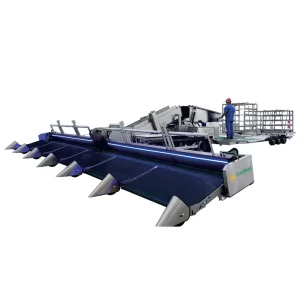
Complete your supply chain with automated harvesters, bulk feed trailers, and specialized agricultural cold-chain vehicles direct from the manufacturer.

In-depth answers covering compliance, customization, structural engineering, and export operations for corporate fleet buyers.
GoldBees superstructures are fabricated using structural marine-grade aluminum alloy 6061-T6 and 5083, combined with cold-formed high-strength steel chassis coated in automotive-grade cathodic electrodeposition primer. Interior surfaces, electrical junction boxes (rated IP69K), and sealed stainless steel wire conduits withstand repeated caustic alkaline foam applications (pH 11–12), high-pressure thermal washouts (80°C at 150 bar), and peracetic acid disinfection cycles without pitting or electrical degradation.
Our closed-body transporters utilize positive-pressure HEPA H13 filtration modules mounted at the superstructure bulkhead. Incoming air passes through pre-filters, high-efficiency particulate air barriers, and optional UV-C sterilization chambers before being distributed across deck plenums. Because internal air pressure is held slightly higher than external atmospheric pressure, unfiltered exterior road aerosols and airborne pathogen vectors cannot penetrate through doorway perimeter seals or deck vents.
Yes. Xinbaiqin supplies either complete turnkey cab-chassis vehicles or knocked-down (CKD/SKD) body kits with custom subframes engineered to match local dealer chassis. Our engineering team routinely configures chassis interfaces for European (Scania, Volvo, MAN, Mercedes-Benz), Japanese (Isuzu, Hino), and Chinese (Sinotruk, FAW, Dongfeng, Foton) wheelbases, axle spreads, and PTO interfaces, supplying full mounting jigs and wiring harness schematics.
Our multi-tier hydraulic lifting floors utilize quad-synchronized hydraulic cylinders powered by an electro-hydraulic power pack. Each deck tier supports up to 12,000 kg distributed load. Critical safety redundancies include mechanical pneumatic locking pins that engage automatically at predetermined tier elevations, hydraulic burst valves that prevent deck drop in the event of hose rupture, and manual lowering overrides for emergency scenarios.
All deck perimeters feature raised peripheral retention lips and downward drainage channels leading into sealed internal effluent collection tanks located beneath the subframe. These tanks hold between 800 to 1,500 liters depending on chassis length, completely preventing roadside leakage during long-haul transit. Quick-release 3-inch camlock discharge valves allow rapid offloading into farm bio-digesters or designated truck washout disposal pits.
Standard fleet configurations (such as 3-deck swine trailers or 4-tier day-old chick transporters) maintain a standard factory build cycle of 35 to 50 calendar days from engineering drawing sign-off. Full turnkey integration involving non-standard custom imported chassis typically requires 60 to 75 days. We maintain dedicated export assembly bays ensuring ocean container, Flat-Rack, or Ro-Ro shipping readiness from Ningbo or Shanghai ports.
Xinbaiqin operates in close coordination with CP M&E (the electromechanical equipment and engineering division of Thailand's Charoen Pokphand Group). Unlike standalone vehicle bodybuilders, our product designs are directly informed by high-volume commercial field operations moving millions of broilers, layers, and swine annually across Asia. This continuous feedback loop guarantees that real-world maintenance pain points are eliminated during CAD design stages.
Every vehicle and semi-trailer exported is accompanied by full international compliance documentation, including CE Machinery Directive compliance certificates, Certificate of Origin (Form E, CO, etc.), chassis VIN declarations, hydraulic pressure test certifications, axle brake calculation certificates conforming to ECE R13 / FMVSS, and comprehensive English-language operation and maintenance manuals.
