Direct factory delivery of heavy-payload feed haulers, temperature-governed pig transports, and sustainable NEV electric logistics platforms engineered for large-scale livestock integrations.





Evaluating structural transformations across North America, the European Union, Southeast Asia, and Latin America toward vertically consolidated, zero-pathogen animal production ecosystems.
The global commercial swine industry has undergone an unprecedented evolution over the past decade. Driven by the critical necessity to manage virulent transmissible pathogens—most notably African Swine Fever (ASF) and Porcine Reproductive and Respiratory Syndrome (PRRS)—alongside rigorous global mandates on animal welfare, modern pig farming is no longer characterized merely by barn penning and manual feeding. Instead, it has transformed into a high-technology industrial discipline governed by biosecurity containment, IoT telematics, precision nutrition delivery, and climate-controlled transport logistics.
Information Gain Directive: The true cost of swine production equipment cannot be measured solely at procurement. Total Cost of Ownership (TCO) in modern pig enterprises is decisively dictated by transit mortality rates, cross-contamination sanitization turnaround windows, and the mechanical preservation of pellet feed integrity during discharge.
Traditional open-slat livestock transport trailers present severe vectors for epidemiological transmission. Modern pig operations mandate fully enclosed, hermetically sealable transport structures equipped with high-efficiency particulate air filtration (HEPA), positive pressure ventilation, and thermal disinfection capabilities (TADD compatible) to systematically neutralize pathogen entry between quarantine zones.
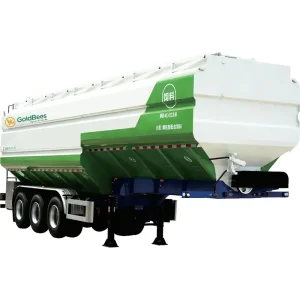
Compound pig feed formulated with granular amino acids, vitamins, and pelletized grains suffers severe nutritional degradation when exposed to friction, heat, and pneumatic impact. Leading pig farming factories require bulk delivery vehicles with variable-pitch hydraulic augers and fluidizing pneumatic discharge that prevent pellet pulverization and unmixing.
Transport-induced stress causes elevated cortisol levels, Porcine Stress Syndrome (PSS), significant live-weight shrink (often exceeding 4-6% in unconditioned transit), and mortality. Industrial swine transport vehicles must integrate multi-zone automatic temperature regulation, hydration lines, dynamic misting cooling, and real-time CO2 scrubbing fans.
How deep industrial clustering, CP M&E electromechanical heritage, and in-house fabrication establish high-precision, cost-resilient equipment standards.
As the world's largest consumer and producer of pork, China has driven unprecedented technological capitalization into swine production infrastructure. Xinbaiqin Special Vehicle Co., Ltd. (operating under the global brand GoldBees), situated within the Cixi Modern Agriculture Industrial Park in Zhejiang Province, exemplifies this industrial escalation. Operating within CP M&E—the specialized electromechanical equipment arm of the multinational Charoen Pokphand Group—Xinbaiqin bridges heavy commercial automotive engineering with practical, frontline agricultural production feedback.
Covering over 66,667 square meters of integrated production campus, GoldBees consolidates structural sheet-metal laser cutting, robotic welding of aerospace aluminum bodies, electrical harness braiding, hydraulic testing, and vehicle assembly in a unified manufacturing continuum.
Unlike third-party trailer builders who assemble generic bodies onto truck chassis, our blueprints are continuously iterated based on multi-million-head livestock operations run across Charoen Pokphand Group's international breeding, grow-out, and processing facilities.
Direct supply agreements with world-tier chassis manufacturers—including Scania, Volvo, Mercedes-Benz, Dongfeng, Sinotruk, FAW, and Foton—enable seamless hydraulic PTO, electronic CAN-bus telemetry, and structural sub-frame alignment for both RHD and LHD international markets.
Leveraging China's dense domestic supply chain for high-strength steel (QSTE700TM) and high-ductility extruded aluminum profiles (6061-T6/6082-T6) allows GoldBees to deliver premium corrosion resistance at a 25% to 35% capex advantage over Western European equivalents.
Direct engineering comparison across structural metallurgy, environmental control, hygiene integrity, and transit shrink mitigation.
| Performance Parameter | Legacy Industry Standard Trailers | GoldBees / CP M&E Advanced Swine System | Operational Economic Advantage |
|---|---|---|---|
| Structural Body Alloy | Standard welded carbon steel or unsealed rivets | Anti-corrosive extruded 6082-T6 Aluminum Alloy with robotic seam-welding | Payload +18% Cuts deadweight; eliminates corrosive urine penetration. |
| Transit Shrink Rate (Live Weight) | Typical loss of 3.8% to 6.2% on 8-hour transit | Regulated microclimate restricts shrink to under 1.2% to 1.8% | Preserves $4,200/load in preserved slaughter carcass yield. |
| Ventilation & Air Quality | Passive draft slots; weather-dependent flaps | EC-governed dynamic forced ventilation with G4+HEPA negative-pressure exhaust option | Zero Suffocation Risk Constant 450 m³/h airflow per 100kg animal. |
| Sanitization & Disinfection Cycle | Manual chemical washdown (4.5 to 6.0 hours); residual harborage | Automated CIP multi-head high-pressure loop; TADD heat dry cycle (70°C for 30 min) | Washout in 75 Mins Guaranteed thermal destruction of ASF/PRRS viral DNA. |
| Bulk Feed Unloading Speed | 12 - 18 tonnes/hour via uncalibrated mechanical screw | Intelligent variable displacement hydraulic auger / high-volume pneumatic (up to 45 t/h) | Triple Unload Speed Pellet breakage < 0.5%; zero silo cross-contamination. |
| Internal Deck Hydraulics | Manual cable winches or rigid welded floor levels | Independent multi-tier synchronized hydraulic scissor-lift decks with safety locks | Zero Ramp Stress Pigs walk on horizontal grade; zero limb fractures. |
Examining how GoldBees equipment adapts to hyper-dense vertical farms, sub-zero continental climates, and multi-facility industrial integrators.
In vertical multi-floor pig complexes across Henan, Hubei, and Sichuan, standard transport trucks cannot maneuver or dock with tight automated loading chutes. GoldBees engineered low-profile, high-payload multi-deck transport semi-trailers that interface precisely with elevator docking seals. These vehicles incorporate sealed bio-airlocks, ensuring zero ambient air exchange between the transport vessel and multi-floor nursery zones during animal transfer.
Operating in regions like Liaoning, Heilongjiang, or the Canadian Prairies, sub-zero ambient conditions (-25°C to -40°C) cause severe hypothermia, frostbite, and respiratory mortality in market pigs. GoldBees incorporates thermal polyurethane composite wall insulation (R-value > 4.5), thermostatically governed diesel auxiliary heaters, and pre-warmed inlet air distribution channels to maintain an internal cabin temperature of 18°C to 22°C regardless of blizzard winds.
In Southeast Asia (Vietnam, Thailand, Indonesia) and equatorial Latin America, extreme ambient heat coupled with 90%+ relative humidity triggers severe heat-stress fatalities within minutes of vehicle standstills. GoldBees integrates high-pressure ceramic misting evaporative cooling systems, high-volume variable-pitch extraction fans running on independent backup battery generators, and non-stop drinking nipple arrays feeding from chilled onboard water reservoirs.
Electrification, edge-computing telemetry, and robotics driving decarbonization and autonomous biosecurity verification.
As corporate agricultural enterprises commit to Scope 1 carbon emission reductions, diesel feed haulers and transport trucks are rapidly transitioning to battery electric platforms. GoldBees NEV Electric Bulk Feed Trucks integrate CATL lithium-iron-phosphate (LFP) high-energy density battery packs. These powerplants not only drive the vehicle chassis with zero tailpipe emissions but also power electric-motor-driven discharge augers, entirely eliminating diesel idling noise and exhaust odors adjacent to pristine breeder barns.
Every GoldBees vehicle is built as an edge-computing IoT node. Onboard microcontrollers constantly stream cabin temperature, ambient relative humidity, ammonium (NH3) parts-per-million, CO2 concentration, and vehicle speed via 4G/5G networks to farm management SCADA dashboards. Automatic GPS geofencing prevents doors and discharge valves from unlocking if the vehicle has not passed through an authorized thermal wash station verified by RFID digital certification.
The manual power-washing of multi-deck pig transporters represents one of the most hazardous and labor-intensive activities in animal husbandry. GoldBees has pioneered integrated Clean-In-Place (CIP) plumbing manifolds. Internally recessed, high-torque rotary spray nozzles blast 80-bar heated wash solutions throughout every internal cubic centimeter, slashing human entry requirements and eliminating bio-wash gaps.
A structured engineering checklist for swine farm corporate procurement directors, technical engineers, and operational fleet managers.
Demand finite element method (FEM) dynamic stress validation data. Ensure the alloy composition utilizes certified high-strength aviation aluminum (e.g., 6082-T6) with minimum tensile strength > 310 MPa to achieve maximum legal payload while enduring aggressive torsional road fatigue.
Industrial pig wash stations utilize extreme pressure sprays and alkaline detergents (pH 11-13). All external wiring harnesses must be IP69K rated, encapsulated in oil-and-alkali resistant polyurethane conduits, with hermetically sealed deutsch connector plugs.
Verify that multi-deck elevator systems integrate pilot-operated check valves and mechanical anti-drop pawls on every cylinder. Hydraulic failures under a full live load of finishing pigs can cause catastrophic animal loss and structural destruction.
In bulk feed haulers, verify zero inter-compartment leakage tolerances. Modern swine production depends on precise stage-dependent medicinal or amino-acid feed formulation; inter-bin cross contamination compromises finishing schedules and compliance.
Explore the extended GoldBees machinery catalog including automated day-old poultry transports, organic fertilizer applicators, and high-volume auger semi-trailers.




In-depth technical answers addressing biosecurity, mechanical duty cycles, chassis compatibility, and international export protocols.
GoldBees swine transports integrate a multi-stage bio-barrier: full cabin sealing prevents airborne contamination along public transit routes; optional G4 pre-filters paired with HEPA filtration scrub intake air; internally integrated high-temperature thermal air decontamination (TADD) capabilities allow bake-out at 70°C for 30 minutes post-wash, proven to destroy viral lipid membranes.
Auger systems utilize continuous screw flighting driven by electro-hydraulic pumps, which delivers high volumetric throughput (up to 40-50 t/h) ideal for short to medium silos while consuming less energy. Pneumatic models employ low-pressure, high-velocity air blowers (dense-phase conveying) that lift feed into tall vertical silo heads (up to 18 meters) through enclosed piping with zero mechanical moving contact, perfectly preserving feed pellet geometry.
Yes. We supply fully engineered complete vehicles on global chassis (Volvo, Scania, Mercedes, Sinotruk, FAW) as well as knocked-down (CKD/SKD) superstructures with custom-engineered mounting sub-frames, standardized ISO bolt patterns, and plug-and-play hydraulic/electrical quick-connects tailored to local chassis makes and regional bridge-formula axle regulations.
Our straight-truck configurations typically offer 2 to 3 loading decks accommodating 120 to 180 finishing pigs (~100-120kg), while our heavy tri-axle semi-trailer configurations provide 3 to 4 synchronized hydraulic deck levels providing up to 90–120 m² of usable floor space, accommodating 260 to 340 market hogs or up to 1,200 weaned piglets per transport trip within legal gross vehicle weight limits.
The system utilizes battery-backed or auxiliary-generator-driven heavy-duty brushless EC extraction fans calibrated to exchange the cabin air volume every 45 to 60 seconds (providing over 450 m³/hour per market animal). If truck engine power ceases, the auxiliary backup battery array engages instantaneously, maintaining full airflow and evaporative water misting cooling for a minimum of 4 consecutive hours.
Every export build is delivered with complete CE conformity certificates (where applicable), comprehensive mechanical and hydraulic schematic blueprints, electrical CAN-bus wiring documentation, pressure vessel test certifications for pneumatic tanks, weld inspection reports, and full English operator and maintenance instruction manuals.
Whether you are planning a high-density vertical farm logistics fleet or procuring bulk feed conveyance trailers for cross-country distribution, our senior technical engineering team is available for architectural review, custom blueprints, and factory audit scheduling.
Xinbaiqin Special Vehicle Co., Ltd. (CP M&E Group)
No. F-1 Cixi Modern Agriculture Industrial Park, Xu-Jia-Pu-Wei-Ken District, Xinpu Town, Cixi City, Zhejiang Province, 315322, China
Direct Office: +86-0574-63587070
Mobile & WhatsApp: +86-18268426644
Customer Service: +86-15869563362
Primary Sales: [email protected]
Technical Dept: [email protected]
Support: [email protected]
