

Custom Transform Poultry Operations with Intelligent Automation - Top China Suppliers and Factory Solutions for Efficiency and Welfare Manufacturer, Products
View Specifications →
Precision engineering designed for high-density poultry integrators, broilers, day-old chicks, and bulk compound feed movement.





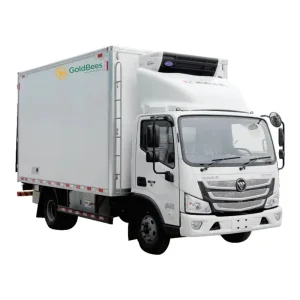
The industrial poultry sector has transitioned from manual, localized feeder trough management to an era of closed-loop, automated, and biosecure nutrient delivery architectures. In commercial broiler, layer, and breeder enterprises, feeding is no longer isolated to the pan feeder inside the shed. Modern animal husbandry recognizes that the feed delivery ecosystem begins at the compound feed mill and extends across long-haul transport corridors directly into overhead silo bin infrastructure before automated mechanical augers meter rations to the birds.
Feed represents roughly 65% to 75% of the total operating expenditure (OPEX) in intensive poultry production. Consequently, minor physical degradation in feed quality—such as pellet fracturing into fine dust or nutritional degradation caused by heat and moisture exposure during transit—exerts an immediate negative effect on the Feed Conversion Ratio (FCR) and European Production Efficiency Factor (EPEF). Modern poultry feeder engineering resolves these operational inefficiencies by integrating sealed, multi-compartment pneumatic and electric auger transport vehicles with synchronized in-house computerized distribution systems.
Operational Fact: Studies demonstrate that reducing feed fines from 25% down to under 8% improves broiler weight gain by up to 4.2% while decreasing gastrointestinal metabolic disorders, directly impacting profitability for commercial flock operators.
With Highly Pathogenic Avian Influenza (HPAI) and other transboundary animal diseases threatening global livestock ecosystems, feed delivery vehicles and silo replenishment hardware are identified by epidemiologists as high-risk contamination vectors. Xinbaiqin Special Vehicle (GoldBees) designs specialized feed logistics machinery tailored to rigorous terminal disinfection routines. This includes seamless anti-corrosion welded aluminum alloy tanks, flush-mounted electrical wiring harnesses, IP67-rated control modules, and sealed compartment partitions designed to survive harsh chemical disinfectants and high-temperature baking cycles without structural degradation.
Agricultural conglomerates such as CP Group, Tyson Foods, JBS, and New Hope Group evaluate poultry feeding and transport machinery using rigorous Total Cost of Ownership (TCO) matrices rather than initial procurement capex alone. Enterprise procurement workflows prioritize the following core engineering facets:
Utilizing high-tensile 6061-T6 aluminum alloys and wear-resistant steels minimizes vehicular dead weight, enabling legal payload maximization up to 30 tonnes per haul while complying with strict axle-weight highway mandates.
Dual-power electric-hydraulic auger conveyors and low-pressure high-flow pneumatic systems achieve discharge velocities exceeding 1.2 tonnes per minute while keeping pellet breakage rates strictly beneath 1.5%.
Independent multi-compartment tank partitions allow simultaneous transportation of starter, grower, and finisher rations within a single trip without formula migration or cross-contamination.
Over 15 years of electromechanical and specialized body manufacturing under CP M&E standards.
Operate roof hatch closures, tank stabilization jacks, and discharge boom slewing remotely from 50 meters away, shielding operators from feed dust and high-voltage transmission lines.
Precision silicone gaskets and automated pneumatic locks protect dry compound feeds against tropical torrential downpours, high ambient humidity, and fungal aflatoxin development.
Floor pans engineered with steep angles and anti-stick internal polished surfaces provide effortless clean-down, enabling fast sanitization between varying medicated feed deliveries.
Direct electric motor connections allow zero-emission hopper unloading utilizing farm grid power (380V/480V 3-phase), saving substantial diesel fuel and cutting site noise by 60%.
Navigating cross-border trade for heavy commercial equipment demands exhaustive structural validation and safety certification. GoldBees vehicles, engineered by Xinbaiqin Special Vehicle Co., Ltd., are custom-built to comply with strict international regulatory regimes across major agricultural regions:
The poultry feed logistics industry is advancing rapidly toward autonomous, data-driven supply networks. Our engineering roadmap integrates the following innovations across future vehicle platforms:
Vehicle-to-Infrastructure (V2I) communication syncing with farm silo load cells to adjust discharge sequences and optimize regional logistics schedules in real time.
Near-Infrared spectrometry integrated into the discharge boom, assessing feed moisture, crude protein, and starch gelatinization prior to unloading into farm bins.
Transitioning vehicle fleets to zero-emission battery electric and hydrogen fuel cell powertrains, helping protein producers meet international scope 1 & scope 2 ESG targets.
Clear, engineering-focused answers for corporate buyers assessing GoldBees special vehicles.
Electric augers use mechanical spiral lifting that moves feed gently along continuous flights at controlled RPMs. This keeps pellet breakage beneath 1.5%. Pneumatic blowers rely on high-velocity air, which can cause higher friction and pellet fracturing (often 3% to 6%) against pipe bends unless equipped with specialized GoldBees gentle deceleration cyclone heads.
Yes. Xinbaiqin regularly exports bulk feed superstructures as complete CKD (Completely Knocked Down) or SKD (Semi-Knocked Down) kits with custom subframes. Our engineering department reviews the subframe drawings, axle configurations, and PTO parameters of your domestic chassis (Scania, MAN, Isuzu, Volvo, Freightliner) to guarantee straightforward alignment.
Every chamber is separated by double-welded, load-bearing bulkhead walls with internal rubberized slide gates or independent discharge hoppers. This allows starter, grower, finisher, or medicated feeds to be transported simultaneously. Dedicated auger sweep gates and reverse-purge pneumatic cycles clear all residual fines before discharging the next compartment.
GoldBees bodies feature IP67/IP69K-rated sealed wiring looms, corrosion-resistant stainless-steel hardware, sealed bearing housings, and self-draining floor slopes. The superstructures are tested to withstand repeated thermal baking cycles (70°C for 30 minutes) at farm bio-exclusion checkpoints along with acidic and chlorinated cleaning sprays.
Supporting end-to-end farm biosecurity, broiler catching automation, and temperature-controlled food transport.


