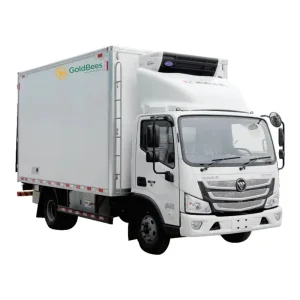
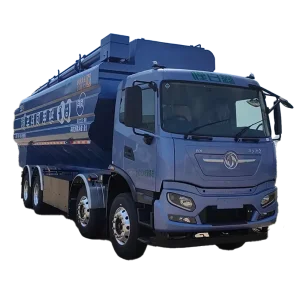
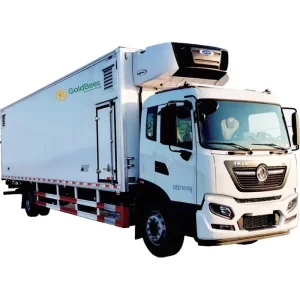
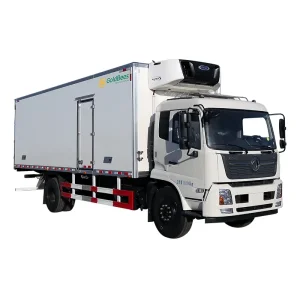
Explore precision-engineered reefer bodies, automated live-haul transports, and multi-compartment refrigerated trucks manufactured directly by Xinbaiqin under the GoldBees brand.
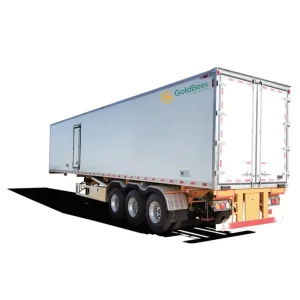
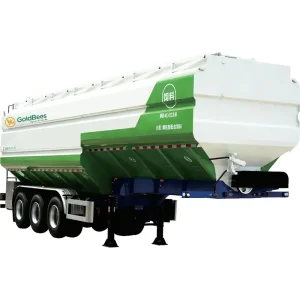
An exhaustive analysis of cold-chain urbanization, regulatory compliance, ATP thermal mandates, and the shift from monolithic reefer distribution to agile, micro-temperature last-mile delivery.
The rapid rise of quick-commerce, central kitchens, and localized dark stores has redefined supply lines. Heavy 40-foot semi-trailers face strict downtown access prohibitions, low-emission zone (LEZ) tolls, and navigation bottlenecks. Small refrigerated trucks (GVW 2.5t to 7.5t) serve as the indispensable bridge between peri-urban logistics hubs and inner-city retail dispensers.
Global food safety frameworks and European ATP (Agreement on the International Carriage of Perishable Foodstuffs) classify equipment based on thermal transfer efficiency. Class FRC standards demand an overall heat transfer coefficient (K-factor) ≤ 0.40 W/(m²·K), with internal holding capacity down to -20°C at +30°C ambient. Achieving this requires vacuum-bonded sandwich panel structures rather than conventional glued walls.
According to FAO logistics metrics, over 30% of perishable agricultural goods suffer catastrophic nutrient or textural deterioration due to localized thermal spikes during door-open cycles. Small refrigerated transport requires high-recovery chiller units with rapid pull-down velocity to counteract 40+ door openings per daily route.
Executive Insight: “Modern cold-chain performance is no longer judged solely by the refrigeration compressor's maximum wattage, but by structural thermal hysteresis—the ability of the vehicle body to reject radiative solar heat gain while managing micro-climate stratification across multi-temperature cargo spaces.”
The convergence of commercial vehicle electrification, AI telematics, and advanced insulation chemistry is creating next-generation cold-chain vehicles with unprecedented efficiency.
Transitioning from heavy metal skins to continuous glass fiber reinforced polyester (FRP) with high-density polyisocyanurate (PIR) cores, cutting tare weight by 22%.
Eliminating mechanical engine-bracket belts in favor of 400V/800V DC hermetic scroll compressors powered directly by chassis traction batteries for steady cooling during idling.
Integrating edge computing that correlates weather radar, traffic delays, and cargo respiration rates to automatically optimize compressor cycles and avoid mid-transit defrost spikes.
Deploying silica aerogel vacuum insulation panels (VIP) paired with R290 (propane) or CO2 natural refrigerants, slashing wall thickness by 40% while raising internal cubic volume.
Evaluating thermal performance parameters between traditional mechanical conversions and GoldBees integrated smart reefer platforms.
| Evaluation Parameter | Conventional Small Reefer | GoldBees Smart Integrated Reefer | Next-Gen NEV Electric Reefer |
|---|---|---|---|
| Thermal Insulation Core | Cut EPS / Low-density PU (32 kg/m³) | High-Density PIR / Structural Foam (45 kg/m³) | Composite PIR + VIP Vacuum Panels (52 kg/m³) |
| K-Factor Value W/(m²·K) | 0.48 – 0.55 (Rapid Thermal Bleed) | ≤ 0.28 (ATP Class FRC Certified) | ≤ 0.18 (Extreme Hyper-Insulation) |
| Refrigeration Drive System | Engine Belt Pulley (Stops at Engine Off) | Dual-Standby (Chassis PTO + 220V Electric) | Direct HVDC Electric Inverter (Continuous) |
| Multi-Zone Partitions | Fixed Fabric Curtains (Poor Seal) | Insulated Sliding Bulkhead with EPDM Gaskets | Triple Independent Zone with Dual Evaporators |
| Biosecurity Washdown | Exposed Wiring, Water Ingress Vulnerability | IP67 Waterproof Harness, Seamless Gelcoat | IP69K Anti-Corrosion Hermetic Enclosures |
| Digital IoT Telemetry | Analog Dial / Simple Data Logger | 4G Cloud Telematics, Real-time GPS & Probes | AI Edge Controller with Automated Smart Defrost |
Engineered to excel across diverse environmental, biological, and logistical challenges—from metropolitan pharmaceutical routes to remote agricultural operations.
Urban grocery distribution requires delivering fresh fruits (+4°C to +8°C), dairy (+2°C to +4°C), and ice cream (-18°C to -22°C) within the same vehicle. Our multi-zone small refrigerated bodies feature movable transverse bulkheads and independent evaporators, allowing simultaneous multi-temperature transit on tight city routes without cross-contamination.
Transporting blood plasma, mRNA vaccines, and specialized biologics requires absolute thermal stability. Even a brief 2°C excursion can spoil sensitive inventory worth hundreds of thousands of dollars. GoldBees pharma-grade small reefers integrate redundant secondary refrigeration circuits, uninterruptible power supplies (UPS), and calibrated multi-point sensor grids.
Hatchery logistics demands both temperature control and continuous fresh air management. Day-old chicks generate substantial metabolic body heat, carbon dioxide, and moisture. Drawing on Charoen Pokphand Group (CP M&E) agribusiness expertise, our specialized vans integrate forced positive-pressure ventilation, CO2 sensors, and proportional climate blending.
How factory direct engineering, structural lightweighting, and integrated CP M&E expertise reduce lifecycle operating costs by up to 28% over 500,000 kilometers.
Traditional aftermarket refrigerated conversions often experience early failures due to improper vehicle integration. Riveted aluminum skins loosen from road vibrations, allowing moisture into the core insulation and degrading thermal performance. Exposed wiring harnesses corrode under harsh road salt and high-pressure chemical washdowns.
Xinbaiqin engineers solve these vulnerabilities through full monocoque sandwich lamination, automated wet-on-wet resin infusion, and integrated wiring conduits molded directly inside structural panels.
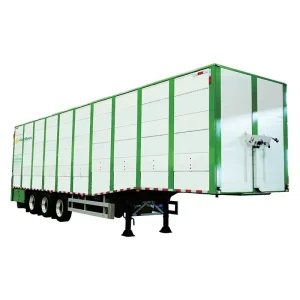
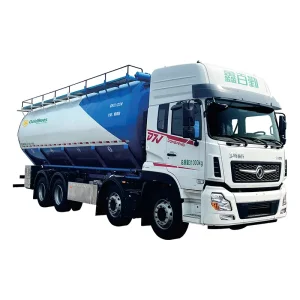
As a key manufacturing unit within CP M&E (Charoen Pokphand Group), Xinbaiqin Special Vehicle builds specialized equipment shaped by real-world agricultural operations. Our refrigerated vans, livestock haulers, and bulk feed transports are engineered to handle the demands of heavy commercial fleets.
Every vehicle is designed for complete lifecycle support: chassis interface plates match global standards (Isuzu, Foton, Hino, Mercedes-Benz, Dongfeng), ensuring reliable performance and straightforward local maintenance anywhere in the world.
Direct technical answers for fleet managers, logistics directors, and procurement teams evaluating small refrigerated truck investments.
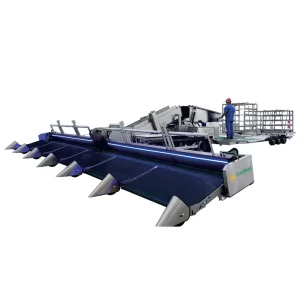
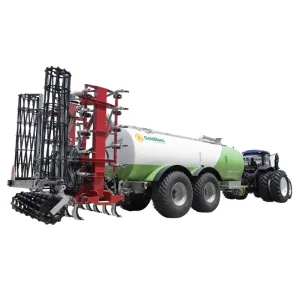
Explore our complete range of specialized industrial vehicles—including livestock haulers, fresh produce sorting trucks, pneumatic feed transports, and harvesting systems.