Certified under European Machinery Directive 2006/42/EC and biosecurity sanitation protocols. Every unit delivers precision temperature regulation, reinforced chassis durability, and superior animal welfare protection.



Modern intensive poultry farming operates on razor-thin metabolic margins. Day-old chicks, high-line parent stock, and market broilers are extremely vulnerable to hyperthermia, carbon dioxide narcosis, and pathogen ingress during multi-hour transit.
Day-old chicks (DOC) cannot thermoregulate their internal core body temperature during the first 96 hours post-hatch. Ambient exposure below 30°C causes hypothermia and irreversible vitelline yolk sac retention, whereas microclimates exceeding 35°C trigger systemic dehydration, respiratory alkalosis, and mortality spikes. GoldBees custom HVAC setups provide laminarly routed conditioned air calibrated to exactly 32.0°C ± 0.5°C across every tier.
With the rapid transboundary spread of Highly Pathogenic Avian Influenza (HPAI H5N1), open-crate natural draft trucks are banned or shunned by leading agribusiness integrators. Fully enclosed CE-certified vehicles equipped with positive-pressure HEPA intake filtration, microbial UV-C scrubbers, and sealed air exhaust loops prevent aerosol cross-contamination between high-density production zones.
In modern poultry integration, a 0.5% reduction in DOA rates across a 50-million-bird annual operation saves over 250,000 birds—equivalent to over $350,000 in recovered direct margin. Precision climate logistics convert transport from a physiological risk bottleneck into a protected lifecycle bridge that safeguards 7-day post-placement performance.
Procurement teams searching for CE Certification Air-Conditioned Poultry Transport Vehicles Manufacturers & Factory are looking for verified aerodynamic CFD airflow mapping, autonomous dual-refrigeration redundancy, wash-down durability, and strict conformity with European Council Regulation (EC) No 1/2005. GoldBees (Xinbaiqin Special Vehicle Co., Ltd. within the CP M&E ecosystem) engineers eliminate microclimate dead zones through structural ducting and IoT telematics.
Achieving CE compliance for live animal transport vehicles requires meeting multiple European directives governing machinery safety, electromagnetic compatibility, pressure vessel integrity, and animal welfare protection.
Full structural validation of all electro-hydraulic rear tail-lifts, hydraulic deck levelers, movable internal partitions, and positive mechanical locking assemblies with dual emergency stops.
Complies with European Council animal transit regulations: automated continuous temperature recording, alarm limit threshold triggers, forced fan air movement exceeding 60 m³/h per bird payload, and 12-hour independent logging.
Electromagnetic interference suppression on all CAN-bus lines, inverters, brushless DC ventilation fans, and telematics transmitters, preventing electronic disruption with the host vehicle chassis.
Heavy-insulation polyurethane foam core sandwich wall panels with heat transfer coefficients (K-value) below 0.38 W/(m²·K), retaining internal thermal equilibrium even when external ambient temperatures hit 48°C.
| Engineering Parameter | Traditional Open-Slat Curtained Truck | Standard Refrigerated Box (Meat Box) | GoldBees CE Air-Conditioned Transporter |
|---|---|---|---|
| Microclimate Control | Uncontrolled (Ambient dependent) | Single-zone thermal chill only | Precision Dynamic Microclimate (±0.5°C) |
| Airflow Exchange Velocity | Passive natural velocity (0 to 12 m/s) | Low-velocity internal loop (0.2 m/s) | Pressurized Laminar (4,500–12,000 m³/h) |
| CO2 & Ammonia Extraction | Variable, stalls in traffic jams | Severe CO2 asphyxiation risk (>3500 ppm) | Autonomous Exhaust Venting (<1000 ppm) |
| Biosecurity Isolation | Zero protection; direct bio-vector intake | Sealed, but lacks particulate intake filters | G4 + F8 / HEPA + Optional UV-C Inactivation |
| Average Chick DOA Rate | 0.45% – 1.80% (Weather vulnerable) | 0.80% – 3.20% (Suffocation risk) | < 0.05% (Consistent year-round) |
| Telematics & Black Box | None | Standard simple GPS temperature log | Multi-tier Cloud IoT + Driver Cockpit Display |
From extreme equatorial heatwaves in Southeast Asia and the Middle East to sub-zero continental winters in Northern Europe and North America, specialized poultry vehicles must adapt dynamically.
In humid equatorial climates (e.g., Thailand, Indonesia, Brazil, Vietnam), ambient air temperatures of 38°C with 85% relative humidity make natural evaporative cooling impossible. Chicks can quickly suffocate in stagnant heat pockets. GoldBees vehicles incorporate independent high-capacity diesel/electric auxiliary generators powering heavy refrigeration compressors, condensing coils, and dehumidification reheat circuits to deliver steady 30°C–32°C air with 50%–60% RH.
Operating across Eastern Europe, Central Asia, and North America requires counteracting exterior temperatures dropping as low as -30°C. Inadequate heating causes chick chilling, respiratory diseases, and elevated flock dropouts. GoldBees systems feature dual PTC ceramic electrical heaters and automated engine coolant heat-exchangers that guarantee instant auxiliary warmth without toxic exhaust or combustion gas risks.
Breeding stock chicks from pedigree lines carry high commercial valuations. Uncontrolled transit stress can disrupt reproductive tract development and permanent flock uniformity. GoldBees specialized carriers offer individually monitored 4-tier micro-chambers with independent infrared thermal sensors, anti-vibration air-ride suspensions, and smooth-braking deceleration protections that maintain bird vigor.
Xinbaiqin Special Vehicle Co., Ltd., working in close synergy with CP M&E (the electromechanical equipment arm of Charoen Pokphand Group), engineers end-to-end biological and logistical protection throughout the avian farming lifecycle.
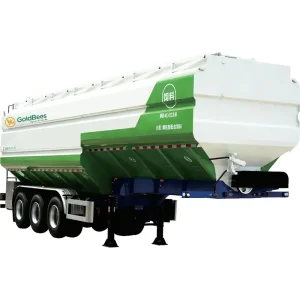
Biosecure feed logistics are the critical starting point of flock health. GoldBees electric/hydraulic auger and pneumatic bulk feed trucks seal pellets from atmospheric humidity and wild bird droppings. Smooth, clean tank interiors prevent mold retention and pathogen propagation from mill to farm feed bin.
GoldBees day-old chick carriers bridge incubators and grow-out facilities. Built with food-grade anti-corrosive aluminum box bodies, IP67-rated electrical harnesses, and smooth, radiused corner profiles, every surface is fully washable, disinfectable, and compatible with thermal bake-out cycles (>65°C for 30 minutes).
Our intelligent chicken harvesting machinery and multi-temperature refrigerated transport bodies protect meat yield at harvest. Automated mechanical catching reduces manual bird bruising, while steady refrigerated trailers maintain cold chain integrity for fresh-dressed birds destined for retail markets.
The future of live animal logistics combines battery-electric platforms (NEV), artificial intelligence telemetry, and automated environmental diagnostics to preserve animal health and support supply chain ESG targets.
Rollout of dynamic PID multi-sensor controllers that continuously adjust cooling, heating, fresh-air dampers, and fan speeds in response to road speed, solar loads, and flock breathing dynamics.
Integration of dedicated high-voltage 800V LFP battery packs into semi-trailers to power all refrigeration and ventilation systems independently, lowering fuel consumption and preventing diesel fumes near chick intakes.
Cabin microphones and volatile organic compound (VOC) sensors analyze chick distress chirps and metabolic byproduct levels in real time, alerting drivers to airflow imbalances before stress sets in.
Automated robotic docking ports featuring self-sterilizing mist gates, automated loading/unloading chutes, and closed-loop data syncing directly with hatchery Enterprise Resource Planning (ERP) databases.
Essential insights for engineering directors, procurement leads, and veterinary biosecurity officers evaluating custom-built poultry transport systems.
Standard refrigerated meat bodies ("reefers") are engineered solely to hold static, dead cargo at stable temperatures via recirculating cold air. They feature virtually zero fresh-air exchange rates. Transporting live day-old chicks inside a traditional reefer leads to suffocation within 45 minutes due to rapidly accumulating carbon dioxide (>4,000 ppm) and metabolic heat spikes.
In contrast, a CE-certified GoldBees air-conditioned poultry carrier functions as an advanced mobile life-support chamber. It combines active mechanical refrigeration with continuous forced fresh-air ventilation (delivering over 25 m³/h per 1,000 chicks), powered heating coils, positive-pressure air filtration, and active carbon dioxide purging vents to keep CO2 concentrations safely below 1,000 ppm.
Temperature stratification naturally causes hot air to gather near the ceiling while cold air pools at the floor. GoldBees resolves this through balanced double-ceiling plenum chambers and laser-cut lateral discharge registers.
Conditioned air is gently routed along the walls and downward through individual crate ventilation slots before being pulled into low-level return ducts. This laminar airflow design maintains temperatures within a strict ±0.5°C margin across bottom, middle, and top tiers, preventing cold-chilling on lower decks and heat buildup on upper ones.
Our CE-certified electrical controls feature a multi-tiered failover design:
1. Direct-Drive Dual Compressor / Engine PTO Backup: If the auxiliary diesel engine fails, the control system switches ventilation circuits to a high-capacity chassis alternator and onboard lithium backup battery array.
2. Auto-Opening Emergency Fresh-Air Flaps: If electrical power is interrupted, heavy-duty pneumatic solenoids release spring-loaded side vents, introducing fresh ambient air by natural draft to prevent suffocation while the vehicle is pulled over.
3. Immediate Cockpit & Cloud Telematics Alarms: Visual and acoustic alarms notify the driver instantly, and GPS-linked alerts are dispatched to the fleet maintenance hub.
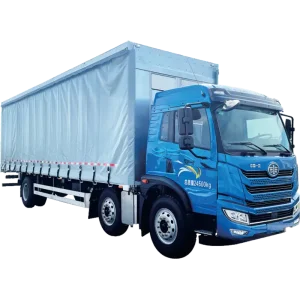
Yes. Xinbaiqin Special Vehicle designs and fabricates modular vehicle subframes tailored to specific client chassis requirements. Whether integrating onto European 4x2 or 6x2 rigid trucks (such as Scania, Volvo, MAN, Mercedes-Benz), Asian platforms (Isuzu, Hino, Fuso), or domestic Chinese prime movers (FAW, Dongfeng, Sinotruk), our structural engineers optimize axle load distributions, wheelbases, and PTO couplings to match regional regulations. Complete semi-trailers configured with BPW/SAF-Holland air axles are also engineered in-house.
Biosecurity relies on thorough cleaning. GoldBees vehicles feature seamless interior skins crafted from marine-grade aluminum alloy or high-impact, gel-coated antimicrobial FRP sheets. Floor sections are constructed with fully seam-welded treadplates with perimeter coving that eliminates 90-degree dirt traps.
All internal wire routing uses sealed IP67/IP69K conduits capable of withstanding industrial pressure washers (up to 100 bar at 80°C) and corrosive foam sanitizers (including glutaraldehyde, quaternary ammonium, and peracetic acid compounds).
Browse our wider selection of live-haul transporters, refrigerated distribution units, and specialized farming vehicles engineered for modern agricultural workflows.




Share your transport routes, local ambient temperature extremes, target chick crate capacities, and preferred chassis configurations. Xinbaiqin's senior mechanical and thermodynamic engineering team will calculate thermal loads, design custom ducting, and deliver a comprehensive vehicle specification proposal.
