Explore our foundational range of CE-certified alive chick carriers, feed logistics semi-trailers, and precision equipment delivered directly from our Cixi integrated manufacturing hub.

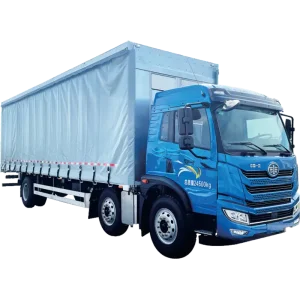




A rigorous examination of thermodynamic parameters, respiratory biology, and CE regulatory alignment governing commercial day-old chick (DOC) transit.
In modern industrial poultry production, the transition phase of day-old chicks (DOC) from the commercial hatchery to grow-out houses or rearing complexes represents the most vulnerable link in the production chain. Biological mortality, sub-clinical dehydration, and early-stage systemic stress during transport directly depress 7-day post-placement performance, feed conversion ratios (FCR), and overall livability. Consequently, selecting an engineered, CE-certified alive chick carrier manufactured by verified industrial factories is not merely a fleet acquisition decision—it is a critical biosecurity and metabolic preservation investment.
Standard refrigerated cargo boxes (reefers) are fundamentally hazardous to day-old poultry. Conventional reefer bodies rely on cyclical, high-velocity chilled airflow that generates localized freezing drafts while starving stagnant pockets of oxygen. A dedicated alive chick carrier incorporates positive-pressure lamina airflow and variable-capacity fresh air conditioning (HVAC) systems.
Procuring from factories possessing genuine CE Certification requires rigorous compliance with European Union harmonized standards. For livestock and day-old chick transportation, certification extends beyond general vehicle safety to encompass Machinery Directive 2006/42/EC, Electromagnetic Compatibility (EMC) Directive 2014/30/EU, and alignment with the stringent animal welfare mandate EC 1/2005.
| Compliance Vector | Standard / Directive | Engineering Implementation in GoldBees Carriers |
|---|---|---|
| Electrical Safety & Control | 2006/42/EC Annex I | IP67 wash-down rated harness wiring, dual fail-safe relays, explosion-proof ventilation motors, and automated generator cutover. |
| Electromagnetic Immunity | 2014/30/EU (EMC) | Shielded telemetry circuits preventing bus corruption from vehicle alternators, radar suites, or high-power mobile telecommunications. |
| Animal Welfare & Microclimate | Council Regulation (EC) 1/2005 | Independent telemetric temperature/humidity data logging with real-time cabin alarms and continuous 48-hour event memory retention. |
| Structural Biosecurity | ISO 22000 / HACCP Alignment | Seamless fiberglass-reinforced polyester (FRP) internal linings with non-porous antimicrobial gel coats resistant to corrosive peracetic acid. |
How Tier-1 integrators, grand-parent hatcheries, and international logistics contractors navigate modern biosecurity challenges and fleet life-cycle efficiency.
Global outbreaks of Highly Pathogenic Avian Influenza (HPAI) and Salmonella enterica have forced global integrators to mandate total hermetic sealing between the driver cab and cargo holds, integrated HEPA filtration modules on air intakes, and thermal disinfection compatibility.
Modern hatcheries demand end-to-end auditability. Fleet managers require continuous cloud transmission of crate-level microclimate analytics, battery status, auxiliary generator health, and GPS routes to preserve parent-stock warranties and meet compliance audits.
Procurement teams evaluate total cost of ownership (TCO) across 10-year operating lifecycles. Requirements feature lightweight aerodynamic sandwich panels, high-efficiency hybrid auxiliary drives, and pure-electric NEV integration to meet corporate decarbonization mandates.
Combining automated robotic fabrication, advanced vacuum composite lamination, and the deep operational heritage of CP M&E to deliver uncompromised commercial vehicle bodies.
High-pressure vacuum lamination constructs seamless sandwich walls using high-density polyurethane and food-grade FRP, yielding outstanding thermal insulation without thermal bridging.
Sub-millimeter CNC fiber laser cutting and multi-axis welding guarantee structural chassis longevity, tight door gasket tolerances, and vibration dampening over rugged rural routes.
Every unit undergoes simulated environmental wind-tunnel testing, rain ingress chamber trials, thermal camera leak detection, and continuous 12-hour full-load HVAC endurance cycles.
Co-engineered with CP M&E under the Charoen Pokphand umbrella, our special vehicles embody feedback from hundreds of live industrial farms across Asia and global export hubs.
Poultry integrators operate across vastly diverging climate zones. GoldBees carriers are customized for regional atmospheric conditions.
Engineered for ambient temperatures surpassing +50°C (+122°F). Features heavy-duty auxiliary water mist pre-cooling, high-capacity dual refrigeration compressors, sand-filter dynamic dust separators, and double-isolated roof panel laminates.
Engineered to combat 95%+ ambient humidity where natural evaporative cooling fails. High-performance multi-stage condensation evaporators extract moisture rapidly without supercooling, preserving chick pulmonary comfort.
Configured for deep winter operation down to -40°C (-40°F). Includes hydronic auxiliary coolant heating systems, engine-independent diesel air heaters, insulated ducting valves, and automatic intake anti-icing louvers.
Comprehensive answers regarding CE certification, payload thermodynamics, chassis matching, and export logistic parameters.
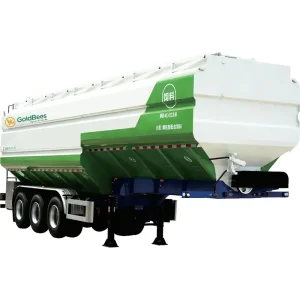
Complete your agribusiness logistics loop with our factory-engineered bulk feed carriers, high-capacity fertilizer applicators, and poultry automation equipment.



Consult with our lead mechanical and thermodynamic engineers in Cixi. We provide complete CAD design proposals, CFD airflow validations, and detailed export quotations aligned with your local chassis and transport regulations.
Connect with Engineering Team