High-integrity vehicles engineered for biosecurity-controlled poultry, swine, dairy nutrition logistics, and automated commercial livestock transport.




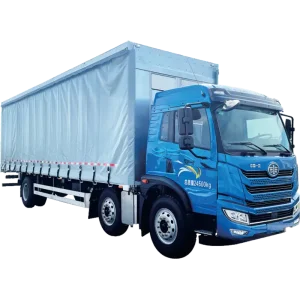

Modern animal protein operations demand unprecedented biosecurity fences, physical barrier hermetic seals, and exact mechanical handling to nullify the cross-farm transmission vectors of African Swine Fever (ASF) and Highly Pathogenic Avian Influenza (HPAI).
Eliminating pathogen vectors during high-volume feed drop-offs requires hermetically sealed discharge gates, active positive-pressure cabin filters, and high-temperature CIP (Clean-In-Place) washdown capabilities. Our CE-compliant dump trucks employ mirror-finish interior seams that leave zero residue for bacterial culturing.
Pellet durability index (PDI) determines Feed Conversion Ratios (FCR) on industrial farms. Conventional dumping or aggressive auger conveying shatters pelleted rations into powder fines, degrading feed efficiency. Our hydraulic discharge rates maintain low radial shear stress (<0.5% breakage across 40m conveying distances).
Transporting bulk feeds entails high cyclic structural fatigue. Through aerospace-grade high-strength low-alloy (HSLA) steel and high-tensile 5083-H111 aluminum configurations, our chassis shed 1,800 kg tare weight relative to market averages, delivering quantifiable diesel savings and payload maximization per kilometer.
The Food and Agriculture Organization (FAO) and WOAH identify delivery trucks as primary cross-contamination corridors during epidemics. Traditional gravity dump trucks discharge clouds of nutritional dust that carry airborne pathogens across silo boundaries. GoldBees sealed pneumatic and auger dump systems isolate the entire transit corridor inside an airtight, negative-pressure boundary from mill load cell to bin silo head.
Selecting the appropriate bulk feed discharge technology depends on silo elevation, feed moisture formulation, particle size, and unload turnaround requirements. Review the engineering architecture below.
| Discharge Architecture | Primary Kinetic Drive | Discharge Rate (T/Hr) | Max Elevation Height | Pellet Degradation | Target Feed Applications |
|---|---|---|---|---|---|
| Hydraulic Auger Conveyor | Proportional hydraulic orbital motors, spline drive shafts | 60 – 90 T/h | 12.5 meters (360° boom) | < 0.8% Degradation | Broiler crumbles, swine grower pellets, extruded dairy feeds |
| Dense-Phase Pneumatic | Screw roots blower / oil-free air compressor system | 40 – 65 T/h | 28.0 meters (vertical duct) | 1.2% - 1.8% Degradation | Multi-tier high-density tower silos, poultry complexes |
| Rear Hydraulic Dump Tipping | Multi-stage Hyva front telescopic hydraulic hoist ram | 120 – 180 T/h | Ground-level hopper pits | < 0.1% Degradation | Bulk whole grains, corn mash, raw soy meal intake at mill depots |
| Hybrid Tilt-Pneumatic Dump | Angle tilt + fluidizing aeration bottom manifold pads | 75 – 110 T/h | 22.0 meters | < 0.6% Degradation | Sticky high-molasses rations, aquafeed pellets, premixes |
Featuring high-tensile Mn65 steel auger flights welded with variable pitch geometry. As the feed advances toward the vertical discharge chute, the volume between flights expands dynamically, eliminating internal pinch points that crush pelleted feeds during unloading operations.
Pneumatic dump configurations utilize microporous polyester aeration mats along tank floor concavities. Dry compressed air micro-aerates the granular feed mass, transforming solid particle columns into fluid-like slurries that stream smoothly without bridge building or rat-holing.
Dump trucks with tall feed silos elevate the center of gravity. Xinbaiqin vehicles integrate WABCO electronic braking systems (EBS) with integrated Roll Stability Support (RSS), automatically engaging service brakes if lateral tilt sensors identify tipping risks during tight turns or elevated-bed dumping.
Xinbaiqin Special Vehicle operates as the core advanced equipment manufacturing subsidiary of CP M&E (Charoen Pokphand Group). Our 66,667m² Cixi base couples automotive-grade robotic manufacturing with rigorous quality management.
Automated 6-axis laser-tracking welding gantries execute longitudinal and circumferential tank seams under inert gas shielding. Continuous non-destructive X-ray testing (NDT) certifies complete joint penetration with zero porosity, guaranteeing fatigue survival on unpaved agricultural tracks.
Agricultural environments expose chassis to high concentrations of ammonia, animal waste, and corrosive disinfectant acids. Entire tank structures and subframes undergo an 18-stage immersion pretreatment and Cathodic Electrodeposition (KTL/E-Coat) delivering >1,200 hours of salt spray resistance.
Our modular body-mounting brackets feature ISO-standard pitch configurations. Whether your fleet standardizes on European prime movers (Mercedes-Benz Actros, Scania, Volvo) or premier Asian chassis (FAW, Sinotruk HOWO, Shacman, ISUZU), our bolt-on subframes preserve chassis warranties.
Positioned within Ningbo's world-class maritime and mechanical cluster, we secure Tier-1 components directly—Danfoss hydraulics, Parker seals, WABCO pneumatics, and Schneider electrics. We maintain deep strategic component reserves to safeguard international delivery schedules against global shocks.
Deploying transport machinery across borders demands rigorous compliance with statutory safety, electromagnetic interference, and pressurized equipment mandates. Xinbaiqin vehicles meet complete European and global benchmarks.
Augers, hydraulic hoists, and powered discharge sweeps are audited under ISO 12100 risk assessments. Includes dual-circuit E-stop systems, electro-hydraulic interlocks preventing dump movements during transport, and physical nip-point guards conforming to EN ISO 13857 clearance metrics.
Pneumatic feed discharge tanks operate under active air pressure (>0.2 MPa). Our pressure vessels are manufactured in compliance with Module H/H1 CE design appraisals, inspected by accredited notified bodies, and hydrostatically proof-tested at 1.5x maximum allowable working pressure (MAWP).
Digital touchscreens, PLC controllers, and CAN-bus telemetry nodes undergo strict radiated emissions and RF interference chamber evaluations (UNECE Regulation 10), ensuring our onboard electrical controls never disrupt tractor electronic steering, radar, or vehicle safety systems.
International fleet consignments include full European Declaration of Conformity (DoC), authorized English-language technical files, pressure vessel safety valve certificates, material test reports (EN 10204 Type 3.1), and complete ISO-compliant schematics for rapid port clearance and local road registration.
Procurement decisions by large agribusiness integrators look beyond upfront capital acquisition expenses (CapEx). Our engineering prioritizes lower running operational expenditures (OpEx), component service longevity, and residual fleet liquidation value.
| Evaluation Parameter | Generic Market Bulk Trucks | Xinbaiqin GoldBees CE Platform | Operational Fleet Impact |
|---|---|---|---|
| Chassis Tare Weight (30m³ Body) | 11,200 kg – 12,500 kg (Carbon Steel) | 9,400 kg – 9,800 kg (Optimized Al-Alloy/HSLA) | Transports 1.4 – 2.2 extra metric tons of feed per trip legally |
| Discharge Turnaround Time | 45 - 65 minutes per 20T payload | 18 - 25 minutes per 20T payload | Enables 1 additional round-trip delivery per shift per vehicle |
| Washdown & Sterilization Cycle | 60 min (high crevices, exposed wiring) | 20 min (IP69K sealed, clean-surface geometry) | 66% reduction in biosecurity gate turnaround dwell time |
| Auger Flighting Service Life | 120,000 – 160,000 tons conveyed | 350,000+ tons conveyed (Hardened Mn65) | Eliminates costly un-welding and auger replacement shutdowns |
| Depreciation & Residual Value (7 Yrs) | Estimated 20% - 25% salvage value | Estimated 45% - 52% residual market valuation | Lowers corporate amortization balance-sheet drag |
The trajectory of modern feed distribution intersects electric mobility, real-time load telemetry, and autonomous bin docking. Here is how GoldBees is pioneering this industrial transition.
We are transitioning heavy bulk fleets toward dedicated CATL lithium iron phosphate (LFP) high-capacity battery architectures. Zero tailpipe emissions during city-to-farm transit, alongside near-silent electric PTO unloading, preserve delicate livestock auditory welfare across quiet breeding farms.
Integrating mmWave radar and ultrasonic boom proximity beacons, our next-generation bulk feed vehicles execute autonomous alignment with farm receiving silo throats. Eliminates driver positioning errors and physical contact collisions that compromise farm structural installations.
Onboard near-infrared (NIR) sensors evaluate feed moisture, protein homogeneity, and grain degradation during discharge cycles. Fleet operators and nutritionist teams monitor batch feed quality in real time via cloud API integration directly into farm ERP systems.
Turnkey vehicles configured for pneumatic long-distance discharge, delicate day-old chick logistics, and ATP-certified refrigerated fresh cargo haulage.






Critical engineering criteria, material specifications, and cross-border homologation guidance for fleet procurement directors and engineering officers.
The CE Machinery Directive governs powered moving mechanisms integrated onto commercial vehicle chassis. For bulk feed dump trucks, this encompasses hydraulic PTO drives, high-angle telescopic tipping hoists, powered rotating auger booms, and pneumatic compressor stations. Compliance requires dual emergency-stop circuits, fail-safe hydraulic check valves that prevent sudden boom collapse in the event of hose rupture (ISO 4413), acoustic and optical tipping alarms, and mechanical interlocks that immobilize vehicle movement while discharge booms are elevated. Every GoldBees vehicle is supplied with a comprehensive Technical Dossier and official Declaration of Conformity.
Pellet pulverization during discharge is primarily induced by three factors: excessive radial friction inside auger troughs, high rotational shear speeds, and mechanical pinching at transitions. We counteract this through: (1) Enlarged trough clearance combined with low-RPM (180–240 RPM), high-displacement hydraulic orbital motors; (2) Variable flight pitch spacing that creates progressive volume expansion along the feed path; and (3) Polyurethane interior trough liners that cushion pellet impact. In pneumatic dump models, dense-phase low-velocity conveying keeps air speeds below 18 m/s, avoiding particle shattering against silo walls.
Yes. While Xinbaiqin supplies turnkey CBU (Completely Built-Up) vehicles utilizing premium Chinese prime movers (FAW, Sinotruk HOWO, Shacman, Dongfeng) and European chassis (Mercedes-Benz Actros, Scania, Volvo, MAN), we regularly engineer and ship SKD/CKD upper body kits for regional mounting. Our engineering group delivers comprehensive subframe mounting CAD files, axle weight distribution calculations, and auxiliary PTO hydraulic schematics compatible with European, American (SAE), and Japanese chassis interfaces.
Industrial farm biosecurity gates use aggressive thermal wash cycles (85°C high-pressure water) coupled with broad-spectrum chemical disinfectants (glutaraldehyde, peracetic acid, caustic quaternary ammonium compounds). Standard commercial automotive harnesses experience rapid jacket embrittlement and pin corrosion in these conditions. Xinbaiqin vehicles feature IP69K sealed electrical harnesses, gold-plated Deutsch DT connectors, marine-grade epoxy coatings on hydraulic solenoid valves, and passivated aluminum or stainless-steel hydraulic hard lines to prevent field degradation.
Standard production schedules for engineered bulk feed trucks span 30 to 45 business days from final technical sign-off and LC verification. Semi-trailers and dump tankers destined for Europe, the Americas, the Middle East, or Southeast Asia can be routed via Roll-on/Roll-off (Ro-Ro) vessels from Shanghai or Ningbo ports, or flat-rack containerization for knock-down configurations. We manage complete export documentation, export customs clearance, and global ocean freight insurance to ensure seamless port handling worldwide.
