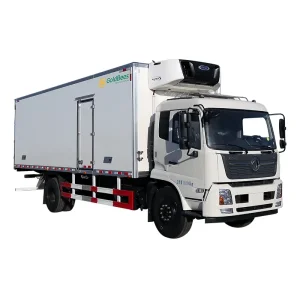
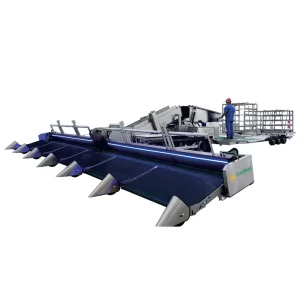
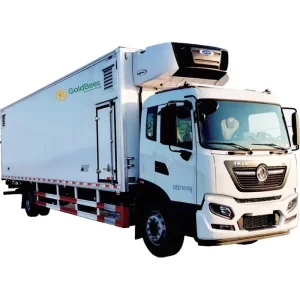
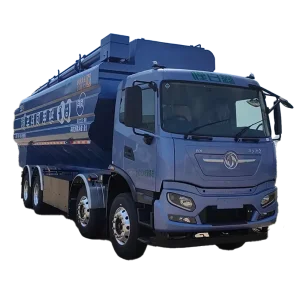
Advanced Biosecurity Logistics, Electric/Hydraulic Discharge Architectures, and Automated Feed Supply Chains Engineered for Modern Mega-Integrators.
Certified equipment deployed in intensive farming, turnkey feed milling, and biosecure cold supply networks worldwide.
Addressing structural shifts across industrial poultry, swine, and dairy clusters with purpose-built freight solutions.
Global livestock operations demand strict containment of Porcine Epidemic Diarrhea Virus (PEDv) and African Swine Fever (ASF). Certified bulk feed trucks feature fully sealed, high-pressure-washable multi-tank systems designed with smooth, hygienic interior walls to eliminate feed residue and cross-contamination risks across consecutive farm deliveries.
Pelleted ration nutritional value depends on structural integrity. Auger conveyance systems with variable-pitch flights and pneumatic discharge configurations with low-velocity, high-density phase displacement keep mechanical shear forces low, ensuring high Feed Conversion Ratios (FCR) at customer discharge towers.
Strict axle-load regulations across European and North American road networks require structural lightweighting. By pairing aircraft-grade 5083/6061 aluminium alloys with high-tensile Domex steel subframes, GoldBees platforms reduce tare weight, maximising legal payload and lowering freight cost per ton-kilometer.
Built under ISO 9001 and European CE Directives (Machinery 2006/42/EC and Pressure Equipment 2014/68/EU).
Dual-power drive units allow operation via tractor Power Take-Off (PTO) or external 380V/440V electrical connection. This reduces diesel consumption, minimizes idling wear, and avoids engine emissions around clean farm holding silos.
Our pneumatic tankers use rotary screw compressors and multi-manifold fluidizing aeration plates. Tested to 0.2 MPa working pressures, they handle delicate powdered premixes, crumb, and textured dairy feed across heights exceeding 28 meters.
Integrated load cells offer real-time telemetry on axle load distribution and per-compartment delivery reconciliation. Drivers use radio remote controls to operate auger rotation, elevation, and slewing while maintaining clear lines of sight.
Continuous engineering milestones driving agricultural freight decarbonization, robotics, and end-to-end trace verification.
Deploying heavy-duty 8x4 and semi-trailer platforms built around CATL LFP battery architectures. These systems handle round-trip deliveries within 200 km radii, lowering operational energy costs and eliminating tailpipe particulate matter at clean farm facilities.
Developing internal robotic misting conduits using ultrasonic atomization nozzles. Automated 360-degree chemical vaporization neutralizes viral vectors inside tanks and discharge augers between batches, producing cryptographically logged biosecurity certifications.
Combining lidar sensors, ultra-wideband (UWB) beacons, and computer vision to automate truck alignment with intake pipes. Automated couplers create closed pneumatic transfers with zero manual intervention or exposure to outside airborne pathogens.
Engineered to meet national homologation standards, transport weight mandates, and livestock health protocols worldwide.
Full conformance with 2006/42/EC, EN ISO 12100:2010 risk assessment protocols, emergency auger shut-offs, torque limiters, and high-voltage insulation monitoring across all electro-hydraulic systems.
Mounting subframes are engineered to interface with major international commercial chassis cabs: Scania, Mercedes-Benz Actros, Volvo FH, MAN, DAF, Isuzu, FAW, and Dongfeng commercial platforms.
Pneumatic tank bodies conform to ADR transport regulations, ASME Section VIII Boiler and Pressure Vessel codes, and PED 2014/68/EU, including hydrostatic verification and radiography on all load-bearing weld seams.
Supported by CP M&E supply networks, our engineering teams offer factory-direct commissioning, rapid-dispatch hydraulic replacement valves, diagnostic calibration, and complete export documentation support.
Technical and regulatory answers for agricultural fleet directors, integrators, and logistics managers.
Auger conveyor discharge systems use mechanical screw flights rotated by hydraulic motors to move feed out of the tanks, offering high discharge rates (up to 1.5–2.0 tons per minute) with very low energy consumption. They are best suited for pellets and crumbles where fines generation must be kept to a minimum, and farm intake silos stand under 12 meters tall. Pneumatic discharge systems use high-volume, low-pressure compressed air to convey feed through flexible or rigid pipelines. This makes them ideal for tall storage towers (up to 30 meters), complex farm pipe layouts, and powdered premixes where mechanical screws can cause friction damage or material compaction.
CE certification confirms compliance with EU directives including the Machinery Directive 2006/42/EC, Low Voltage Directive 2014/35/EU, and Pressure Equipment Directive 2014/68/EU (for pneumatic units). In daily operations, this ensures the vehicle has dual-circuit safety interlocks, emergency stop controls at all operating stations, thermal protection on electric/hydraulic motors, rupture valves on hydraulic lifting cylinders to prevent auger collapses, and pressure relief valves that guard against over-pressurization inside the tanks.
Yes. Our bulk feed tankers feature 3 to 8 independent compartments separated by reinforced steel or aluminium bulkheads. Each bin has its own bottom gate control, so medications, premixes, or species-specific rations (such as broiler starter feeds versus layer finisher feeds) can be carried on the same route without mixing. Bottom slide gates and trough augers are built with zero-dead-zone geometry to prevent residual feed carryover between drops.
The GoldBees NEV bulk feed truck uses dedicated liquid-cooled Lithium Iron Phosphate (LFP) battery systems paired with high-efficiency permanent magnet synchronous motors (PMSM). By decoupling the discharge system's electrical power from the drive traction motor, the body can unload at farm silos without drawing propulsion power. Dual-gun DC fast charging supports high utilization, taking batteries from 20% to 80% charge in about 45 minutes during routine feed mill loading intervals.
Biosecurity wash bays expose truck exteriors and undercarriages to harsh disinfectants, glutaraldehyde, quaternary ammonium sprays, and high-pressure steam. GoldBees tanks undergo thorough shot blasting (Sa 2.5 standard), followed by multi-stage electrophoretic coating (e-coat) and marine-grade polyurethane topcoats. Fasteners, hydraulic pipe fittings, and electrical junction boxes are rated to IP67/IP69K, preventing moisture ingress and corrosion even with daily high-temperature washdowns.
Explore our complete product catalog for day-old poultry logistics, modern livestock carriers, and automated farm equipment.