Engineered for commercial poultry integrators requiring strict microclimate regulation, continuous pathogen isolation, and compliance with the highest international animal welfare standards.

Heavy payload cold storage transport with multi-temperature zoning for agricultural perishables.
View Details & Spec
Comprehensive mechanical and electrical systems for modern meat industrialization and milling.
View Details & Spec
Smart automation engineered to maximize bio-handling rates and bird physiological welfare.
View Details & Spec
Fully European CE marked automation systems built to European safety & EMC directives.
View Details & Spec
Heavy-duty aerodynamic refrigerated box body with polyurethane sandwich insulation.
View Details & Spec
Heavy equipment array engineered for compound feed manufacturing and automated housing.
View Details & Spec
Multilevel biosecure carrier fitted with automatic hydraulic tailboards and microclimate control.
View Details & Spec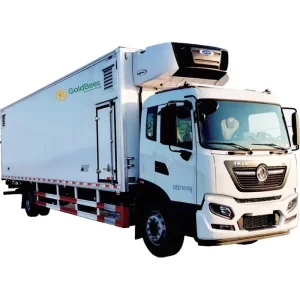
Flagship positive-pressure day-old chick transporter with complete IoT cloud telemetry.
View Details & SpecModern commercial hatcheries operate on razor-thin survival margins where neonatal avian physiology intersects directly with high-performance automotive climate engineering.
The global day-old chick transport sector has transitioned from rudimentary passive-ventilation vehicles to fully autonomous, climate-controlled environmental chambers on wheels. In industrial poultry integration—spanning parent stock breeders, commercial layers, and fast-growing broilers—the transportation stage represents the single most volatile vulnerability in the entire supply chain. Newly hatched chicks possess immature thermoregulatory mechanisms, making them exceptionally susceptible to hyperthermia, dehydration, hypoglycemia, and cold stress during transit between commercial hatcheries and grow-out facilities.
The metabolic heat release of a neonatal chick ranges from 0.12 to 0.15 Watts. When an industrial carrier loads between 60,000 to 180,000 chicks inside a single enclosed semi-trailer, the cargo mass collectively produces upwards of 18 to 27 kilowatts of continuous sensible heat, coupled with immense latent moisture expiration and carbon dioxide generation. Without precision mechanical conditioning, micro-pockets of toxic atmosphere and thermal runaway develop in under 12 minutes, resulting in irreversible flock mortality, stunted growth curves, and compromised seven-day livability metrics on the recipient farm.
A chick's rectal body temperature must remain within 40.0°C to 40.8°C (104°F–105.4°F). Environmental air temperatures inside shipping crates must be dynamically maintained between 31.5°C and 33.0°C with 55% to 65% relative humidity. Any variance exceeding ±1.5°C triggers acute stress responses, depleting the residual yolk sac prematurely and reducing 42-day broiler processing weights by up to 8.4%.
Navigating the exhaustive statutory directives and animal welfare frameworks that distinguish an authentic CE-certified manufacturer from standard commercial builders.
Governs integrated auxiliary diesel generating sets, automated hydraulic rear lifting platforms, active duct dampening actuators, and rotary blower assemblies. Requires fail-safe interlocks, emergency stop loops, and structural burst-pressure validation.
Safety Directive HarmonizedGuarantees that variable-frequency fans, PID temperature microprocessors, high-power DC brushless motors, and cellular telemetry antennas function flawlessly without radiating electromagnetic interference to automotive CAN-bus systems.
EN 61000-6-2 & EN 61000-6-4Enforces strict livestock welfare in transit. Mandates positive forced-air ventilation exceeding 45 m³/h per 1,000 birds, audible high/low cabin temperature warnings, independent multi-sensor dataloggers, and backup power failovers.
DG SANTE Verified Protocols| Evaluation Parameter | Standard Commercial Truck Body | CE Certified GoldBees Carrier (Xinbaiqin) | Compliance Benefit |
|---|---|---|---|
| Ventilation Redundancy | Single-circuit belt-driven fans | Dual independent electrical & diesel backup systems with automatic failover | Zero-Loss Fail-Safe |
| CO2 & Airflow Quality | Passive exterior louvers, high dead-zones | Pressurized laminar airflow with continuous fresh air renewal (>65 air exchanges/hr) | <1,000 ppm CO2 Guaranteed |
| Electromagnetic Suppression | Non-shielded harness, radio flicker | Automotive-grade shielded harnessing, IP68 sealed waterproof junction boxes | CE EMC Class IV Certified |
| Biosecurity Cleanability | Exposed fasteners, porous rivet joints | Mirror-finish seamless FRP / Food-grade stainless 304 interior with radial cove joints | CIP High-Pressure Washable |
How vertical integration, end-to-end component engineering, and agribusiness operating experience yield unmatched cost-to-performance ratios for global fleets.
Xinbaiqin Special Vehicle Co., Ltd. operates an integrated 66,667-square-meter modern manufacturing headquarters in Cixi, Zhejiang Province. Unlike regional body-assemblers in Europe or North America that procure chassis, refrigeration units, fans, and sandwich panels from disparate third-party intermediaries, Xinbaiqin represents the unified manufacturing division associated with CP M&E—the industrial electromechanical power of Charoen Pokphand Group. This structural integration eliminates compounding markups, compresses production lead times from 180 days down to 45–60 days, and enforces closed-loop manufacturing discipline.
Automated fiber laser cutting beds, 1,000-ton hydraulic press benders, and continuous robotic seam welding ensure dimensional tolerances within 0.5 millimeters across all structural chassis sub-frames and body pillars.
Precision Structural IntegrityBodies are produced using continuous high-pressure polyurethane foaming presses. The resulting composite panels achieve thermal conductivity rates under 0.024 W/(m·K) without thermal bridges or structural delamination over 10-year lifecycles.
Zero Thermal-Bridge BuildEvery GoldBees vehicle design is battle-tested across CP Group’s global broiler and breeder operations. Over 15 years of live operating telemetry continually refines airflow geometry, sanitation drainage, and vibration damping systems.
Integrator-Tested DesignBreaking down the fluid mechanics, thermal balancing algorithms, and multi-point telemetry arrays that maintain neonatal avian stability.
The core vulnerability of conventional chick transit lies in the formation of heat islands and stagnant air pockets. The GoldBees CE-certified architecture eliminates these hazards through a patented dual-duct positive-pressure plenum system. Conditioned air is driven from the roof-mounted air handler through perforated distribution chambers down between chick crate columns, maintaining laminar flow velocity across every basket before exiting through calibrated floor-level exhaust ports.
Utilizes dual Copeland or Bitzer scroll compressors linked to modulating hot-gas bypass systems and ceramic PTC heating banks. Delivers instantaneous heating or cooling transitions to neutralize external ambient shocks ranging from -30°C up to +48°C.
Equipped with up to 32 digital PT100 temperature probes, non-dispersive infrared (NDIR) CO2 transducers, and digital differential pressure transmitters. Data packets are streamed in real time via 4G/5G cellular telematics to the driver and hatchery HQ.
In the event of prime mover engine shutoff or PTO mechanical failure, a heavy-duty Kohler or Perkins auxiliary diesel genset initiates automatically within 8.5 seconds, guaranteeing uninterruptible fan and cooling operation.
Customizing thermal envelopes, filtration arrays, and mechanical suspensions to conquer diverse geographical operational challenges.
Extreme Heat & Sandstorm Defense: Engineered with oversized tropicalized condensers, cyclone sand pre-separators, and secondary HEPA filters capable of maintaining interior 32°C conditions during ambient +50°C summer heatwaves.
Tested: UAE, Saudi Arabia, EgyptSaturated Humidity & Monsoons: High-humidity environments impair chick evaporative cooling. Equipped with dedicated reheat dehumidification loops to strip moisture without chilling crate interiors.
Tested: Thailand, Indonesia, VietnamSub-Zero Arctic Transits: Integrated high-output auxiliary coolant heaters (Webasto/Eberspächer) and floor-embedded heat dispersion channels prevent perimeter basket frost shock down to -35°C ambient road temperatures.
Tested: Kazakhstan, Poland, RomaniaHigh Altitude & Rugged Terrain: Low barometric pressure reduces air mass flow. GoldBees trucks dynamically calibrate ECM fan RPMs and feature Wabco multi-chamber pneumatic air suspensions to insulate birds from mechanical shock.
Tested: Brazil, Colombia, MexicoKey financial metrics and technical evaluation frameworks utilized by C-level corporate supply chain officers and commercial fleet directors.
When enterprise poultry integrators issue Requests for Proposal (RFPs) for large-scale chick carrying fleets, procurement evaluation matrices extend far beyond initial capital expenditure (CapEx). A single day-old chick carrying truck transports tens of millions of dollars worth of biological inventory throughout its operational lifecycle. A difference of only 0.25% in average transit mortality or a 1.5% decrease in cull rates over five years completely dwarfs the purchase price difference between standard truck bodies and high-performance CE-certified GoldBees vehicles.
| Evaluation Vector | Technical RFP Evaluation Benchmark | GoldBees Engineering Standard | Five-Year Financial Impact |
|---|---|---|---|
| Direct Transit Mortality | Industry allowable SLA: < 0.20% | Field proven SLA: < 0.03% to 0.05% | $140,000+ saved per 100k-capacity vehicle/year |
| 7-Day Farm Livability | Standard industry threshold: 98.2% | GoldBees flock performance: 99.1% - 99.4% | Significant feed conversion ratio (FCR) gains |
| Auxiliary Fuel Efficiency | Continuous full-load generator operation | Inverter-driven smart load matching & PTO hybridization | 22% reduction in auxiliary diesel consumption |
| Body Structural Longevity | Corrosive panel degradation at 4–5 years | Extruded aluminum framing & seamless FRP composite | 10+ years operational lifespan with high salvage value |
Ensure that prospective suppliers provide: 1) European Notified Body CE Machinery Directive compliance certificates, 2) Factory-verified acoustic and vibration dampening test records, 3) Real-time automated data logging validation with cloud telemetry APIs, and 4) Complete availability of global modular replacement parts for air handlers, sensors, and electrical controllers.
Preventing cross-facility contamination of Avian Influenza (HPAI), Newcastle Disease, and Salmonella through advanced sanitary engineering.
Logistics vehicles represent the single highest vector risk for introducing viral and bacterial pathogens into biosecure breeding facilities. Conventional trucks with wooden floor cores, open mechanical crevices, and water-absorbing insulation materials harbor microscopic pathogens despite surface spraying. GoldBees vehicles are engineered from the chassis up to function as an impenetrable biological defense barrier.
Inner panels feature continuous, non-porous gel-coated fiberglass reinforced polymers (FRP) with rounded internal corner radii (coving). This completely eliminates structural seams where down, dander, and biological fluids can accumulate.
Equipped with high-flow floor drains linked to automated biological isolation valves. Vehicles withstand direct high-pressure hot water washing (>80 bar, 70°C) and aggressive chemical disinfection agents without corrosion.
The interior cargo chamber maintains continuous positive static pressure (+25 to +40 Pa relative to exterior ambient pressure). Even while traveling through contaminated environments, external untreated air is physically barred from entering.
Direct technical answers addressing engineering architecture, chassis integration, export shipping logistics, and lifecycle maintenance.
GoldBees superstructures are engineered on modular sub-chassis frames compatible with all major commercial commercial truck chassis builders, including Mercedes-Benz (Actros/Arocs), Scania, Volvo, MAN, DAF, Isuzu, Hino, and leading Chinese prime movers such as FAW Jiefang, Sinotruk HOWO, Foton Auman, and Dongfeng. Chassis interfaces comply strictly with European Body Builder Directives, ensuring proper center of gravity distribution, axle weight limits, and seamless CAN-bus telematics communication.
When the truck becomes stationary, natural ram-air ventilation drops to zero, and chicks' CO2 production can quickly exceed lethal limits (above 3,000 ppm). The GoldBees automated microclimate controller uses dual optical NDIR sensors to continuously monitor CO2 concentrations. If levels exceed 1,200 ppm, modulating fresh air dampers automatically open, and high-static-pressure variable fans ramp up to inject 100% pre-conditioned fresh air, exhausting stale CO2-laden air through calibrated one-way pressure louvers regardless of vehicle speed.
Fail-safe redundancy is central to our CE-certified build. Each vehicle features a three-tier power architecture: Primary power is supplied via chassis PTO or main engine-mounted high-output alternators. If primary power drops, an integrated onboard silent diesel auxiliary power unit (APU) with an independent fuel supply starts automatically within 10 seconds. Furthermore, high-capacity lithium iron phosphate (LiFePO4) emergency battery banks provide 45 minutes of essential ventilation fan operation during generator crank cycles.
Capacity is determined by crate geometry, basket ventilation space, and regional road weight regulations. Standard rigid 4x2 truck configurations carry approximately 40,000 to 65,000 chicks. Heavy rigid 6x2 and 8x4 platforms carry between 75,000 to 110,000 chicks. Our flagship 13.6-meter tri-axle semi-trailer transports between 140,000 and 180,000 day-old chicks per haul while maintaining full internal environmental homogeneity and ergonomic loading paths for trolley handling.
For complete built-up vehicles (CBU), units are transported via specialized Roll-on/Roll-off (Ro-Ro) vessels or flat-rack containers with anti-corrosion protective marine wax coatings. For international clients with local body-mounting facilities or strict import tariff structures, Xinbaiqin delivers complete knocked-down (CKD) or semi-knocked-down (SKD) body kits with precision interlocking polyurethane wall sections, pre-assembled modular HVAC packs, and plug-and-play wiring harnesses along with full technical assembly documentation.
Explore our full line of bulk feed distribution, livestock mobility, and refrigerated logistics vehicles designed to optimize biosecurity and operational efficiency.

High-volume electric/hydraulic bulk feed delivery trailer engineered to eliminate pellet breakage.
View Details & Spec
Fully isolated environmental chamber truck custom-configured for sensitive avian genetics.
View Details & Spec
Zero-emission battery electric commercial transport for sustainability-oriented agricultural hubs.
View Details & Spec
High-pressure pneumatic discharge carrier for tall silos and contaminant-free loading.
View Details & Spec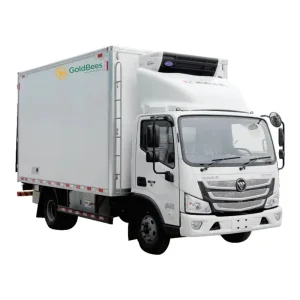
Dual-purpose mobile unit combining on-field automated produce grading with cold transport.
View Details & Spec
Advanced biosecurity features protecting breeding swine herds against African Swine Fever.
View Details & Spec
Intelligent multi-compartment refrigerated carrier for dairy, eggs, and processed meat.
View Details & Spec
Patented non-slip floor deck structure ensuring animal safety and zero limb injury during transit.
View Details & Spec