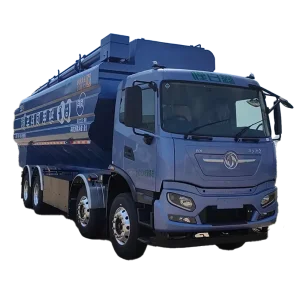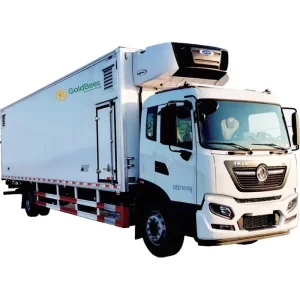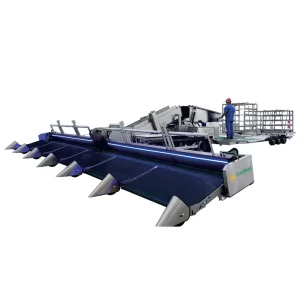
Explore our certified precision transport systems and feed logistics equipment built to rigorous CE quality requirements.





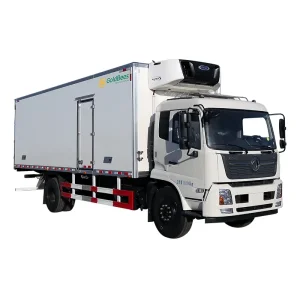

Transitioning from rudimentary open-crate logistics to hermetically engineered, data-driven mobile nurseries.
Modern Day-Old Chick (DOC) transport demands laminar air distribution ensuring every chick maintains a body temperature between 39.5°C and 40.5°C, avoiding metabolic acidosis or dehydration across unevenly stacked crates.
CE marked vehicles require comprehensive bio-isolation, integrated positive-pressure air filtration, and sealed chassis layouts designed to survive chemical thermal-fogging and heavy high-pressure sterilization routines.
Real-time CO2, humidity, and thermal logging sensors connect directly via CAN-bus to cloud telematics dashboards, triggering automatic fan adjustments and sending real-time warnings to drivers before threshold limits are breached.
Enterprise poultry integrators prioritize Total Cost of Ownership (TCO), uncompromised survivability rates, and cross-border regulatory compliance.
In industrial-scale poultry farming, chick transport loss directly influences the Feed Conversion Ratio (FCR) and 7-day initial mortality. Leading global breeding complexes (Cobb, Ross, Aviagen genetics) contractually require suppliers to provide transport vehicles equipped with independent auxiliary power units (APU), redundant backup cooling circuits, and positive pressure ducting to mitigate heat-pocket suffocation risks during long hauls.
Procuring fleets for international operational hubs spans the EU Animal Welfare Transport Regulation (EC 1/2005), North American USDA biosecurity specifications, and GCC extreme temperature operational criteria. Partnering with a supplier providing certified CE machinery standards, electrical safety declarations, and modular chassis compatibility (Volvo, Scania, Mercedes-Benz, MAN, Isuzu, FAW, Foton) allows multinational operators to standardize their vehicle fleet architecture seamlessly.
Harnessing automated fabrication campuses, digital twins, and vertically integrated industrial clusters to deliver cost advantages and engineering precision.
Our 66,667 m² production campus employs fiber laser cutting systems and multi-axis automated robotic welding gantries. This guarantees high-strength chassis structural integrity, eliminates micro-fissures, and ensures precision sealing against bio-contaminant ingress.
Utilizing high-density, seamless vacuum-bonded FRP (Fiberglass Reinforced Polymer) sandwich panels, the vehicle body achieves exceptional thermal insulation values (K-value ≤ 0.35 W/m²K), dramatically minimizing HVAC power consumption during tropical and polar transit.
Backed by Charoen Pokphand Group's industrial electromechanical infrastructure, we deploy fully integrated components—from specialized IP67 waterproof wiring harnesses to low-maintenance drivelines—delivering rapid lead times and dependable parts availability globally.
Real-world deployments demonstrate stable performance across diverse road topologies and climate conditions.
Configured with heavy-duty dual-evaporator HVAC systems and sand-filtering inlet air ducts capable of maintaining +28°C core cabin conditions even during sustained +48°C ambient exterior temperatures across desert and humid tropical routes.
Equipped with auxiliary hydronic diesel heaters, insulated floor sub-chambers, and heat recovery circulation loops. Guarantees newborn pullets and broilers avoid hypothermia and frostbite during -30°C long-distance winter hauls.
Reinforced high-tensile steel sub-frames, heavy-duty pneumatic air suspension systems, and custom approach/departure angle profiles engineered to protect structural integrity during transit over unpaved secondary rural farm roads.
Technical guidance for fleet directors, biosecurity compliance officers, and procurement managers.
Complete your supply chain with our specialized broiler carriers, pig transports, and turnkey farm systems.