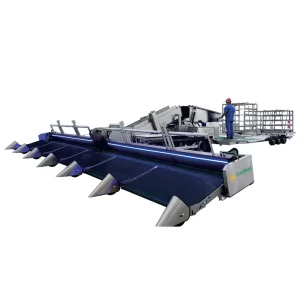
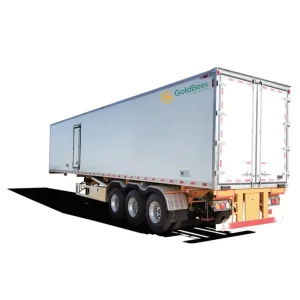
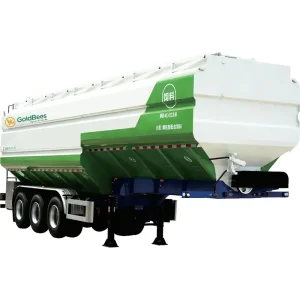
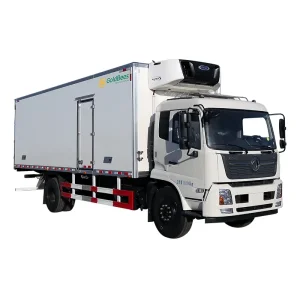
Industrial portfolio of specialized transport vehicles engineered to fulfill strict international sanitary standards, payload optimization, and uninterrupted thermal security.
Modern mega-scale slaughterhouses, deep-processing centers, and centralized cold hub facilities enforce strict criteria on transport infrastructure to eliminate microbial degradation and biological weight loss.
Global food logistics requires certified compliance with CE Directives (Machinery 2006/42/EC, EMC 2014/30/EU) alongside ATP Class FRC certification. Procurement demands guarantee that insulated walls deliver heat transfer coefficients below K=0.4 W/m²·K under severe 40°C ambient gradients.
Uncontrolled thermal fluctuations directly drive liquid weeping and muscle mass dissipation. High-volume meat processors operate on thin net margins; retaining drip loss below 0.3% across transit corridors prevents hundreds of thousands of dollars in commercial weight shrinkage annually.
Biosecure transport cabins must withstand aggressive chemical washdowns using hypochlorite sprays, quaternary ammonium compounds, and high-pressure steam up to 100 bar. Flooring systems require seamless, seamless welded aluminum or fiber-reinforced polymer pans with automated scupper drainage.
Bridging large-scale slaughtering output with retail distribution via automated cooling thermodynamics, composite paneling, and intelligent payload structural mechanics.
Insulation panels are manufactured using automated wet-on-wet high-pressure vacuum injection of 45kg/m³ high-density polyurethane (PU) or extruded polystyrene (XPS). Outer skins incorporate anti-bacterial gel-coated glass-fiber reinforced plastic (FRP) that prevents structural delamination over long duty cycles.
Specialized roof trusses handle dynamic pendulum forces. Our transporters feature integrated anodized aluminum alloy or stainless steel (SUS304) bi-rail/tubular overhead tracking systems rated for static and dynamic stress loads surpassing 1,500 kg per linear running meter with fall-safe pneumatic catchers.
To eliminate localized dead zones and hot pockets around dense carcass blocks, ceiling-integrated aerodynamic supply channels route pressurized airflow directly down cargo walls to create a 360-degree protective cold envelope around hanging bovine or porcine halves.
Dual-redundant PT100 temperature sensors and door-contact nodes interface via CAN-bus with 5G transmission hubs. Cold chain data loggers stream continuous telemetry to fleet dashboards, triggering instant alerts if cabinet temperatures deviate by ±0.8°C from pre-cooling targets.
Comprehensive technical breakdown illustrating the structural parameters of GoldBees vehicle designs manufactured for fresh carcass and packed meat distribution.
| Performance Parameter | 3-Axle Heavy Refrigerated Semi-Trailer | 18-Tonne Medium Fresh Meat Transporter | Compliance Test Benchmark |
|---|---|---|---|
| Target Internal Temperature | -1°C to +2°C (Chilled) / -20°C (Deep Frozen) | -2°C to +4°C (Multi-Stop Distribution) | EN 12830 / ATP Class FRC |
| Overall Heat Transfer (K-Value) | ≤ 0.32 W/(m²·K) | ≤ 0.36 W/(m²·K) | ATP Type Testing Rules |
| Overhead Meat Rail Load Rating | 4 - 5 Longitudinal Rails (Up to 22,000 kg) | 3 - 4 Rails (Up to 9,500 kg) | Dynamic Roll-Over FEA Tested |
| Insulation Composition | High-Density Rigid PU Foam (Zero ODP/GWP) | High-Density Polyurethane Sandwich | ISO 844 / DIN 53420 |
| Refrigeration Unit Interface | Independent Diesel-Powered (Carrier / Thermo King) | Direct Engine-Drive / Underslung Electric Hybrid | CE Machinery Directive / ECE R10 |
| Flooring Profile & Anti-Slip | Seamless Welded 4.0mm Aluminum Checked Pan | 3.0mm Heavy-Duty Corrugated Al-Alloy | HACCP Direct Food Contact |
Strategic engineering shifts driving operational decarbonization, structural tare-weight minimization, and next-generation environmental compliance over the next decade.
Shift towards 800V silicon carbide (SiC) high-voltage battery-electric vehicle architectures eliminating diesel reliance during idling and urban delivery runs, slashing direct emissions to zero.
Adoption of subcritical and transcritical CO² (R744) refrigeration units with Global Warming Potential (GWP) equal to 1, future-proofing fleets against expanding EU F-gas phase-outs.
Incorporation of silica aerogel thin-core sheets within composite panels, cutting wall thickness by 25mm while sustaining identical thermal resistance and boosting internal pallet volume.
Predictive cooling algorithms that assess real-time weather forecasts, route elevations, and frequent door openings to proactively super-cool payloads before highway bottlenecks.
Engineered flexibility to comply with divergent commercial gross vehicle weight limits, legal dimensions, and hygiene inspection regimes worldwide.
Constructed within the strict 2.60m overall width boundary for refrigerated bodies (Directive 96/53/EC). Seamless integration of CE certified tail lifts, anti-underrun protective bars (ECE R58.03), and electronic braking systems (EBS) with integrated roll-stability support.
Compliant with Federal Motor Vehicle Safety Standards (FMVSS) and USDA Food Safety and Inspection Service guidelines for direct contact meat containment surfaces. Heavy-duty suspension designs accommodate severe 53-foot kingpin and tandem slide configurations.
Engineered for Latin America, Southeast Asia, and the Middle East where ambient conditions exceed 45°C with 90% RH. Optimized condensing coils, extra-thick 120mm front-bulkheads, and high-output generators safeguard payload safety during border clearance hold-ups.
Authoritative clarity for fleet managers, compliance auditors, and logistics engineers specifying high-performance meat cold-chain equipment.
Explore the full portfolio of animal husbandry logistics, feed transport systems, and automated harvest technologies engineered for global supply chains.