Engineered for zero-compromise biosecurity, high thermal stability, and maximum legal payload across transatlantic and trans-Eurasian transport corridors.
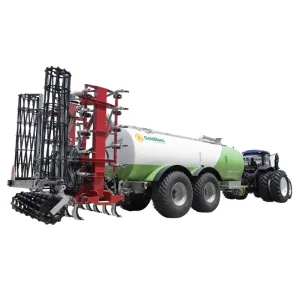
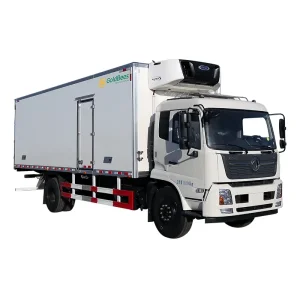
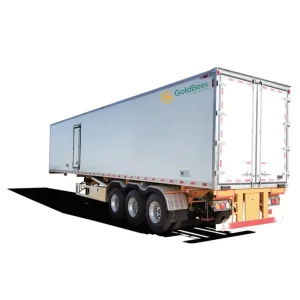
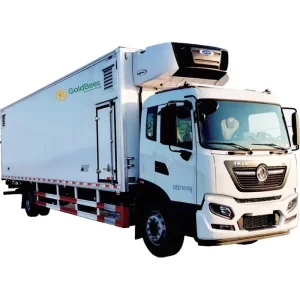
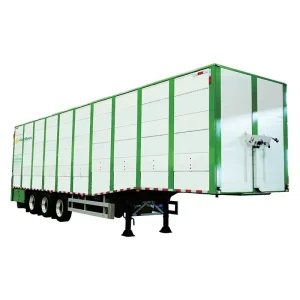
Modern intensive poultry operations can no longer depend on traditional open-curtain transport. Global regulatory mandates, stringent pathogen containment, and high animal welfare demands have accelerated the shift toward fully sealed, positive/negative pressure intelligent transport superstructures.
With the global prevalence of Highly Pathogenic Avian Influenza (HPAI) and infectious respiratory pathogens, enclosed biosecure carriers featuring MERV-13 and optional HEPA H14 filtration have become mandatory. Preventing cross-contamination between contract farms and hatcheries protects multimillion-dollar genetic investments and parent stock integrity.
Autonomous sensor grids across all cargo tiers monitor temperature, relative humidity, carbon dioxide (CO2), ammonia (NH3), and static air pressure differentials. CAN-bus integrated gateways deliver live telemetry directly to central fleet management platforms, triggering dynamic HVAC adjustments before birds enter thermal stress.
In live broiler haulage, transit weight loss (shrink) historically strips 1.5% to 3.5% of live weight due to stress, panting, and dehydration. Modern climate-regulated bodies suppress physiological distress, yielding documented live shrink reductions of up to 1.2%, directly recouping vehicle acquisition costs within 18 months of intensive commercial deployment.
Technical specifications required by Tier-1 poultry integrators across Europe, the Americas, and the Asia-Pacific when evaluating large-capacity transport manufacturing bids.
For delivery into European and high-compliance jurisdictions, superstructures must conform fully to Council Regulation (EC) No 1/2005 regarding animal protection during transport. This demands automated continuous data-logging for up to 30 days, emergency ventilation fail-safes operating independently of prime-mover ignition, and audible driver alarms.
Tender criteria enforce continuous resistance to extreme caustic detergents, peracetic acid, quaternary ammonium compounds, and high-pressure steam jet cleaning (up to 120 bar at 85°C). Sealed interior walls must possess zero porous seams, utilizing high-grade 304/316L stainless steel fasteners and marine-grade anti-corrosive aluminum alloys.
International fleet managers require modular superstructures capable of subframe integration onto diverse prime-mover chassis platforms: Scania, Volvo, Mercedes-Benz Actros, MAN, Sinotruk HOWO, FAW, and Shacman, with hydraulic and electrical auxiliary power units (PTO or autonomous diesel generators).
| Performance / Engineering Metric | Conventional Open/Slatted Truck | Standard Commercial Reefer | GoldBees CE Climate Superstructure |
|---|---|---|---|
| Thermal Stability Envelope | Uncontrolled (Amb. ± 15°C) | Stagnant air pockets (±4.5°C variation) | Micro-zone controlled (±0.5°C uniform) |
| Airflow Velocity & Distribution | Turbulent, draft-induced chill | Top-down ceiling blow (chokes lower racks) | Laminar negative/positive pressure wall-jet |
| Pathogen Containment Barrier | Zero filtration (open intake) | Coarse screen only | Multi-tier MERV-13 / Optional HEPA UV-C |
| Auxiliary Safety System | None | Engine-dependent reefer | Independent auxiliary gen-set + 4-hr battery backup |
| Day-Old Chick Dead On Arrival (DOA) | 0.45% – 1.80% | 0.25% – 0.60% (asphyxiation risk) | < 0.05% guaranteed across all tiers |
Operating within the CP M&E industrial matrix in Cixi, Zhejiang, Xinbaiqin Special Vehicle leverages a 66,667 m² smart manufacturing facility engineered for continuous precision, scalability, and lifecycle durability.
Superstructure framing uses automated 12 kW fiber-laser cutting stations and 3D digital robotic welding arms. Tolerances are held within ±0.3 mm across 13.6-meter trailer frames, eliminating structural twisting, air leaks, and micro-vibrations that cause live animal stress during long transit.
Chassis subframes and metallic elements undergo multi-stage immersion cathodic electrodeposition coating (KTL / E-coat) followed by robotic thermal-cured fluorocarbon finishes. This achieves 1,500+ hours of continuous ASTM B117 salt spray resistance, standing up to ammonia fumes and intensive disinfectant baths.
As the specialized manufacturing division backed by Charoen Pokphand Group (CP M&E), our vehicle designs are derived from direct operational feedback across thousands of internal commercial farms, feed mills, and hatcheries, giving engineering validity no independent coachbuilder can match.
Transporting 100,000 to 140,000 day-old chicks or 7,000 adult broilers in a hermetically sealed environment requires active heat dissipation. High biological heat loads (10 to 12 watts per kg) require advanced dynamic fluid mechanics.
Conditioned air travels through an insulated false ceiling plenum and enters cargo bays via micro-perforated dynamic nozzles, generating a uniform downward laminar wash that prevents stagnant heat pockets across all container layers.
Intake and exhaust ports are protected by multi-stage filtration: G4 coarse pre-filters capture road debris and dust, followed by F9/MERV-13 micro-retention cassettes that trap airborne bacteria, spores, and viral droplets down to 0.3 microns.
When carbon dioxide exceeds 1,500 ppm or internal humidity climbs beyond 65% RH, PID-controlled modulating exhaust dampers dynamically cycle high-volume variable speed extraction fans, cycling full-body air within 45 seconds without temperature drops.
Primary refrigeration runs from prime-mover PTO generators; secondary power is managed by an integrated sound-attenuated Yanmar/Kubota auxiliary diesel gen-set. A lithium-ion UPS buffer sustains ventilation blowers for up to 4 hours during mechanical failures.
From extreme equatorial heat to sub-zero continental winter routes, GoldBees specialized bodies are engineered to meet the unique physiological demands of every poultry cargo type.
Cargo Profile: Up to 140,000 birds at high density.
Critical Parameters: Internal skin temperature maintained between 39.5°C and 40.0°C (box ambient 24°C – 26°C); fresh air exchange continuous without drafts.
Configuration: Multi-tier hydraulic internal tail-lifts, aluminum dollies, PTC ceramic heating elements, and ultrasonic atomizing humidifiers for arid climates.
Cargo Profile: 5,500 – 8,000 market-weight birds (2.0 – 2.8 kg).
Critical Parameters: Preventing hyperthermia, heat prostration, and wing bruising; rapid turn-around unloading.
Configuration: Automated roller-bed deck floors matching standard modular drawer cages (Stork, Meyn, Linco); high-velocity wall extraction vents with emergency open-wall flaps.
Cargo Profile: Pedigree genetic stock transferred under ultra-strict biosecurity isolation.
Critical Parameters: Pathogen-free air barrier, continuous data telemetry, video surveillance in cargo hold.
Configuration: Hermetically sealed cabin structure with HEPA H14 filtration, positive pressure airlocks, UV-C germicidal intake channels, and dual GPS/Satellite data uplink.
Factory-direct livestock, feed, and cold-chain transport solutions built to ISO 9001, CE, and global agricultural logistics standards.
Clear answers for fleet managers, transport directors, and biosecurity auditors evaluating our large-capacity poultry vehicle designs.
Our superstructures conform to the European Machinery Directive (2006/42/EC), Low Voltage Directive (2014/35/EU), and Electromagnetic Compatibility Directive (2014/30/EU). For livestock transit, bodies fulfill Council Regulation (EC) No 1/2005, verifying active mechanical ventilation across stationary vehicle states, temperature warning monitoring, and EN 12642 Code XL structural rigidity standards.
Large-capacity day-old chick transporters integrate multi-stage Carrier or Thermo King refrigeration units augmented with our dual-plenum forced ventilation design. The system delivers up to 18,000 m³/h of conditioned laminar airflow, maintaining constant heat extraction and preventing thermal pockets even when ambient outside temperatures exceed 45°C.
Yes. We engineer customized intermediate subframes conforming to chassis manufacturer body-builder directives (including Scania, Volvo, Mercedes-Benz, MAN, DAF, Kenworth, and Freightliner). Electrical systems feature standardized ISO 1185 and 12098 wiring harnesses, and power delivery operates seamlessly with standard 24V vehicle power supplies.
The cargo bay is engineered as a hermetically sealed, washdown cell. Interior sandwich panels use seamless food-grade glass-reinforced plastic (FRP) with antimicrobial gel-coats. Wall-to-floor junctions feature coved corners to prevent organic accumulation, paired with integrated high-pressure spray manifolds for automatic interior disinfection cycles.
Vehicles feature multi-layer safety redundancies. If the prime mover PTO or primary generator faults, an automatic transfer switch (ATS) starts the soundproofed auxiliary diesel generator within 8 seconds. If mechanical systems stall entirely, independent heavy-duty AGM/Lithium battery systems keep fresh-air louvers open and extraction fans operational for up to 4 hours.
Our 13.6-meter 3-axle tri-axle semi-trailer transports between 120,000 and 150,000 day-old chicks (depending on crate geometry) across 4 to 5 interior tiers. Lightweight high-strength 6061-T6 aluminum internal shelving structures reduce body tare weight, keeping operating weights well inside standard European and international 40-tonne gross vehicle weight (GVW) limits.
