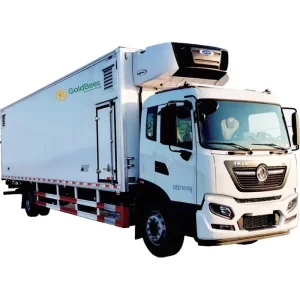
Direct from factory supply lines: engineered to surpass rigorous international standards for food safety, animal welfare, and continuous operational durability.





The international protein supply network is experiencing an aggressive structural shift. Intensified industrial farming protocols, rigorous transboundary animal disease countermeasures, and aggressive carbon-reduction mandates have fundamentally redefined livestock logistics. Transporting live cargo—swine herds, day-old chicks, cattle, and commercial broilers—is no longer merely a freight exercise. It represents an uninterrupted, biologically controlled extension of the biosafety perimeter connecting high-density feed mills, breeding campuses, finishing farms, and processing facilities.
Legacy slatted-wall trailers exposing stock to ambient weather, highway dust, and cross-contamination risks are rapidly being retired across Tier-1 integrated agribusinesses. Modern CE-certified scale livestock semi-trailers deploy completely sealed composite chambers equipped with positive-pressure HEPA filtration, targeted fresh air displacement, and independent multi-zone thermostatic systems capable of negating severe external heat stress and Arctic sub-zero conditions.
Regulatory authorities—specifically the European Union under Regulation (EC) 1/2005, alongside USDA and Australasian biosecurity departments—stipulate exacting thresholds for livestock loading densities, ceiling clearances, real-time internal environmental logging, water delivery mechanisms, and automated hydraulic lifting gates. GoldBees livestock transport units ensure turnkey adherence to CE Machinery Directive 2006/42/EC and Electromagnetic Compatibility (EMC) 2014/30/EU.
By shifting body metallurgy from heavy non-galvanized mild steels toward high-yield 6061-T6 aviation aluminum alloys and ultra-high-strength martensitic chassis steels, tare mass is reduced by 15% to 28%. This weight reduction unlocks substantial payload increments per legal gross vehicle weight (GVW) haul, significantly driving down diesel consumption and lowering greenhouse gas emissions per ton-kilometer.
Corporate procurement teams, large agricultural conglomerates, and contract fleet operators evaluate equipment investments through a rigorous lifetime value (LTV) framework. Selecting CE-certified scale livestock transport equipment demands deep integration across three critical operational axes:
The total cost of ownership is often undermined by rapid electrical component degradation caused by caustic foaming detergents, high-pressure 120-bar water jets, and corrosive thermal disinfection chambers. GoldBees vehicles feature military-spec IP69K-rated sealed wiring harnesses, water-shedding unibody frame geometries, and laser-welded joint seals designed to prevent corrosive bio-waste pooling.
Manual ramps impose extreme physiological strain, elevated cortisol spikes, and fatal bruising during loading. GoldBees implements synchronized, fail-safe dual hydraulic tail lifts with wireless remote actuation, non-slip patented tread ribs, and integrated safety arrestors that preserve cargo tranquility while cutting loading cycles by up to 50%.
Global logistics managers require real-time traceability. Our integrated digital controller relays in-cabin carbon dioxide levels, ammonia (NH3) concentration, ambient humidity, and temperature data to fleet HQ, enabling automated fan acceleration and active water-misting cooling before thermal discomfort occurs.
As part of the CP M&E group ecosystem, Xinbaiqin approaches transport infrastructure not as isolated vehicles, but as an integral link in a synchronized feed-to-food cold supply architecture:
Equipped with either electric/hydraulic auger systems or ultra-clean pneumatic blowers, GoldBees bulk feed trucks prevent external atmospheric contact. They dock seamlessly with modern external farm silos, ensuring pathogen-free compound feed arrives without pellet damage or cross-flock contamination.
Day-old chicks represent extraordinarily fragile biological assets. GoldBees dedicated day-old poultry transports deploy redundant climate regulation systems, maintaining micro-climates within ±0.5°C across all box stacks, accompanied by precise laminar airflow circulation that guarantees pristine survival metrics.
Closing the agricultural loop, our intelligent liquid organic fertilizer spreaders transform farm-collected wastewater and organic manure into precisely metered soil nutrients, governed by onboard GPS field rate controllers to safeguard groundwater and boost soil productivity.
Deploying commercial specialized rolling stock into diverse global jurisdictions requires rigorous homologation and robust engineering adaptivity. Xinbaiqin's dedicated export divisions manage all international regulatory requirements:
GoldBees livestock and feed bodies are engineered to mount seamlessly onto leading global truck chassis, including Scania, Volvo, MAN, Mercedes-Benz, Isuzu, and prominent Chinese OEMs (FAW, Sinotruk, Foton). Custom sub-frame mounting matches specific axle spread configurations and local bridge weight formula constraints.
Every export unit carries a complete CE Technical File, including mechanical stress analysis under dynamic transit loads, low-voltage electrical safety certifications, electromagnetic compliance documentation, and multi-language maintenance schematics for seamless local road authority homologation.
With an extensive inventory of standardized hydraulic valves, sensors, controller modules, and wear parts, our international logistics network coordinates rapid air-freight parts dispatch, backed by remote video diagnostics led by factory mechanical engineers.
The future of scale animal transport lies at the convergence of commercial electrification, machine vision, and real-time welfare automation. Our Cixi research campus is advancing three core engineering programs:
Scaling pure-electric bulk feed haulage vehicles and high-voltage battery-operated body systems. This eliminates tailpipe idling emissions during loading and unloading at enclosed biosecure farm entrances, creating zero-emission operations.
Integrating inside-body thermal imaging and behavioral recognition algorithms. The system monitors herd distribution in real time, detecting overcrowding, panting, downer animals, and heat stress before physical symptoms impact herd survival.
Developing fully robotic external and internal sanitization bays with optical sensor tracking, ensuring 360-degree chemical, steam, and UV-C sterilization of transport trailers without requiring human entry into contaminated environments.
Essential engineering and operational clarifications for international fleet managers, fleet technical leads, and logistics procurement directors:
CE Certification verifies full adherence to Machinery Directive 2006/42/EC, Low Voltage Directive 2014/35/EU, and EMC Directive 2014/30/EU. It certifies mechanical integrity, emergency stops, hydraulic anti-burst valves, safe electrical wiring harnesses, and failure-proof operations across extreme working conditions.
Our trailers utilize independent onboard auxiliary generators or heavy-duty lithium battery arrays that power heavy-duty electric fans and high-pressure water nebulizers continuously—even when the truck engine is turned off at customs checks or traffic bottlenecks.
We utilize marine-grade 6061-T6 aluminum alloys and high-integrity 304/316 stainless steels, paired with specialized anti-slip textured treadplates. All welds undergo complete penetration inspections, and electrical conduits are fully sealed with IP69K liquid-tight connectors.
Yes. Our modular platform allows configurations of 2, 3, or 4 levels with hydraulically adjustable deck heights. This flexibility accommodates varied livestock, such as nursery weaners, market-weight hogs, breeding sows, sheep, or cattle, within the same fleet framework.
Trailers feature integrated clean-in-place (CIP) spray manifolds, smooth, crevice-free internal surfaces, and dedicated sewage holding tanks that securely contain all waste fluids during transit, preventing contamination along municipal road corridors.
Standard builds typically ship within 30 to 45 business days. Highly customized, climate-controlled multi-deck units are generally completed, certified, and prepped for deep-sea container or Ro-Ro shipment in 60 to 75 days.
Comprehensive machinery, automation solutions, and livestock trailers engineered by Xinbaiqin Special Vehicle Co., Ltd.