
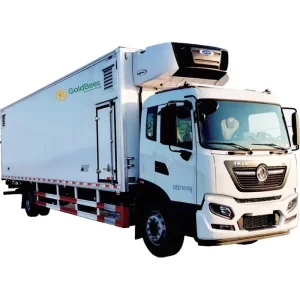
Direct procurement access to leading animal transport and automation units engineered under world-class biosecurity and animal welfare certifications.
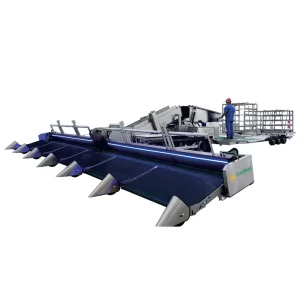





Analyzing how biosecurity protocols, microclimate monitoring, and ESG decarbonization mandates are redefining fleet specifications across corporate integrators.
The transmission of airborne and surface pathogens—such as Avian Influenza and African Swine Fever (ASF)—has turned vehicle engineering into a primary frontline defense. Modern buyers require hermetically sealed bodies, antimicrobial interior coatings, positive-pressure air filtration, and IP69K-rated electrical wiring designed to withstand continuous 85°C high-pressure thermal washouts and chemical sterilants.
Day-old poultry and live broilers are vulnerable to thermal stress, carbon dioxide buildup, and ammonia spikes. Today's commercial fleets integrate multi-zone IoT sensor arrays that report real-time compartment temperature, relative humidity, and airflow rates to cloud control centers. Automated ventilation dampers and auxiliary heating/cooling balance onboard conditions to lower Mortality-in-Transit (MIT) below 0.05%.
With corporate carbon disclosure frameworks and stringent regional emissions standards, agribusiness conglomerates are transitioning their short-haul feed distribution and localized hatchery routes to electric and hybrid platforms. High-power hydraulic and pneumatic discharging equipment is being re-engineered with high-efficiency 380V/400V electric power take-off (e-PTO) systems to cut transit emissions and yard noise.
Procurement directors at tier-1 agribusinesses no longer assess logistics equipment through the narrow lens of initial acquisition cost. Modern asset valuation models incorporate tare weight reduction, feed degradation indices during discharge, corrosion resistance under caustic sanitizers, and residual value over a 10-year operational lifecycle.
In mature markets such as the European Union, North America, and Australia, animal welfare legislation (such as EU Council Regulation EC 1/2005) places legal liabilities on shippers regarding space allowance, temperature logging, and hydration access. Consequently, manufacturers that fail to provide certified data-logging capabilities and audited structural engineering are eliminated from enterprise tenders.
How vertical integration, precision robotic assembly, and proprietary metallurgy create unmatched cost-to-performance benchmarks in special vehicle manufacturing.
Tanks and subframes undergo six-axis laser tracking and robotic seam welding, delivering high weld penetration and fatigue resistance under torsional road stresses.
By pairing 5083/6061-T6 aluminum alloys with high-strength low-alloy (HSLA) steel, body tare weight is reduced by up to 22%, expanding legal payload capacity per trip.
Integrated production of PLC control panels, auger gear reducers, hydraulic valve banks, and variable-frequency fans avoids third-party integration delays.
Located within the Yangtze River Delta automotive cluster, the facility leverages ready access to specialized chassis, valves, and precision fabrication suppliers.
Agribusiness equipment must perform reliably across challenging real-world conditions, from tropical heat to sub-zero winter routes.
Target Markets: Southeast Asia, Central America, Sub-Saharan Africa.
Engineering Focus: Extreme humidity and temperatures exceeding 42°C demand oversized auxiliary refrigeration units, multi-stage water evaporative spray curtains, and cross-ventilation blowers that prevent lethal heat accumulation during delays.
Target Markets: Northern Europe, Central Asia, Northern China.
Engineering Focus: Severe winter temperatures require body sandwich panels injected with high-density polyurethane foam, heated hydraulic lines, automated shutter louvers, and auxiliary diesel/electric warm-air ducting to protect young stock.
Target Markets: Developing Agricultural Belts, Remote Pastoral Regions.
Engineering Focus: Torsional ground forces demand reinforced subframes, parabolic spring or air suspension dampening, and reinforced auger mounts that protect cargo and prevent structural failure over rough terrain.
Comparing conventional agricultural conversions against purpose-engineered GoldBees animal husbandry logistics platforms.
| Specification Dimension | Conventional Converted Trucks | GoldBees Factory-Engineered Platform | Procurement Impact (ROI) |
|---|---|---|---|
| Structural Metallurgy | Standard carbon steel, prone to internal rust | High-tensile steel & marine-grade 5083/6061 alloy | +22% legal payload, 10+ yr chassis life |
| Biosecure Decontamination | Exposed harnesses, open seams, standard seals | IP69K sealing, smooth continuous robotic welds | Withstands 85°C high-pressure washing |
| Discharge & Unloading | High-rpm mechanical augers (pellet crushing >3.5%) | Variable hydraulic & low-pressure pneumatic (<0.8%) | Preserves feed nutritional value and texture |
| Climate & Telematics | Manual roof vents, non-monitored conditions | Multi-tier automated climate & live IoT data feed | Mortality-in-transit (MIT) drops to <0.05% |
Key operational, customization, and export compliance considerations addressed by our engineering team.
Browse our line of cold chain, feed logistics, livestock transport, and automated production solutions.


