
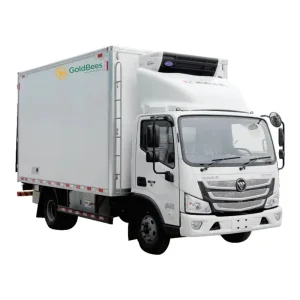
China China Suppliers' Fresh Produce Sorting & Transport Vehicle - Factory Engineered for Freshness, Capacity & Efficiency Suppliers, Factory
View Technical Specs
Direct-from-factory special vehicles tailored to agricultural logistics, bulk grain handling, live bird transport, and temperature-critical supply chain stability.




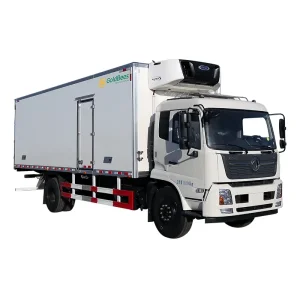
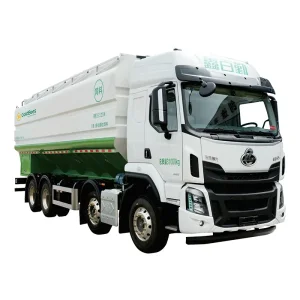

Industrial poultry farming is undergoing an aggressive structural migration toward mega-integrations, requiring zero-contamination, ultra-efficient logistics solutions connecting compounding feed mills to high-capacity broiler and layer complexes.
With pathogen transmission threats such as Highly Pathogenic Avian Influenza (HPAI) posing existential risks to poultry integrations, vehicle biosecurity has transformed from an afterthought to a core mechanical specification. Modern transport tanks require hermetically isolated multi-compartment structures with self-purging clean-out valves, wash-down rated sealed electronics, and anti-retention internal welds that eliminate residual mold or bacterial harborage.
Nutritional consistency directly impacts broiler Feed Conversion Ratios (FCR). High-velocity pneumatic unloading systems historically degraded high-density pelleted starter and finisher feeds into excessive fines (PDI loss > 12%). Contemporary feed truck engineering favors low-RPM, high-torque hydraulic and electric screw auger systems that discharge up to 1.5 tons per minute while preserving pellet structural durability below a 1.5% attrition threshold.
Escalating global diesel costs and stringent roadway axle-load limits enforce relentless lightweighting. By replacing traditional Q235 carbon steel bodies with 6061-T6 aerospace-grade aluminum alloy and high-strength wear-resistant alloys (such as BS700MC), tare weights decrease by 25% to 38%, expanding legal cargo capacity by up to 4.2 metric tons per trip and drastically curbing fuel burn on unloaded backhauls.
Combining vast supply-chain integration, advanced robotic automated welding, and direct feedback loops from CP M&E agricultural megaprojects, our Cixi manufacturing facility sets global benchmarks for commercial durability.
Unlike conventional semi-trailer workshops that rely on manual stick welding, our production lines utilize 3D high-precision laser-cutting gantries and dual-wire robotic circumferential seam welders. Tank structures feature continuous smooth internal fillets that eliminate feed particle hang-up points, minimizing bacterial development and preventing cross-batch formula contamination between broiler breeder and chick diets.
Our electric-hydraulic auger bulk feed trucks feature customized split hydraulic manifolds with wireless proportional joystick operation. Operators can raise the 360-degree rotating discharge boom up to a height of 9.5 meters while continuously adjusting auger screw rotation speed from 0 to 450 RPM, delivering pinpoint feed drops into tall silos without operator exposure to hazardous dust or high-voltage lines.
Feed trucks are exposed to severe atmospheric abuse: ammonia gases near poultry houses, caustic high-pressure disinfectant washes, and harsh highway de-icing salts. All GoldBees steel subframes and tank sections undergo high-voltage cathodic electrodeposition (e-coating) followed by multi-coat polyurethane baking, achieving salt-spray resistance exceeding 1,200 hours without surface blistering or corrosion creep.
Our superstructure engineering supports global commercial vehicle platforms, including Volvo, Scania, Mercedes-Benz Actros, MAN, Isuzu, FAW, Sinotruk HOWO, Dongfeng, and Foton. Whether configured as a rigid 4x2, 6x4, or 8x4 truck, or built into a 3-axle tri-axle semi-trailer with air suspension and front-axle lift, our body mount brackets conform to OEM chassis manufacturer body-builder directives.
| Engineering Parameter | Electric/Hydraulic Screw Auger Model | Intelligent Pneumatic Air-Blower Model | NEV Pure Electric Bulk Feed Truck |
|---|---|---|---|
| Discharge Velocity | 1.2 – 1.8 Tons / min | 0.8 – 1.2 Tons / min | 1.0 – 1.5 Tons / min |
| Max Silo Discharge Height | 9.5 Meters (Mechanical Boom) | 18.0 Meters (Flexible Hose System) | 8.5 Meters (Hydraulic Boom) |
| Pellet Degradation (Fines < 2mm) | < 1.2% Attrition | 3.5% – 6.0% Attrition | < 1.0% Attrition |
| Power Take-Off (PTO) Source | Chassis Transmission PTO or 380V Grid Motor | Heavy-Duty Roots Blower PTO System | High-Voltage CATL Battery DC-AC Inverter |
| Biosecurity Isolation Rating | Hermetic Top Slide Hatches + Clean-out Port | Fully Closed Pressurized Vessel System | Sealed Multi-Compartment with Remote Air Scrub |
| Typical Poultry Application | Commercial Broiler & Layer Compound Pellets | Powder Mash, Wheat Bran & Tall Extruded Silos | Zero-Emission Eco-Farms & Urban Hatcheries |
A chicken feed truck operating on a tropical Southeast Asian highway has vastly different requirements than a unit in sub-zero Scandinavian winter routes or rugged Latin American agricultural tracts.
In Southeast Asia, East Africa, and Central America, rapid diurnal temperature fluctuations generate internal condensation inside metal tanks, inducing feed caking and mycotoxin proliferation. Our tropical variants incorporate insulated composite thermal roof skins, desiccant breather check valves, and internal moisture drains that ensure delivered chicken feed arrives dry and chemically stable.
Breeder farms and high-biosecurity hatcheries are frequently sequestered in remote mountain foothills or unpaved agricultural valleys. For these demanding routes, GoldBees builds reinforced torsional chassis subframes with parabolic leaf or heavy-duty bogie suspension, increased ground clearance angles, reinforced stone guards, and heavy-duty hub reduction drive axles.
Northern Europe, Central Asia, and North American operations demand equipment resilient to -30°C conditions. We engineer hydraulic line trace-heaters, cold-start power packs, low-viscosity Arctic hydraulic oils, and insulated silicone gaskets that prevent hydraulic valve locking and preserve flexible boom seal integrity during blizzards.
Savvy fleet managers and enterprise agribusiness procurement directors evaluate chicken feed trucks beyond initial capital expenditure (CAPEX). Total Cost of Ownership (TCO) revolves around payload ratios, energy efficiency per ton delivered, and cycle downtime.
A 1,500 kg reduction in vehicle empty weight translates directly to an extra 1.5 tons of compound poultry feed delivered on every single route. Over an annual lifecycle of 600 delivery runs, this yields 900 tons of additional transport capacity without additional chassis, driver salaries, or insurance overhead, effectively amortizing the equipment upgrade within 18 months.
Running a 400-horsepower heavy truck engine merely to spin an auger during silo unloading consumes 12 to 18 liters of diesel per hour. GoldBees incorporates dual-power systems: alongside traditional truck PTO, our vehicles feature an auxiliary 15 kW to 22 kW high-efficiency electric motor that plugs directly into standard 380V/440V farm grid power, slashing stationary fuel consumption and emissions by up to 85%.
Downtime during peak flock feeding periods is unacceptable. Our hydraulic valves, planetary gearboxes, hydraulic motors, and electronic control cards employ standardized, universally interchangeable components (Danfoss, Eaton, Parker, or Siemens-compatible controllers), ensuring that replacement components can be sourced locally in any major international hub.
From pure electric commercial powertrains to IoT load telemetry and autonomous cleaning cycles, animal feed logistics is merging with intelligent automation.
With environmental ESG reporting becoming mandatory for multinational food processors, GoldBees is pioneering NEV electric bulk feed vehicles. Powered by high-energy-density lithium-iron-phosphate (LFP) battery packs, these vehicles deliver ultra-quiet operation near sensitive breeding flocks, zero direct tailpipe carbon emissions, and instant electric torque for auger startup without engine idle vibration.
Next-gen bulk bodies are equipped with onboard multi-axis dynamic load cells integrated into each compartment. Fleet dispatchers monitor exact tonnage depletion in real time via cloud dashboards, matching silo sensor levels with delivered mass while monitoring continuous temperature and humidity sensor feeds to detect moisture spikes prior to feed drop.
To eliminate cross-contamination between medicated broiler feeds and layer diets without labor-intensive manual tank washing, automated high-pressure rotating spray nozzles are incorporated into the upper tank ceilings. Combined with automatic disinfectant dosing pumps and dry-air purgers, vehicles complete biosecurity sanitation cycles in under 12 minutes.
Discover our comprehensive lineup of auger semi-trailers, day-old chick climate transporters, organic fertilizer spreaders, and smart catching solutions.

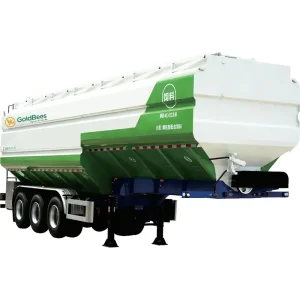
Detailed answers to clarify vehicle configurations, chassis integration, export shipping logistics, and warranty coverage for international buyers.