

Engineered by Xinbaiqin Special Vehicle (CP M&E Group) to maintain uncompromised thermal boundaries, extreme mechanical uptime, and superior payload integrity.


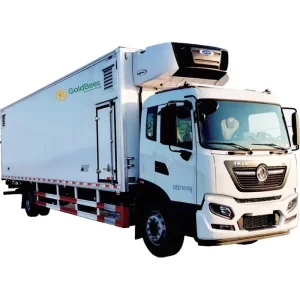


Evaluating commercial realities, regulatory headwinds, and supply chain vulnerability across worldwide perishable distribution networks.
The global trade in animal proteins, pharmaceuticals, and fresh horticulture has reached unprecedented volumes. However, structural wastage persists: the Food and Agriculture Organization (FAO) estimates over 14% of perishable food value is lost globally prior to retail distribution. Inadequate transport thermal management represents over 60% of these downstream losses, driving enterprise demand for robust, precision-controlled cold transport trucks.
Stricter ATP standards across the European Union, FSMA (Food Safety Modernization Act) rules throughout North America, and strict biosecurity protocols post-African Swine Fever (ASF) and Avian Influenza have forced transport operators away from generic insulated trailers. Modern fleets require automated real-time thermal records, medical-grade washability, and hermetic vapor-barrier containment.
As the premier global center for industrial specialization, Chinese advanced vehicle manufacturers offer unprecedented economies of scale combined with agile custom engineering. Xinbaiqin Special Vehicle (working in conjunction with CP M&E, the electromechanical equipment branch of Charoen Pokphand Group) brings deep agricultural and food processing operational intelligence directly into custom cold-box construction.
Operational Fact: Xinbaiqin’s refrigerated and live-spec cargo designs are informed directly by live agricultural environments, processing plants, and commercial fleets across the CP Group network, converting everyday field stresses into engineered mechanical resilience.
How composite chemistry, intelligent telemetry, and electric drivetrains are reshaping commercial thermal fleets.
Transition from traditional riveted sheet metal to seamless vacuum-bonded FRP (Fiberglass Reinforced Polymer) panels infused with rigid, high-density extruded polystyrene (XPS) or polyurethane (PU) foam. This eliminates thermal bridging, reduces tare weight by up to 25%, and ensures water ingress prevention.
The emergence of New Energy Vehicle (NEV) truck chassis and high-voltage DC electric refrigeration units. Operating directly from onboard lithium iron phosphate (LFP) energy storage systems, these setups eliminate diesel auxiliary engine noise, emissions, and fuel costs while idling at loading docks.
Multi-node thermal mapping, relative humidity monitoring, and predictive door-opening cycle tracking. Cellular and satellite telemetry streams cargo-level conditions directly to cloud ERPs, triggering active refrigeration compressor modulation before cargo suffers thermal damage.
Special vehicle architecture with IP67/IP69K sealed electrical harnesses, non-porous floorings, and drain systems capable of handling corrosive chemical sanitizers, hot water high-pressure blasts, and thermal bake-out cycles necessary to eliminate farm-to-farm pathogen transmission.
Purpose-built transport engineering configured for the rigorous demands of distinct logistics environments.
Operating Range: Strict +2°C to +8°C and ultra-cold -20°C environments.
Technical Challenge: Even a 1°C excursion can denature biological products and invalidate regulatory compliance.
Xinbaiqin Solution: Dual-zone redundant refrigeration circuits, independent backup battery generation, and encrypted continuous data-logging systems ensure uncompromised cold continuity throughout long transit legs.
Operating Range: -18°C to -25°C deep freeze, or 0°C to +4°C chilled.
Technical Challenge: High dynamic ceiling loads during cornering and severe moisture washouts between batches.
Xinbaiqin Solution: Structural stainless-steel overhead rail integration, reinforced ceiling stiffeners, extruded aluminum T-profile airflow flooring, and seamless drain wells for easy sanitization.
Operating Range: Split compartment (+4°C for dairy, +10°C to +12°C for delicate fruits).
Technical Challenge: Frequent door cycles at multi-drop retail outlets cause rapid thermal ingress.
Xinbaiqin Solution: Lightweight insulated transverse bulkheads, high-velocity side-curtain air blowers, and rapid thermal pull-down compressors ensure fast set-point recovery after every drop.
Beyond body manufacturing: engineering operational uptime, legal payload efficiency, and multi-year durability.
By pairing finite element analysis (FEA) optimized high-tensile steel subframes with aerospace-grade aluminum extrusions and fiberglass composite skins, GoldBees bodies shed up to 800 kg compared to standard industry counterparts. This enables direct conversion of tare weight into revenue-generating payload within strict road weight limits.
Multi-lip engineered EPDM rubber door gaskets, integrated thermal breaks, and single-piece high-pressure foam injection guarantee minimal thermal conductivity (K-value ≤ 0.38 W/m²·K). This reduces refrigeration unit cycle times, cutting engine fuel consumption and compressor component wear.
Our engineering division designs customized mounting sub-structures compatible with tier-one global chassis platforms including ISUZU, FOTON, FAW, HOWO (Sinotruk), MAN, and SCANIA. This gives global clients flexibility to source local chassis while benefiting from advanced cold-box engineering.
To reduce international freight tariffs and container shipping costs, Xinbaiqin delivers cold-box systems in fully knocked-down (CKD) or semi-knocked-down (SKD) kits. Precision pre-drilled interlocking joints allow quick assembly in regional workshops with standard tooling.
Projecting the next decade of breakthroughs across smart logistics, clean energy power, and automated cargo handling.
Deployment of organic Phase Change Materials (PCM) integrated into interior ceiling cavities. PCMs absorb excess thermal energy during transit, reducing compressor runtime by up to 35%. Paired with roof-mounted photovoltaic solar arrays, the system provides zero-emission auxiliary power during dock layovers.
Development of zero-emission long-haul transport trailers powered by cryogenic liquid hydrogen fuel cells. Coupled with automated battery-swapping chassis options for regional feed and fresh-produce loops, fleets achieve 24/7 continuous operation without lengthy charging delays.
Seamless synchronization between autonomous hub-to-hub prime movers, automated pneumatic/auger discharge systems, and robotic live-poultry harvesters. Live bio-metric and thermal sensors will autonomously adjust cabin airflow, humidity, and temperature without human intervention.
In-depth engineering answers covering manufacturing methodologies, thermal standards, and global compliance.
We avoid mechanical riveting and discontinuous wood-framing that degrade over time. Our cargo bodies utilize vacuum-bonded composite sandwich panels formed under constant positive pressure, featuring high-density closed-cell hydrophobic polyurethane or extruded polystyrene cores. Subframes are treated with hot-dip galvanization or high-performance cathodic electro-deposition (ED) coating to eliminate underbody corrosion from aggressive farm and road salts.
Every livestock and food-grade body is engineered for intensive sanitization. All wiring runs through high-grade IP67/IP69K sealed conduit systems. Internal wall seams are sealed with food-grade silane-modified polymer matrices resistant to chemical foam disinfectants, high-pressure hot water washing up to 85°C, and secondary thermal baking processes used in modern disease control facilities.
Yes. We regularly supply our international partners across Southeast Asia, the Middle East, Africa, and the Americas with complete CKD (Completely Knocked Down) and SKD (Semi-Knocked Down) panel kits. Panels feature self-aligning tongue-and-groove joints and aluminum structural profiles, allowing quick local assembly using standard structural adhesives and simple rivet techniques.
We integrate both world-class international refrigeration units (Carrier Transicold, Thermo King) and proven domestic high-efficiency units. Depending on your duty cycle, bodies can be equipped with direct-drive road-compressor setups, independent auxiliary diesel units, or full-electric high-voltage DC units paired with standby grid-plug capabilities for warehouse loading.
Unlike standard cold trucks which only cool, our day-old chick and live breeder transports feature active HVAC climate pods. These combine positive-pressure fresh air intake filtration, multi-stage supplementary electrical or hydronic heating, dynamic exhaust air exchange, and continuous CO2 monitoring, guaranteeing an exact, uniform temperature envelope across all tiers regardless of harsh external weather conditions.
Standard commercial insulated box bodies are completed within 20 to 30 working days from chassis arrival and design sign-off. Highly customized multi-deck livestock semi-trailers or specialized NEV feed transport trucks require 35 to 45 working days. Export logistics are fully handled from our Ningbo/Shanghai ports, accompanied by full export documentation, CE declarations, and complete wiring schematics.
Explore our heavy-duty refrigerated semi-trailers, bulk animal feed haulers, and automated agricultural harvesting vehicles.



