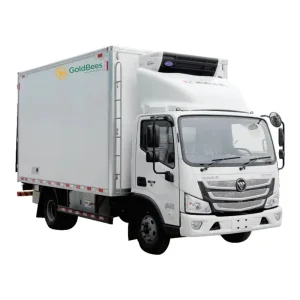
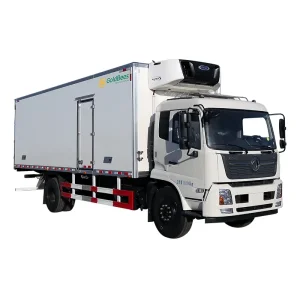
Explore our core engineered transport systems designed for hatcheries, poultry integrators, and feed distributors worldwide.
How hyper-dense urbanization, tightening epidemiological controls, and genetic sensitivity redefine bio-secure live transit.
Global outbreaks of Highly Pathogenic Avian Influenza (HPAI) have rendered open-crate transport obsolete. Modern compact carriers deploy hermetically sealed cargo cells, negative/positive dual-pressure airflow systems, and HEPA-grade filtration (99.97% retention at 0.3 μm) to safeguard high-value day-old chicks and grand-parent breeding lines against ambient bio-hazards.
While heavy 40-foot articulated trailers serve highway corridors, regional transit between localized hatcheries and grow-out facilities mandates rigid, compact 4x2 and 6x2 platforms. These vehicles navigate narrow secondary rural roadways, restricted farm biosecurity gates, and zero-emission urban delivery perimeters with 35% lower drag profiles and optional pure-electric (NEV) powertrains.
Modern fast-growing broilers (e.g., Ross 308, Cobb 500) exhibit heightened susceptibility to thermal micro-fluctuations. Dehydration and metabolic exhaustion during transit directly increase 7-day field mortality and reduce feed conversion ratios (FCR). Advanced compact carriers incorporate autonomous HVAC algorithms capable of maintaining cargo temperature within ±0.5°C across extreme climatic ambients (-30°C to +48°C).
Combining 15+ years of agricultural electromechanical mastery with real-world farming telemetry from Charoen Pokphand Group.
Independent multi-stage ventilation channels deliver up to 8,000 m³/h of tempered, positive-pressure air throughout multi-tier crate layouts. Real-time gas telemetry continuously monitors carbon dioxide (kept <1,500 ppm) and relative humidity (stabilized at 55–65%), automatically modulating variable-speed brushless EC fans.
Every GoldBees compact poultry body is constructed using food-grade 6082-T6 aircraft aluminum alloys or 304 stainless steel welded assemblies. Interior surfaces feature zero dead-angle radii, IP69K waterproof wiring harnesses, and integral Clean-In-Place (CIP) misting nozzles capable of handling harsh chemical disinfectants.
Configured to meet rigorous transport directives, diverse chassis rails, and extreme environmental profiles worldwide.
Modular subframes engineered to mount seamlessly onto leading global commercial chassis platforms, including Isuzu, Fuso, Hino, Mercedes-Benz Atego, MAN, Volvo FL, FAW, and Dongfeng, adhering to regional axle load limits.
Full compliance with European Union Council Regulation (EC) No 1/2005 on live animal protection in transit, USDA-FSIS transport welfare guidelines, and Australian Animal Welfare Standards & Guidelines (Land Transport of Livestock).
Leveraging CP M&E's worldwide presence across Southeast Asia, the Middle East, Latin America, and Africa to provide local parts depots, factory-certified refrigeration technicians, and lifecycle warranties.
Real-world integration showing performance across varied geographical and climatic challenges.
Moving up to 100,000 day-old chicks per compact rig. Features gentle laminar air feeds, floor-level exhaust ports, and humidity injection to avoid dehydration shock over 12-hour hauls across tropical or arid terrains.
Safeguarding high-value Grandparent (GP) and Parent Stock (PS) breeders with medical-grade multi-barrier HEPA and UV-C air scrubbers, ensuring pathogen-free delivery to isolated biosecure breeder farms.
Fast mechanical docking, high-velocity exhaust curtains, and anti-stress hydraulic loading gates cut transit-related bruising, wing damage, and dead-on-arrival (DOA) rates to below 0.05%.
Xinbaiqin’s forward engineering investments in autonomy, electro-mobility, and predictive biosecurity algorithms.
Proprietary neural-network climate controllers analyzing real-time flock density, chick body weight, and external weather to autonomously adjust air cycles in microsecond intervals.
Dedicated commercial battery-electric platforms (BEV) and hydrogen fuel-cell options eliminating tailpipe emissions while utilizing regenerative power to drive auxiliary cooling.
Integration with automated chicken harvesting robots and robotic crate conveyors, cutting human loading contact to zero and lowering pre-transport bird stress.
Cryptographically secure black-box logging recording temperature, disinfection cycles, transit times, and air filtration history for automated compliance reporting.
Detailed technical, engineering, and manufacturing specifications for commercial integrators.
Review our precision feed trucks, day-old chick carriers, and temperature-controlled logistical units.