Factory-direct agricultural transportation solutions engineered by Xinbaiqin Special Vehicle under CP M&E industrial oversight.



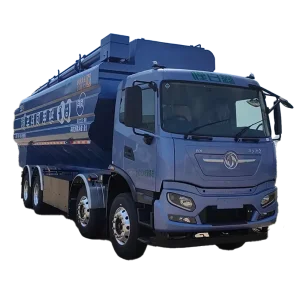


Transforming biological vulnerability into high-survival commercial yields through integrated thermal aerodynamics, micro-climate automation, and strict biosafety barrier isolation.
In modern high-density industrial poultry production, the transport corridor connecting commercial hatcheries to grow-out broiler houses or pullet facilities represents the most biochemically precarious operational node. Newly hatched chicks (Day-Old Chicks or DOC) are poikilothermic during the first 72 to 96 hours post-hatch; their internal neuroendocrine thermoregulatory system is entirely undeveloped, leaving them unable to autonomously regulate core body temperature. Subjection to ambient micro-fluctuations triggers lethal metabolic cascade reactions: chilling forces the rapid utilization of residual vitelline reserves for basal heat preservation instead of foundational immune organ development, while localized thermal buildup induces rapid hyperthermic dehydration, high mortality, and permanent gastrointestinal tract degradation.
The global poultry integration landscape, particularly across Latin America, Southeast Asia, Sub-Saharan Africa, and Central Asia, is witnessing an aggressive scaling of hatchery production capacities. Mega-hatcheries turning out over 1.5 million to 3 million chicks per week necessitate ultra-large capacity vehicular dispatch. Concurrently, transport routes frequently extend from 150 kilometers to over 1,500 kilometers across diverse altitudinal, climatic, and seasonal topographies. Standard general-purpose refrigerated reefers or rudimentary forced-air box trucks fail completely in such rigorous commercial parameters due to acute micro-climatic dead zones, inconsistent air replenishment, severe carbon dioxide (CO2) asphyxiation, and cross-contamination vectors.
The Biological Imperative: Maintaining chick core temperature strictly between 39.5°C and 40.0°C (cloacal internal metric) mandates an ambient box air temperature stabilized at 24.0°C to 27.5°C, an air velocity across chick crates between 0.15 to 0.35 m/s, and constant volumetric replacement to cap internal carbon dioxide concentration strictly below 1,500 PPM.
Consequently, procurement protocols among tier-1 agribusiness integrators, breeding stock producers (Ross, Cobb, Hubbard), and hatchery logistics concessionaires have transitioned toward purpose-engineered, smart-automated Day-Old Chick Transport Lorries. China's emergence as the primary engineering and manufacturing nexus for specialized agricultural vehicles has transformed this niche market. Combining heavy industrial manufacturing capability, agile electro-mechanical customization, comprehensive chassis integrations (from Sinotruk, FAW, and Foton to Volvo, Scania, and Isuzu), and deeply integrated parent agribusiness operational experience, Chinese original equipment manufacturers provide unmatched life-cycle return on investment.
Systemic breakdown of airflow hydrodynamics, micro-climate automation, biosecure thermal insulation, and multi-tier structural design.
Utilizing positive-pressure conditioned air delivery ducts positioned overhead with floor-level negative-pressure extraction manifolds. This hydrodynamic layout eliminates thermal stagnation pockets within densely stacked chick dollies, ensuring identical cubic meter exchange rates across front, center, and rear tiers.
Equipped with heavy-duty independent diesel generator units (Perkins, Cummins, or Yanmar) coupled with dual-circuit industrial refrigeration units, supplemental ceramic PTC electric heating grids, and hot-water heat exchangers tapping the chassis engine cooling jacket for zero-load cold-weather cruising.
Body interior constructed of continuous food-grade glass-reinforced plastic (FRP) panels sandwiching high-density extruded polystyrene (XPS) insulation core (K-factor ≤0.35 W/m²K). Fully seamless polyurethane floor transitions with internal integrated drain traps withstand high-pressure chemical foam washing and 75°C thermo-drying bake cycles.
High-precision digital sensing array deployed at 8 to 24 volumetric coordinates recording real-time temperature, relative humidity, and CO2 concentration. Automated CAN-bus PLC controllers modulate intake louvers and fan VFDs dynamically while streaming encrypted data to hatchery central servers via 4G/5G sat-nav.
Integrated with 24V DC battery-backed bypass louvers that snap open pneumatically within 1.5 seconds if an auxiliary generator trip is detected. High-flow extraction fans instantly switch to dual battery bank operation, delivering uncompromised emergency survival ventilation even during complete mechanical shutdown on highway shoulders.
Constructed with high-rigidity structural aluminum or stainless steel floor guide channels, anti-slip threshold plates, and rear electro-hydraulic cantilever lifts (1,500 kg - 2,500 kg capacity). Ensures rapid, vibration-isolated crate transfer that minimizes mechanical trauma and eliminates open-door thermal dissipation during loading operations.
Why the world's largest agribusiness conglomerates partner with Xinbaiqin Special Vehicle for specialized poultry logistics platforms.
The specialized vehicle manufacturing ecosystem in China operates with immense supply chain integration and technological depth. Xinbaiqin Special Vehicle Co., Ltd., based in Cixi, Zhejiang, represents the pinnacle of this industrial cluster. What sets GoldBees specialized vehicles apart from generic commercial bodybuilding workshops is our structural affiliation with CP M&E, the industrial electromechanical arm of Charoen Pokphand Group (CP Group)—one of the world's foremost agro-industrial and poultry conglomerates.
Most commercial vehicle builders approach day-old chick transport from a purely mechanical perspective: fabricating an insulated shell and mounting standard reefer units. Xinbaiqin approaches day-old chick lorry engineering from the biological realities of intensive hatchery operations. Every GoldBees body, electrical harness, ventilation duct, and PLC algorithm is validated against millions of hours of live transport operational feedback across CP Group's expansive network of parent breeding stock farms, commercial broiler hatcheries, layer operations, and feed production facilities worldwide.
Equipped with robotic laser-cutting gantries, 16-meter continuous vacuum composite sandwich bonding presses, and automated CNC folding cells producing seamless, zero-cold-bridge thermal enclosures.
Over 30 dedicated electromechanical and aerodynamic design engineers collaborating with poultry physiologists to continuously optimize air velocity profiles, static pressure balances, and thermal efficiency.
With an annual output surpassing 2,000 specialized vehicles, China's precision procurement corridors guarantee rapid fleet delivery timelines that Western boutique bodybuilders simply cannot match.
Every unit undergoes strict thermal imaging enclosure scans, high-pressure water deluge penetration testing, electrical load bank stress diagnostics, and aerodynamic wind tunnel calibration before factory release.
Tailoring thermodynamic resilience and structural robustness to overcome regional transport challenges across four continents.
Operating Environment: Ambient temperatures exceeding 42°C with relative humidity over 85%.
Engineering Response: Oversized dual-circuit refrigeration systems paired with high-efficiency dehumidification coils prevent sweat condensation inside crates, protecting down feathers from dampness-induced hypothermia.
Operating Environment: Severe continental winters down to -35°C with howling crosswinds.
Engineering Response: 100mm ultra-dense XPS insulated sandwich panels, variable-speed hot water heating networks tapping chassis waste heat, and electric pre-heaters ensure the cargo bay never dips below 25°C, even while stationary.
Operating Environment: Violent daytime thermal spikes, fine abrasive dust, and intense solar radiation.
Engineering Response: Multi-stage sand/dust inertial pre-filtration banks, UV-resistant exterior gelcoats, and double-insulated rooftop solar shielding prevent HVAC clogging and ambient thermal transmission.
Operating Environment: Deep ruts, unpaved gravel tracks, and high vibrational shock.
Engineering Response: Heavy-duty European-spec airbag chassis suspensions, reinforced dolly locking rail anchors, and flexible wiring looms rated to withstand sustained vertical acceleration shocks without structural stress cracking.
Standard engineering configurations developed by China GoldBees for regional delivery and cross-border transport.
| Performance Specification | Rigid Lorry Platform (4x2 / 6x2) | High-Volume Semi-Trailer Platform (3-Axle) |
|---|---|---|
| Typical Chassis Adaptation | Sinotruk Howo / Isuzu FVR / FAW J6P / Foton Auman | Tri-Axle Airbag Semi-Trailer paired with 4x2 / 6x4 Prime Mover |
| Chick Carrying Capacity | 35,000 to 75,000 Day-Old Chicks (350 - 750 Crates) | 120,000 to 180,000 Day-Old Chicks (1,200 - 1,800 Crates) |
| Enclosure Construction | 80mm FRP Sandwich Panels, XPS Core, Seamless Joints | 90-100mm Vacuum-Bonded FRP/XPS Composite, High Thermal Resistance |
| Refrigeration Capacity | 12.5 kW - 18.0 kW (Sub-Engine / Independent Diesel) | 32.0 kW - 45.0 kW (Dedicated Dual Heavy-Duty Refrigeration Circuits) |
| Supplemental Heating Capacity | 10 kW PTC Ceramic Electric + Chassis Water Heat Exchanger | 25 kW Multi-Stage Auxiliary Diesel Hydronic Heating Matrix |
| Air Exchange Delivery Volume | 4,500 - 8,500 m³/h Positive Balanced Flow | 16,000 - 24,000 m³/h Positive Laminar Dispersion |
| Micro-Climate Control Accuracy | ±0.75°C Temperature / ±5% RH Equilibrium | ±0.5°C Temperature / Multi-Zone Closed-Loop Servo Controlled |
| Biosecurity Filtration | G4 Dust Pre-Filter + Optional F7 Core Filtration | Multi-Stage Inertial Sand Trap + F8 Secondary + UV-C Germicidal Ducting |
| Power Autonomy & Redundancy | Chassis PTO / 15 kVA Auxiliary Diesel Generator Set | 35-50 kVA Soundproof Marine-Grade Generator Set + Dual Battery Bank |
| Loading & Unloading Interface | 1,500 kg Electro-Hydraulic Cantilever Aluminum Liftgate | 2,500 kg Heavy-Duty Vertical Column or Cantilever Tail Lift |
Discover how electric propulsion, biosecurity air scrubbing, and predictive AI modeling are redefining poultry transport economics.
With global decarbonization mandates escalating, China is spearheading the electrification of specialized agricultural transport. Pure battery electric (BEV) and hybrid chassis equipped with high-density CATL LFP battery packs directly power electric DC scroll compressors and variable-speed fan coils. This architecture eliminates secondary diesel generator emissions, reduces noise stress on chicks, and cuts operational fuel costs by up to 60% per trip.
As Highly Pathogenic Avian Influenza (HPAI) and infectious bursal diseases threaten commercial flocks globally, day-old chick lorries are incorporating hospital-grade bio-defense systems. Incoming intake air passes through cyclonic pre-separators, H13 HEPA media arresting 99.97% of airborne pathogens, and ultraviolet-C (UV-C) irradiation tunnels to guarantee zero biological pathogen ingress during highway operation.
Modern telematics systems incorporate machine learning models trained on millions of voyage data miles. By processing real-time ambient weather forecasts along the planned GPS transit corridor, road incline data, and live chick metabolic heat generation curves, the onboard controller proactively pre-cools or pre-ventilates specific cargo bay compartments before temperature deviations can occur.
Key mechanical and commercial specifications procurement teams must verify before awarding day-old chick lorry tenders.
Verify that the bodybuilder can seamlessly mount superstructures to target market chassis (Euro III, IV, V, or VI emissions standards). Mounting subframes must comply with original chassis manufacturer body-builder guidelines (BEP/VBI) to preserve drive axle warranties, ABS brake balance, and stability control calibration.
Demand engineering airflow documentation detailing total CFM / cubic meters per hour under full payload static pressure. Systems must maintain positive cabin pressure (+15 to +30 Pa) against road ram air to prevent untreated exhaust gas or ambient dust from infiltrating door rubber seals during transit.
Ensure all interior hardware, fan housings, light fixtures (IP67 or higher), and sensor modules are resistant to corrosive chemical disinfectants (peracetic acid, quaternary ammonium compounds, glutaraldehyde). Flooring must have smooth coved corners without blind crevices that harbor bacterial colonies.
Direct technical and commercial answers addressing procurement inquiries from poultry integrators worldwide.
Integrate your day-old chick logistics with our comprehensive suite of bulk feed transporters, live poultry carriers, and cold-chain distribution semi-trailers.




Whether you are modernizing existing hatchery logistics, planning a greenfield mega-hatchery expansion, or bidding on national agro-logistics tenders, our CP M&E technical team is ready to assist with CAD layout simulations, thermodynamic feasibility assessments, and export documentation.
