Seamless integration of factory-level feed pellet manufacturing with high-payload, temperature-controlled, and biosecure transport solutions engineered for intensive farm ecosystems.





An authoritative analysis of mechanical metallurgy, thermal conditioning dynamics, and full supply-chain scalability defining modern feed processing.
Modern Chinese feed mill pellet machines utilize high-chromium stainless steel alloys (e.g., X46Cr13 / 4Cr13), vacuum-forged and treated under strict atmosphere-controlled quenching furnaces. Crucially, hole micro-finish is brought to ≤0.4 μm Ra using synchronized 4-spindle CNC gun drilling machines. This ultra-smooth bore geometry reduces friction coefficients, completely eliminating early-stage extrusion blockages and boosting energy transfer efficiency by up to 14% compared to legacy fabrication standards.
Starch gelatinization represents the cornerstone of digestible animal feed. Leading Chinese original equipment manufacturers (OEMs) implement dual-axis differential diameter conditioners (DDC) and jacketed retention vessels. Operating at precise steam injection pressures (0.2–0.4 MPa) and temperatures between 82°C and 90°C, conditioning retention times exceed 120 seconds. This optimizes starch gelatinization rates up to 85%, radically eliminating salmonella and enteric pathogens while ensuring unmatched pellet cohesion.
To eliminate mechanical slippage inherent in traditional belt drives, industrial pellet mills engineered in China feature heavy-duty helical gear transmissions paired with multi-spline shafts. High-precision gear grinding delivers transmission efficiencies above 97%. Safety is reinforced through dual shear-pin mechanisms or electro-hydraulic overload trip clutches that instantaneously disengage drive motors upon accidental tramp metal ingestion, protecting the ring die and roller assembly from catastrophic fracture.
Why elite global integrators treat feed processing and bulk transport as an unified, contamination-free biological continuum.
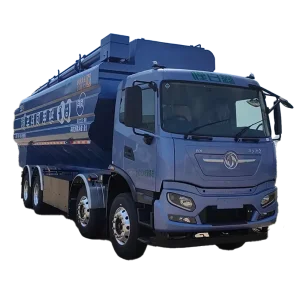
Pellets leave the counter-flow cooler sterile, but open-air bagging or unsealed flatbed transport exposes nutrition to African Swine Fever (ASF), Avian Influenza, and mycotoxins. Modern factory solutions demand pneumatic sealed loadout bins coupled with custom-built multi-compartment auger bulk feed trucks that isolate distinct animal feed formulations during transit.
Pellet fragmentation during farm site unloading degrades Feed Conversion Ratios (FCR). By utilizing hydraulic slow-turn, variable-pitch discharge augers or low-pressure high-volume pneumatic blowing systems mounted directly on GoldBees vehicles, pellet breakage rates drop below 1.5%, preserving structural integrity from the mill die face to the broiler pan feeder.
The modern agro-complex demands severe Scope 1 carbon emission reductions. Chinese manufacturers lead global deployments with New Energy Vehicle (NEV) electric bulk feed trucks. Operating on massive LFP battery systems with automated regenerative braking, they eliminate diesel exhaust near animal barns while reducing per-ton logistics costs by up to 38%.
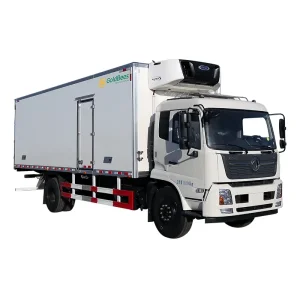
Rather than dealing with fragmented vendors, international agribusinesses rely on Chinese integrated engineering groups (like CP M&E) capable of delivering multi-million bird layer projects, automated feed mill towers, automated live-bird harvesters, and specialized biosecure refrigerated transport semi-trailers under a single unified engineering guarantee.
Engineering specifications comparison covering poultry, swine, ruminant, and aquafeed pelleting configurations.
| Series Configuration | Main Motor (kW) | Throughput Capacity (t/h) | Die Inner Diameter (mm) | Steam Pressure (bar) | Target Animal Species | Pellet Diameter Range (mm) |
|---|---|---|---|---|---|---|
| CPM-Type 420 High-Shear | 110 – 132 | 8.0 – 15.0 | 420 | 2.0 – 4.0 | Broiler, Layer, Pullet | 2.0 – 4.5 |
| Heavy Swine CPM-508 Dual-Drive | 160 – 200 | 15.0 – 25.0 | 508 | 2.5 – 4.5 | Sow, Piglet, Swine Finishing | 2.5 – 6.0 |
| Mega-Scale 678 Gear-Transmission | 220 – 280 | 25.0 – 40.0 | 678 | 3.0 – 5.0 | Commercial Compound Integrators | 3.0 – 8.0 |
| Ruminant Extruded Fiber 768 | 250 – 315 | 20.0 – 35.0 | 768 | 2.5 – 4.0 | Dairy Cattle, Sheep, Camel | 6.0 – 12.0 |
| Aquafeed Sub-Micro Pre-Conditioner | 90 – 160 | 3.0 – 8.0 | 350 / 420 | 3.5 – 6.0 | Tilapia, Sinking Shrimp, Carp | 0.8 – 2.5 |
Resolving regional challenges across differing climates, grain formulations, and intensive industrial farm models.
High ambient humidity causes pellet sweat, mold proliferation, and immediate durability collapse. Chinese manufacturers counter this by engineering high-retention counter-flow coolers with chilled dehumidification air loops, paired with specialized stainless steel (SUS304) discharge conveyors. Closed-cabin refrigerated cold-chain trucks and insulated multi-tank bulk feed haulers protect the finished cargo from tropical thermal shock between the feed plant and remote jungle farm facilities.
With corn and soybean meal price volatility, mills increasingly incorporate cassava, palm kernel cake (PKC), rice husks, and distillers dried grains (DDGS). Chinese ring die manufacturers design custom compression ratios (1:8.5 to 1:12) with specialized relief-depth configurations and corrugation tooth profiles on roller shells to process abrasive, low-lignin materials without choking motors or causing rapid die pitting.
Modern closed-environment livestock houses holding hundreds of thousands of animals require hourly just-in-time feed arrivals. The synergy of high-volume dual-die pellet machines running at 40 tons/hour paired with synchronized fleets of multi-deck GoldBees livestock transporters and 30-ton pneumatic auger trucks guarantees feed and animal supply continuity with mathematical predictability.
Technical, commercial, and operational clarity for chief operating officers, plant managers, and agritech procurement executives.
Under standard poultry formulation parameters (corn-soy base with <1.5% mineral premix ash content), vacuum-heat-treated 4Cr13 stainless steel ring dies achieve an operational service life between 1,000 and 1,400 hours. Abrasive formulations incorporating high ash, bentonite binders, or unground hulls will reduce die life to 600–900 hours, which can be mitigated using carbide-tipped roller assemblies.
Leading Chinese factories engineer all motor windings, soft starters, and VFD inverters to strict destination electrical codes. Whether your facility operates on 380V/50Hz (Asia, Europe), 440V–480V/60Hz (North & South America), or 415V/50Hz (Australia, UK, South Africa), complete Siemens, WEG, or ABB CE/UL certified electrical packages are integrated directly prior to dispatch.
A feed mill can produce perfect 98 PDI pellets, but if transported via crude dump trucks or manual bagging, mechanical abrasion and moisture absorption will turn up to 15% of the payload back into useless fines. Closed-loop electric/hydraulic auger trucks discharge feed directly into farm silos at controlled speeds, maintaining pellet structural integrity and preserving biosecurity.
For standalone ring die pellet mills and auxiliary modular machinery, standard factory dispatch is 25 to 40 days. For full turnkey mill projects combined with custom chassis-mounted special logistics vehicles (bulk feed trucks, day-old chick carriers, refrigerated semi-trailers), project manufacturing timelines typically span 60 to 90 days, inclusive of pre-shipment dry-testing.
Certified manufacturing solutions delivering automated biosecure handling for pigs, poultry, organic fertilizers, and completed feed mill plants.



