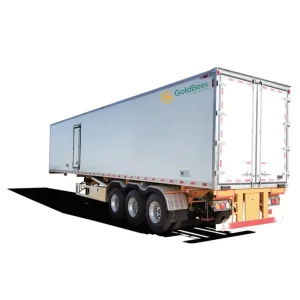
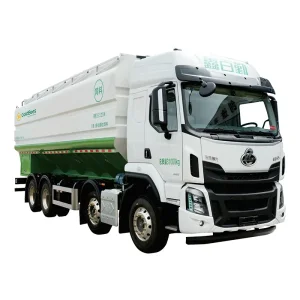
Explore our flagship heavy-duty feed transport trailers, automated livestock carriers, and climate-controlled biosecurity tankers engineered for multinational agribusiness operations.

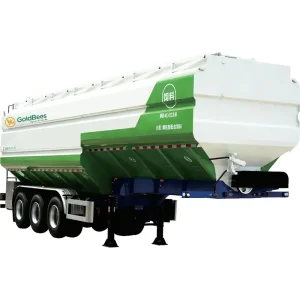
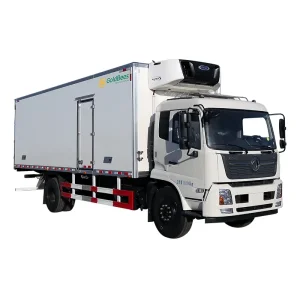


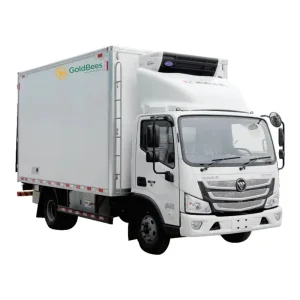

Modern intensive livestock and poultry farming demands high-volume, contamination-free, biosecure transport solutions that safeguard nutritional ratios from feed mill blending plants directly into remote silos.
Modern intensive livestock operations cannot risk biological contamination. Chinese specialized vehicle fabricators, guided by CP M&E standards, implement completely sealed internal silos, automated high-pressure wash-down manifolds, and hermetic clean-in-place (CIP) pneumatic systems that eliminate residual cross-batch bacterial carryover.
Discharge technology dictates feed pellet integrity. Top-tier manufacturers integrate variable-frequency hydraulic and electric auger drives that reduce shear forces, keeping pellet breakage below 0.5%. Simultaneously, low-velocity pneumatic discharge systems handle powdery premixes and extreme silo heights without heat accumulation.
Operating margin is won in tare weight reduction. By substituting conventional carbon steels with high-tensile 5083/5182 aerospace-grade aluminum alloys and advanced ultra-high-strength steel plates, Chinese builders deliver up to 3.5 tonnes of increased legal payload per trip, cutting ton-kilometer logistics overhead.
China’s specialized vehicle sector combines full-chain component manufacturing, aggressive robotic automation, and direct operational testing within the world’s largest livestock ecosystem.
From primary sheet metal stamping, CNC laser profiling, robotized robotic seam welding to hydraulic valve machining—the proximity of Chinese manufacturing clusters drastically shortens custom production lead times by up to 45% compared to Western counterparts.
Enterprises like Xinbaiqin operate in tandem with mega-agricultural groups like Charoen Pokphand (CP Group). Every engineering design undergoes immediate fleet-scale verification across poultry integrators, breeding pig complexes, and regional mega-mills.
Capital equipment procurement yields 30% to 40% TCO savings without compromising components. Units utilize world-class components—including Parker hydraulics, Eaton motors, Schneider PLCs, and BPW/FUWA axle assemblies—maximizing global maintenance continuity.
Capitalizing on China's global leadership in electric traction and battery power architectures (CATL, BYD battery management), electric bulk feed transport vehicles provide zero-tailpipe-emission site maneuvering, near-silent unloading, and reduced fuel overhead.
Deploying agricultural transport equipment across diverse global territories requires meticulous attention to axle weight distributions, braking systems, safety directives, and harsh environmental operating regimes.
Factory configurations strictly match international transport mandates: DOT/FMVSS for North American operators, ADR for Australian heavy-vehicle bridge formulas, and EU whole-vehicle type approval (ECWVTA) standards. Chassis integration supports Scania, Volvo, MAN, Mercedes-Benz, Isuzu, FAW, and Sinotruk platforms.
Whether navigating desert thermal conditions (+50°C in the Middle East and Australia) or extreme sub-zero operation (-40°C in Northern Europe and Central Asia), hydraulic lines feature dual-grade fluids, insulation-wrapped oil circuits, pre-heaters, and corrosion-resistant powder coatings tailored to resist de-icing salts.
All export configurations can be outfitted with industrial IoT gateways. Real-time telemetry delivers GPS geo-fencing, chamber-by-chamber temperature and moisture logging, auger torque feedback, axle strain monitoring, and biosecure gate latch status to farm enterprise ERPs.
The intersection of AI vision, autonomous systems, decarbonization, and closed-loop biosecurity is redefining modern farm logistics assets.
Ultrasonic LiDAR and machine-vision cameras automatically dock high-reach auger discharge chutes directly with vertical farm silo intake funnels, removing operator error and preventing silo neck damage.
Eliminating diesel engine idling during long unloading sequences. Auxiliary high-capacity battery packs drive discharge augers silently, reducing farm gate emissions and cutting diesel consumption by up to 18 liters per stop.
Onboard load cells built into axle suspensions and trailer chassis beam joints compute continuous, real-time load distribution down to ±0.2% accuracy, generating automated digital consignment notes via cloud APIs.
Next-gen inner-body geometries eliminate internal ribs and 90-degree corners. Integrated high-temperature steam sterilization systems allow 15-minute terminal sanitation cycles at quarantine staging stations.
Engineered for diverse operating conditions: from continuous multi-silo poultry feeds to heavy-density ruminant logistics and temperature-critical parent-stock hatchling relocations.
Modern mega-hatcheries and broiler complexes require segregated delivery of crumb, starter, grower, and finisher formulas without cross-mixing. Multi-compartment trailers allow independent automated batch discharge into specific barn towers with complete dust suppression.
SPF (Specific Pathogen Free) swine facilities demand zero external air intrusion during delivery. Bulk tankers connect to airtight bio-valves, discharging high-fiber breeder feeds into quarantine bins while preserving vehicle quarantine perimeters.
Transporting high-bulk, coarse dairy mixes and steam-flaked grains presents severe bridging problems in standard conical hoppers. Custom wide-mouth discharge chutes and vibratory unloader pads prevent clumping and maintain continuous 1.5t/min discharge rates.
Get authoritative insights regarding factory customization, discharge speed, chassis adaptation, and international logistics execution.
Electric/hydraulic auger systems deliver between 60 to 90 tonnes per hour depending on material density and elevation angle. Pneumatic blower discharge operates at approximately 45 to 65 tonnes per hour, highly suited for higher vertical silo towers (over 18 meters) where physical auger reach is constrained.
Agricultural trailers feature finite-element-analyzed (FEA) heavy-duty chassis beams built from Q345B/Q460 or 6061-T6 aluminum alloys. Axles from global suppliers like BPW or FUWA feature mechanical multi-leaf or heavy-duty air suspensions configured to endure rough rural access terrain without structural micro-cracking.
Yes. We offer fully sub-assembled body kits (CKD/SKD) with universal subframe brackets designed to mate with locally procured chassis cabs, including Mercedes-Benz, Scania, Volvo, Hino, and Isuzu, conforming to local wheelbases, power take-off (PTO) outputs, and cab-to-axle clearances.
Vehicles feature closed isothermal boxes with composite fiberglass polyurethane walls, multi-stage HEPA air filtration, automated negative-pressure ventilation fans, active heating arrays, and redundant refrigeration modules governed by intelligent PLC systems maintaining cabin temperatures within ±0.5°C.
Every vehicle comes with full export paperwork: Certificate of Origin (CO), commercial invoice, packing list, bill of lading, and compliance documentation including ISO 9001, CE, CCC, DOT compliance declarations, or regional test reports required for target market registration.
Through CP M&E’s global service footprint and direct overseas engineering teams, clients receive digital technical manuals, remote video troubleshooting, and express DHL delivery for critical parts like hydraulic valves, seals, auger shafts, sensors, and electronic control units.
Review our expanded lineup including new energy electric haulers, semi-trailer tankers, and specialized poultry transport systems.