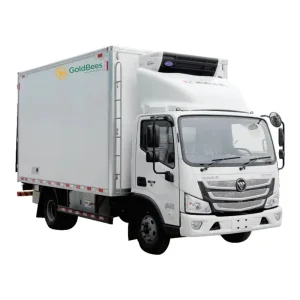
Engineered by Xinbaiqin Special Vehicle (CP M&E) to eliminate mortality rate surges, enforce stringent farm biosecurity barriers, and optimize payload capacity.
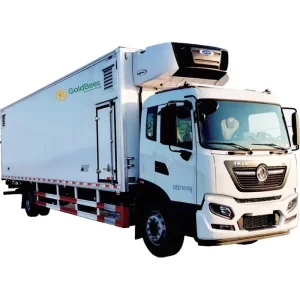







In modern industrialized animal husbandry, live cargo logistics represents the single highest biosecurity risk vector and the most volatile determinant of post-hatch viability and final carcass yield. Globally, commercial poultry integration produces tens of billions of broilers, layers, and breeding stock annually. The logistical movement connecting primary grandparent stock (GPS) facilities, parent stock (PS) hatcheries, commercial grow-out farms, feed processing mills, and slaughterhouses forms an uninterrupted cold-and-live distribution pipeline.
Historically, the animal husbandry sector relied heavily on open-slat flatbed haulers or rudimentary curtain-sided trucks for bird transit. Field epidemiology and commercial telemetry indicate that non-conditioned transit exposes livestock to extreme thermal stress (hyperthermia and hypothermia), toxic gas accumulation (NH3, CO2), acoustic agitation, and pervasive atmospheric pathogen plumes including Highly Pathogenic Avian Influenza (HPAI) and Newcastle Disease Virus (NDV). In commercial day-old chick (DOC) transit, temperature fluctuations exceeding ±1.5°C outside the narrow 32.0°C–35.0°C thermal envelope trigger immediate metabolic dehydration, delayed residual yolk sac absorption, suppressed early immunocompetence, and elevate 7-day mortality rates by up to 4.8%.
Consequently, tier-one protein conglomerates across the Americas, EMEA, and Asia-Pacific have shifted their capital expenditure from generic freight fleet conversions to specialized, biosecure, fully automated transport platforms. China has emerged as the global nexus for this mechanical transformation, combining expansive manufacturing capacity, deep agritech R&D, and integrated component ecosystems to engineer high-specification vehicles that meet or exceed stringent global animal welfare guidelines (such as EU Council Regulation EC No 1/2005) while minimizing total cost of ownership (TCO).
The core biological challenge of high-density poultry transportation stems from metabolic heat generation. A standard load of 60,000 to 120,000 day-old chicks dissipates considerable sensible and latent heat, releasing thousands of kilocalories per hour alongside substantial moisture and metabolic respiratory CO2. Under conventional convective cross-ventilation, stagnant micro-climatic thermal pockets inevitably form in the vehicle's central core, suffocating interior clusters while exterior birds suffer peripheral chilling.
State-of-the-art Chinese manufacturers, led by Xinbaiqin Special Vehicle under the CP M&E engineering banner, address this with multi-channel computational fluid dynamics (CFD) modeled climate architectures. Incorporating roof-mounted or belly-mounted auxiliary generator-powered HVAC packages, variable-frequency scroll compressors, positive-pressure air delivery plenums, and under-floor return vents, these specialized platforms circulate continuously conditioned, tempered fresh air across every crate tier. Intelligent telemetry continuously samples carbon dioxide concentrations; if CO2 crosses 1,500 ppm, automated proportional dampers open fresh air intake dampers through primary G4 pre-filters and H13/H14 medical-grade HEPA filters, neutralizing incoming bio-aerosol pathogens while preserving micro-climatic homeostasis.
A convergence of precision automotive robotics, complete metallurgy supply networks, and feedback from operating environments within the world's largest protein clusters.
Unlike third-party conversion shops, our engineering is directly informed by CP Group’s global agricultural ecosystem. Every body design, sensor threshold, and ventilation layout is validated against real operational conditions across modern feed mills, commercial layer barns, and industrial hatcheries.
By utilizing aerospace-grade 6061-T6 extruded aluminum alloys alongside high-tensile structural steel (e.g., Domex/QSTE), tare weight is reduced by 15% to 28% compared to traditional builds. This engineering directly translates to higher payloads per trip within local axle load limits.
Our modular bodies are designed to interface seamlessly with all primary domestic and international commercial chassis, including Scania, Volvo, Mercedes-Benz Actros, MAN, Isuzu, Hino, Sinotruk HOWO, FAW Jiefang, Foton Auman, and Dongfeng commercial platforms.
Rigorous biosecurity demands aggressive chemical foam washings, high-pressure hot water lances (80°C+), and terminal thermal fogging. Vehicle internal compartments feature robotic continuous-weld seams, IP69K sealed electrical harnesses, and non-porous antimicrobial gelcoats.
Every vehicle functions as an intelligent industrial node. Integrated microcontrollers broadcast multi-point temperature, humidity, static cabin pressure, CO2 levels, and door-interlock biosecurity logs via 4G/5G MQTT telemetry directly to central farm enterprise systems.
China's centralized production cluster in Cixi, Zhejiang leverages localized vertical integration across hydraulics, thermal composites, and structural sheet metal. This delivers up to 40% capital cost savings versus European builds, combined with readily available export spare parts.
Global livestock haulage does not operate in uniform conditions. Fleet engineers must design vehicle thermal and air-exchange envelopes for extreme geographic and seasonal operational realities:
Operating environments in regions such as Thailand, Indonesia, Brazil, and Nigeria frequently present ambient temperatures from 36°C to 44°C combined with relative humidity levels exceeding 85%. Under these conditions, natural evaporative cooling mechanisms in live broilers fail, leading to rapid metabolic heat buildup and high dead-on-arrival (DOA) rates at processing facilities.
Xinbaiqin configurations for these climates feature high-capacity, multi-compressor refrigeration circuits paired with high-volume evaporators and auxiliary diesel generator systems. Insulated composite body panels incorporate high-density polyurethane (PU) or extruded polystyrene (XPS) cores skinned with fiberglass-reinforced plastic (FRP), delivering thermal heat transfer coefficients (U-values) as low as 0.28 W/m²·K. Roof mounted misting nozzles and high-velocity ventilation fans maintain air speed across feather canopies at 1.8 to 2.2 m/s, dissipating latent heat during transit delays.
Hauling day-old chicks or breeding stock through winter environments in regions such as Kazakhstan, Northern China, or Canada presents the opposite challenge: external ambient conditions regularly drop below -30°C. If cold air bypasses conditioning, incoming drafts induce hypothermia in hatchlings within minutes.
Our sub-zero logistics configurations deploy independent high-output liquid fuel or hydronic heating systems that pre-heat and condition intake fresh air before it reaches live animal compartments. Proportional thermostatic control valves balance recirculated interior air with fresh tempered airflow to sustain cabin targets of 33.0°C ± 0.5°C, while automated louver shutters prevent wind-chill infiltration during high-speed highway transit.
| Engineering Dimension | Traditional Open/Curtain Haulers | Standard Commercial Box Reconversion | GoldBees / Xinbaiqin Specialized Transporter |
|---|---|---|---|
| Thermal Deviation Range | ±8.0°C to ±15.0°C (Uncontrolled) | ±3.5°C to ±5.0°C (Non-uniform) | ±0.5°C Multi-Zone Micro-Controlled |
| Biosecurity Air Filtration | None (Ambient exposure to plumes) | Basic G3/G4 Dust Mesh | 3-Stage: Pre-Filter + Activated Carbon + H14 HEPA |
| Air Exchange Architecture | Uncontrolled ram-air turbulence | Single-point front discharge | Positive-Pressure Laminar Ceiling Plenums + CFD Floor Return |
| Sanitization Compatibility | Wood/Steel frame corrodes; porous | Plywood liners harbor bacteria/spores | Seamless Robot-Welded 6061 Aluminum / IP69K Sealed |
| Payload-to-Tare Ratio | Poor (Excessive chassis deadweight) | Standard Heavy Steel Build | Optimized Lightweight Aero Alloys (-18% Tare Weight) |
| Mortality Impact (DOA Rate) | 1.5% to 5.0%+ (Seasonal spikes) | 0.8% to 1.8% | < 0.05% Documented Consistent Field Rate |
The commercial poultry transport sector is undergoing rapid modernization driven by three primary technological shifts:
1. Electrification and New Energy Vehicles (NEV): Tightening carbon emission regulations near urban processing hubs have spurred the adoption of pure electric and hybrid bulk feed transport trucks. Xinbaiqin's NEV bulk feed series integrates high-density lithium iron phosphate (LiFePO4) battery packs that power both vehicle propulsion and electric-hydraulic auger discharge systems, enabling silent, zero-emission unloading at feed silos without idling diesel engines.
2. Closed-Loop Pathogen Interception Systems: The global persistence of HPAI clades has made farm-to-farm cross-contamination a top operational risk. Next-generation poultry vehicles are equipped with onboard UV-C germicidal irradiation banks within recirculating ducts and electrostatic precipitation modules that destroy viral and bacterial RNA in incoming and exhaust air streams.
3. Automated Harvesting and Mechanical Caging Interfaces: To address agricultural labor shortages, modern integrated systems interface automated mechanical chicken harvesting harvesters with custom-engineered transport trailers. Hydraulic tail-lifts, roller-bed decks, and automated crate locking mechanisms reduce bird handling stress and cut loading and unloading times by over 60%.
Critical engineering evaluation criteria for commercial poultry and livestock fleet procurement teams.
Determine whether thermal conditioning systems should operate off the primary engine power take-off (PTO) or an independent diesel generator set (e.g., Perkins, Kubota). Independent gen-sets provide continuous climate security if the primary truck engine fails during highway transit.
Select discharge mechanisms based on farm silo heights: choose electric/hydraulic auger screws for horizontal and semi-vertical setups, or pneumatic blower systems for elevated grain and feed silos requiring gentle pellet handling to minimize fines.
For live bird and swine transports, specify deck vertical clearance, anti-slip drainage profiles, internal drinking nipples, and motorized hydraulic tail-lifts to comply with international humane transport standards (such as EC 1/2005 or North American TQA certifications).
In-depth technical answers addressing engineering validation, chassis adaptation, and operational biosecurity.
Explore additional specialized machinery, semi-trailers, automated systems, and turnkey farm support equipment from Xinbaiqin Special Vehicle.