Direct manufacturer supply spanning ATP-rated multi-temperature refrigerated boxes, automated pneumatic/auger bulk transport, and biosecure transit units.







An authoritative analysis of temperature-controlled freight logistics, cross-border food compliance, and China’s strategic manufacturing transformation.
The contemporary cold chain logistics sector has transitioned from an operational support vertical into a mission-critical vector of global food security, bio-pharmaceutical integrity, and decarbonized transit economics. With the global refrigerated transport market expanding at an annualized Compound Annual Growth Rate (CAGR) surpassing 8.4%, enterprise fleet owners face severe regulatory pressures: meeting ATP (Accord sur les Transports Périssables) Class FRC criteria, conforming to HACCP protocols, and slashing diesel idling emissions while mitigating urban noise pollution.
Within this international theater, Chinese specialized vehicle production has undergone a fundamental architectural evolution. Leading manufacturers such as Xinbaiqin Special Vehicle Co., Ltd. (in alliance with CP M&E of Charoen Pokphand Group) have shifted away from primitive manual composite bonding toward fully automated, high-pressure polyurethane foaming presses, vacuum-assisted resin transfer molding (VARTM), and unified digital quality architectures. The conventional trade-off between structural rigidity and thermal degradation has been solved through composite sandwich wall configurations featuring eliminated metallic thermal bridges and optimized microcellular core matrices.
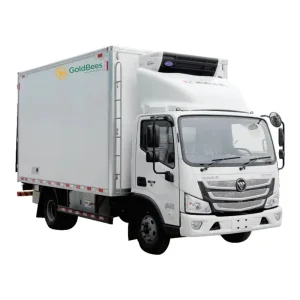
Furthermore, the integration of heavy-duty commercial chassis (sourced from global tier-1 platforms including Sinotruk, Foton, FAW, Scania, and Isuzu) with aerodynamically contoured box enclosures has yielded unprecedented fuel efficiencies. Fleets deploying Xinbaiqin's custom multi-temperature insulated superstructure achieve measurable operational savings across high-latitude sub-zero routes and extreme tropical humidity corridors alike.
Polyurethane structural ribs with specialized polyamide isolation blocks guarantee structural continuity without thermal conductivity bypasses.
Seamless mechanical PTO (Power Take-Off) coupled with 380V three-phase electric standby inputs enables emission-free warehouse depot staging.
Proprietary microprocessors dynamically balance evaporator fan speeds, modulation valves, and hot-gas defrost cycles to hold ±0.3°C tolerances.
A rigorous inspection of vacuum laminating, continuous polyisocyanurate (PIR) cores, and sub-floor thermal aerodynamics.
The manufacturing standard of refrigerated truck superstructures is determined by the chemistry of its composite panels and the metallurgical precision of its subframe assembly. At the 66,667 m² Cixi campus, panels are fabricated via an uninterrupted single-piece wet lamination process under negative vacuum pressure (0.1 MPa) on automated heated press beds reaching 35 meters in continuous length.
The core thermal barrier utilizes ultra-dense, closed-cell polyisocyanurate (PIR) or high-performance extruded polystyrene (XPS) with density parameters ranging from 42 kg/m³ to 48 kg/m³. By refining the microcellular pore structure to achieve a closed-cell ratio exceeding 96%, our thermal conductance values consistently test below 0.020 W/m²·K. This enables ATP Class FRC certification, guaranteeing an internal hold temperature of -20°C in external ambient settings of +30°C.
| Performance Dimension | Xinbaiqin GoldBees PIR/FRP Spec | Standard Market XPS/Metal Spec | Operational Impact & ROI Benefit |
|---|---|---|---|
| Thermal Conductivity (K-Factor) | 0.018 – 0.021 W/m·K | 0.032 – 0.038 W/m·K | Up to 34% reduction in refrigeration compressor run-time |
| Tare Weight (8.6m Box Body) | 2,150 kg (High-Strength Composite) | 2,780 kg (Steel Skin + Timber Frame) | 630 kg added legal payload capacity per freight movement |
| Moisture Absorption Rate | < 0.5% by volume (96h immersion) | > 3.8% by volume | Prevents water ingress rot; eliminates tare weight creeping over 10 years |
| Subframe Anti-Corrosion Treatment | Hot-Dip Galvanizing (85µm) + E-Coat | Single-Coat Alkyd Primer Spray | Withstands daily biosecurity chemical washdowns (pH 2–12) |
| Air Leakage Coefficient | 0.08 m³/(m²·h) at 100 Pa | 0.25 m³/(m²·h) at 100 Pa | Surpasses ATP Class FRC deep-freeze transit containment standards |
The inner flooring framework is engineered specifically for pallet jack and forklift point loads. Extruded T-profile aluminum alloy (6061-T6) interlocking air duct floor sections are welded continuously to high-skirting kick-plates (300mm to 450mm height). This creates a monolithic, hermetically sealed bathtub basin that prohibits blood, organic fluids, or cleaning chemicals from penetrating the structural floor insulation.
Evaluating commercial vehicle electrification, solar-assisted dynamic refrigeration, and AI CAN-bus telemetry.
Replacing mechanical belts with 800V high-voltage direct-current electric power take-off systems connected to high-capacity CATL/BYD LFP traction batteries, ensuring continuous cold output even during prolonged vehicle engine shut-off.
Transitioning from fluorinated hydrocarbons (R404A/R134a) to R744 (transcritical carbon dioxide) and R290 (propane) circuits, aligning with Kigali Amendment directives and EU F-Gas phase-downs.
Edge-computing gateways cross-reference GPS geofencing, ambient weather forecasting, and ultrasonic door sensors to pre-cool box interiors and automatically lock out unnecessary defrost cycles during rapid urban drops.
The industry trajectory also showcases a significant ramp-up in aerodynamic trailer sculpting. Modern Xinbaiqin reefer semi-trailers incorporate rear boat-tails, side skirts, and roof-integrated solar arrays. The solar modules trickle-charge the refrigeration auxiliary battery banks, offsetting up to 18% of parasitic electrical loads during long-haul daylight runs across arid or high-insolation routes.
Engineered cold containment adapted to diverse biological payloads, high-risk biosecurity perimeters, and specialized logistics corridors.
Sensitive hatchery logistics demand strict microclimate stabilization. Day-old chicks generate substantial metabolic heat yet cannot tolerate drafts. Our dedicated chick transporters integrate fresh-air intake pre-heaters, multi-tier laminar ventilation, and positive-pressure filtration systems keeping internal mortality rates below 0.05% on 1,000 km trips.
Equipped with overhead stainless-steel hook conveyor tracks (load-bearing up to 1,200 kg per meter), high-speed dual evaporators, and integrated blood sump troughs. The system guarantees rapid pull-down from +38°C slaughterhouse carcass temperatures to +2°C muscle equilibrium without weight-reducing moisture loss.
Complying strictly with WHO Good Distribution Practice (GDP) and FDA 21 CFR Part 11 validation. Redundant dual-refrigeration units, multi-point calibrated Pt100 temperature sensors, automated backup generators, and unalterable blockchain-linked telematics logging prevent catastrophic thermal breaks.
A transparent overview of the technical testing rigor applied prior to vehicle dispatch from our Cixi production campus.
International procurement directors must guarantee that vehicles delivered to overseas regions (such as Southeast Asia, the Middle East, Central Asia, Latin America, and Eastern Europe) satisfy stringent commercial vehicle inspection standards. Xinbaiqin operates a multi-stage factory acceptance testing (FAT) regimen:
Every newly prototyped box configuration undergoes a 12-hour thermal equilibrium analysis within a steady-state calorimeter chamber to empirically verify the K-value against ATP Class FRC benchmarks.
A closed-loop high-pressure multi-nozzle spray chamber subjected to 35 kPa precipitation pressure for 60 continuous minutes confirms zero moisture ingress across perimeter gaskets and refrigeration bulkhead interfaces.
Multi-axis hydraulic shaker rigs replicate 100,000 km of severe off-pavement structural torsional stresses to guarantee no panel de-bonding, frame shear, or refrigerant tubing stress cracking occurs.
Heavy-payload transport superstructures, electrified logistics units, and automated field handling solutions engineered for maximum durability.





Critical operational, technical, and logistics intelligence for international supply chain directors and fleet buyers.
