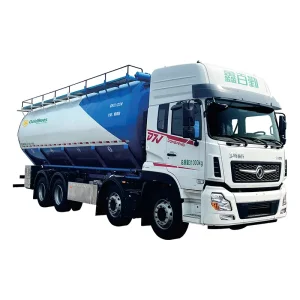
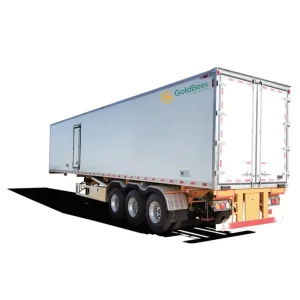
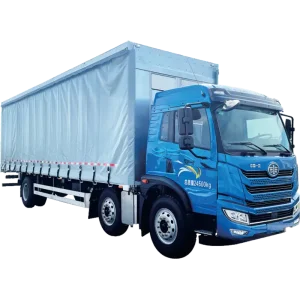
Explore heavy-duty bulk delivery trailers, zero-emission electric carriers, and climate-controlled livestock transport solutions manufactured to international CE and ISO benchmarks.
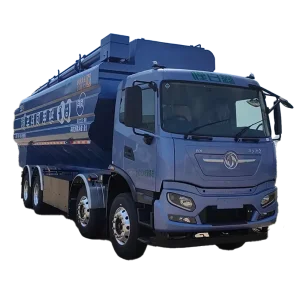
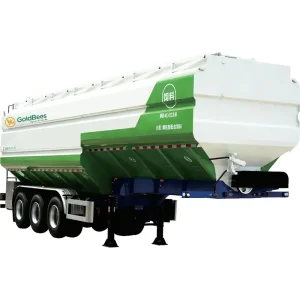
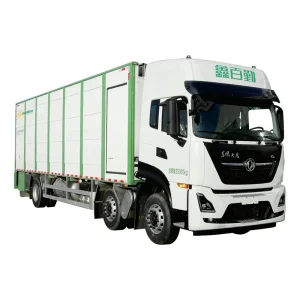
From simple mechanical dump trucks to intelligent pneumatic and auger-driven biosecure mobile ecosystems: how modern livestock operations are optimizing every link of feed intake and bio-containment.
The industrial livestock sector is experiencing unprecedented consolidation. The rise of mega-farms housing tens of thousands of swine or millions of poultry broilers and layers demands logistical coordination operating with zero tolerance for downtime, feed contamination, or nutritional degradation. A bulk animal feed vehicle is no longer merely a transportation tank; it has transformed into a critical bio-containment barrier and an active participant in feed conversion ratio (FCR) management.
Modern feed vehicle manufacturing now addresses three major structural shifts across global agricultural supply chains:
Global outbreaks of African Swine Fever (ASF) and Highly Pathogenic Avian Influenza (HPAI) have forced commercial integrators to isolate logistics. Vehicles must endure aggressive terminal sanitation cycles—utilizing hot thermal baking, corrosive disinfectant misting, and high-pressure steam without premature wiring harness degradation or structural seam oxidation.
With tightening axle-load restrictions across North American DOT, European EC directives, and Asian transport frameworks, vehicle builders utilize 5083/5182 high-tensile marine-grade aluminum alloys and advanced structural FEA simulations. This eliminates deadweight, reducing diesel consumption per ton-kilometer by up to 18%.
Integration of wireless RF remote controls, CAN-bus PLC automation, anti-clogging safety interlocks, and automated hatch actuation removes drivers from elevated danger zones atop the tank while generating precise digital audit logs verifying exact delivery weight, compartment source, and silo matching.
Procuring specialized fleet equipment requires multi-layered diligence beyond base pricing. Discover how multinational agribusinesses audit custom feed vehicle manufacturers.
Engineering tanks to match diverse global chassis makes—such as Scania, Volvo, Mercedes-Benz, FAW, Shacman, Sinotruk, and Isuzu—requires precise sub-frame calculation, bolt-on torsion relief brackets, and dynamic weight distribution balancing.
Procurement teams evaluate auger discharge speeds (up to 1.2 – 2.0 tons per minute) versus pneumatic blowers for ultra-tall silos. Custom builders must provide both hydraulic-driven screw configurations and high-volume low-pressure (HVLP) compressor integrations.
Modern feed mills synthesize specialized diets across lifecycle stages (starter, grower, finisher). Double-walled bulkheads, zero-clearance slide gates, and leakproof rubberized seals prevent cross-contamination of medicated vs. non-medicated batches.
Leading buyers look beyond initial CAPEX. Tank longevity, corrosion-proof electrical seals, modular hydraulic pump availability, and standardized wear bushings dictate operating uptime and residual fleet value over a 10-to-15-year service lifecycle.
How the Xinbaiqin (CP M&E GoldBees) manufacturing hub in Cixi, Zhejiang leverages smart robotics, aerospace welding, and integrated supply chains to achieve unmatched custom delivery times.
The manufacturing of heavy animal feed transport equipment requires an intricate union of chassis mechanics, hydraulic fluid power, pressure vessel integrity, and precision sheet metal fabrication. Xinbaiqin Special Vehicle Co., Ltd., emerging from the electromechanical expertise of Thailand's Charoen Pokphand Group (CP M&E), stands at the forefront of this industrial transformation. Operating across a modern 66,667 m² facility with an annual manufacturing volume exceeding 2,000 units, the plant bridges heavy industrial scalability with bespoke agile engineering.
Tanks undergo precision multi-axis CNC laser cutting and automated longitudinal seam welding. This reduces micro-porosity in weld seams, preventing stress cracking caused by high cyclic vibration on washboard gravel rural roads.
Located in the Yangtze River Delta manufacturing cluster, the factory draws upon immediate domestic access to high-tensile structural steel, aviation aluminum plates, hydraulic motors, and electronic harnesses. This tight supply ecosystem shortens lead times by 40% compared to Western counterparts.
Unlike pure automotive bodybuilders, GoldBees benefits directly from Charoen Pokphand's expansive internal network of commercial feed mills, poultry grow-outs, and breeding swine facilities. Vehicles are rigorously iterated using first-hand feedback from fleet drivers and biological safety officers.
Feed vehicle performance varies significantly across diverse climates, topography, and road networks. Discover how custom engineering optimizes fleets across major continents.
Operational Profile: Long-distance highway transit followed by unpaved farm access roads; high-volume semi-trailers (up to 40 – 60 m³ capacity).
Customization Needs: Heavy-duty tri-axle air suspensions, extra-long 360-degree rotating hydraulic discharge augers to reach 10-meter silos, and heavy roll-stability electronic braking systems.
Operational Profile: Stringent carbon emission rules, tight turning radii in historical villages, and rigid noise pollution thresholds during early morning deliveries.
Customization Needs: Low-noise electric auger drive units (plug-in farm power integration), steerable rear axles, pneumatic discharge with integrated dust collector bag filters, and CE-compliant safety handrails.
Operational Profile: Extreme ambient humidity, heavy monsoon deluges, and rapid microbial growth rates within unventilated grain tanks.
Customization Needs: High-grade corrosion-resistant stainless-steel bottom chutes, insulated double-skin compartment tops to avoid condensation sweat, and IP69K sealed waterproof wiring harnesses.
Authoritative technical answers to common queries raised by agricultural fleet directors, procurement executives, and integrator operations leaders.
Hydraulic-drive augers utilize the truck engine's Power Take-Off (PTO) to run hydraulic pumps and high-torque motors. This provides stepless variable speed control and high torque directly in off-grid field environments. Electric-drive augers utilize an onboard high-capacity AC electric motor that can connect directly to the farm’s 380V/480V external shore power grid. This eliminates truck diesel idling during discharge, cuts emissions, prevents farm exhaust ingress into animal sheds, and reduces fuel operational costs by up to 65%.
Every GoldBees bulk feed tank utilizes robotic laser-welded division bulkheads with 100% continuous perimeter seals. Each compartment features independent bottom slide gates with dual self-cleaning scraper gaskets. When discharging distinct feed formulations (e.g., medicated nursery starter pellets followed by non-medicated finisher mash), our clean-out bottom inspection doors and high-pressure air purgative systems ensure residual retention of less than 0.05% of compartment volume.
Yes. Xinbaiqin regularly exports completed upper-body tank assemblies and sub-frame integration kits in knocked-down (CKD or SKD) format. We supply full technical 3D CAD interface drawings, subframe connection brackets, drive linkage components, and hydraulic interface documentation compatible with local chassis brands across Europe, Southeast Asia, South America, and Africa.
All electrical conduits, sensor nodes, and CAN-bus control units are built to IP67/IP69K standards, fully rated against 100-bar high-pressure hot water washing (80°C) and chemical disinfectant foam applications (glutaraldehyde, peracetic acid, quaternary ammonium). Tank exteriors feature automotive-grade polyurethane baking enamel coatings resistant to long-term corrosive chemical exposure and UV weathering.
Pneumatic conveying is recommended when feed silos exceed 12 meters in height, are situated beyond the reach of an 8-to-11-meter mechanical auger arm, or when complete airtight conveyance is required to prevent exterior environmental exposure. Mechanical augers are preferred for standard farm geometries due to lower capital expense, zero air filtration maintenance, lower energy consumption, and superior protection against pellet breakage.
Standard configured models (such as 20–45 m³ electric/hydraulic auger trucks) typically maintain a factory build schedule of 25 to 35 business days from chassis receipt or drawing sign-off. Bespoke semi-trailers or NEV specialized electric bodies require 45 to 60 days, including comprehensive hydraulic load-testing, weld ultrasonic inspection, and simulated road vibration trials prior to port dispatch.
Review additional customized semi-trailers, integrated mill solutions, day-old chick climate transport, and live poultry systems manufactured for global turnkey operations.