
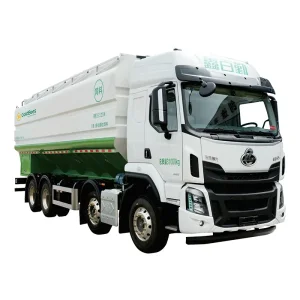
Explore our industrial standard bulk feed transport trucks, electric auger systems, and bio-protected livestock haulage platforms.





Modern intensive livestock production is confronting unprecedented structural challenges: volatile feed component costs, aggressive biosecurity imperatives (such as African Swine Fever and Highly Pathogenic Avian Influenza), and stringent carbon emission regulations. Custom bulk feed bin trailers suppliers are no longer mere mechanical welders; they serve as critical infrastructural partners in protecting animal health and safeguarding operating margins.
Traditional bagged feed logistics impose prohibitive manual labor costs, high packaging waste, and continuous micro-exposure to environmental contaminants. Industrial integration mandates high-capacity semi-trailers and specialized rigid feed bin trucks capable of transporting 20 to 65 cubic meters of formulated pellet feed under hermetically sealed conditions directly from mill batching plants to isolated exterior farm silos.
Comparative quantitative metrics across a 10,000-head swine finishing network over a standard 365-day logistical cycle:
A bulk feed bin trailer must operate seamlessly across varied regional terrains, legal axle weight envelopes, and extreme environmental dynamics.
Configured for interstate gross weight compliance (Federal Bridge Formula), utilizing long-wheelbase tandem and tri-axle semi-trailers. Systems incorporate high-reach top augers engineered to load massive 40-foot vertical farm silos rapidly while resisting freezing hydraulic fluids in winter conditions.
Enhanced passive and active tank ventilation prevents inner condensation and feed bridging caused by diurnal temperature swings and torrential monsoons. Aluminum-magnesium alloy shells resist localized corrosion, while sealed power units prevent tropical insect and moisture ingress.
Compact rigid truck layouts and low-center-of-gravity semi-trailers fitted with electronic steering axles to negotiate narrow rural village roads. Noise-damped pneumatic blowers and enclosed hydraulic drive motors meet stringent municipal acoustic directives near residential interfaces.
Xinbaiqin Special Vehicle leverages CP M&E's extensive agribusiness manufacturing background to deliver structural integrity, vertical integration, and modular customization at scale.
Continuous longitudinal tank seams are executed using automated submerged arc and laser-tracking robotic cells, ensuring fatigue-resistant hermetic seals that eliminate micro-cracking across prolonged vibration cycles.
Equipped with dual electric motor drive and auxiliary PTO-driven hydraulic systems. Drivers can plug into farm grid infrastructure during unloading to eliminate engine idle emissions, noise, and diesel fuel burn.
Integrated dynamic axle load cells, wireless remote-controlled boom rotation (up to 270°), and pneumatic pressure monitors provide operators with precise compartment discharge analytics directly via mobile HMI interfaces.
Subframe designs engineered for universal chassis compatibility (Dongfeng, FAW, Foton, Volvo, Scania, MAN). Every tank module features hot-dip galvanized mounting brackets and marine-grade epoxy surface protections.
The global transition to Net-Zero feed-to-food supply chains requires continuous innovation in chassis and body integration:
Every kilogram eliminated from the tare weight of a bulk feed trailer represents a kilogram of usable payload gained for life. Xinbaiqin's engineering focus leverages finite element analysis (FEA) to eliminate structural redundancies in stress-bearing members.
By migrating from traditional Q235 structural steel to aerospace-grade 5083/5182 aluminum-magnesium alloys and custom roll-formed side panels, our dry bulk bodies decrease trailer gross weight by up to 35%. This engineering translates into reduced diesel consumption on empty return legs, heightened resistance against corrosive organic feed acids, and full compliance with regional axle weight ceiling thresholds across worldwide export markets.
Ensuring frictionless homologation and operational readiness across diverse international regulatory frameworks.
Vehicles are engineered to meet international safety and environmental norms including CE machinery directives, DOT braking and lighting parameters, ADR dangerous goods mechanical standards, and GCC Gulf market high-ambient operational thresholds.
Backed by CP M&E's worldwide commercial infrastructure, we maintain localized inventory of mission-critical hydraulic motors, planetary reducers, auger bearings, and electronic PLC controllers to minimize downtime.
Comprehensive bilingual commissioning procedures, digital operation manuals, and remote video maintenance diagnostics empower local agricultural fleet operators to maintain peak hydraulic and electrical discharge efficiency.
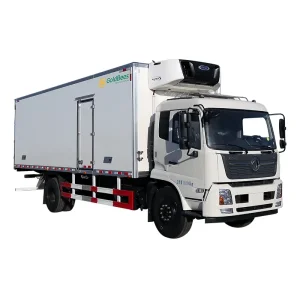
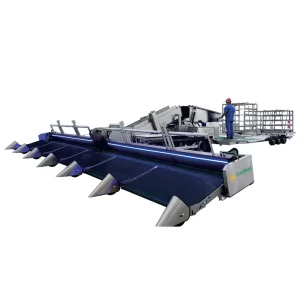
Complete your operations with our multi-temperature cold-chain units, poultry handling machines, and livestock semi-trailers.

Comprehensive engineering clarifications for fleet executives, agricultural integrators, and equipment procurement managers.