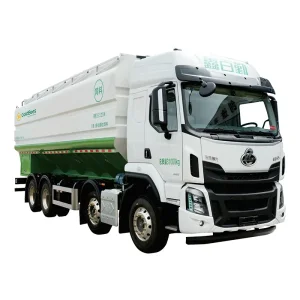
Precision temperature control, negative pressure biosecurity, and automated sorting vehicles engineered for global farming integrators.
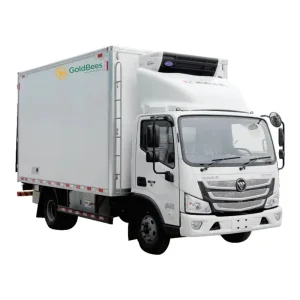
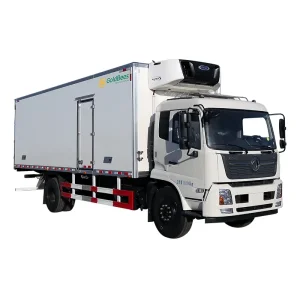


Transporting day-old chicks (DOC) is not mere general freight or standard refrigerated trucking. It is a time-critical biological supply chain operation directly governing first-week poultry survivability and lifelong FCR.
Newly hatched chicks lack an active homeothermic regulation mechanism during the first 72 hours of post-hatch life. They cannot shiver effectively or sweat. Exposure to cabin temperatures outside the narrow 30°C–32°C range triggers rapid metabolic stress, yolk sac malnutrition, and irreversible early flock mortality.
Dense logistics packing releases massive biological carbon dioxide, metabolic moisture, and thermal wattage. Standard reefers recirculate stale air, leading to fatal asphyxiation. Specialized transport superstructures must guarantee continuous, lamellar fresh air displacement exceeding 25–40 m³/h per 1,000 chicks.
Global outbreaks of Highly Pathogenic Avian Influenza (HPAI) and Salmonella demand impenetrable hermetic separation. Transport trucks must integrate positive/negative differential pressure airflow, high-efficiency particle filtration (HEPA), and seamless composite interior panels resistant to corrosive phenolic washes.
Xinbaiqin Special Vehicle (in alliance with CP M&E) engineers GoldBees day-old chick trucks with integrated aerospace-grade climate management, ensuring absolute uniformity across multi-tier chick boxes.
Patented pressurized floor ducts and perforated side-wall plinths guide conditioned air vertically through chick crates, preventing thermal dead zones between top and bottom tiers.
Dual-redundant onboard diesel generator sets provide seamless power continuity to climate and ventilation modules, eliminating risks during engine downtime or cross-border layovers.
Real-time cloud monitoring of CO₂ levels, relative humidity (50–70% RH target), and multi-point temperature sensors streamed straight to fleet dispatch and farm control towers.
Integrated mist nozzles, anti-microbial gel-coat FRP panels, and sloped floor gutters enable certified chemical CIP (clean-in-place) disinfection between hatchery runs.
Combining deep vertical agribusiness integration via CP M&E with the world's most responsive precision coachbuilding ecosystem.
Unlike generic coachbuilders, Xinbaiqin operates under the electromechanical umbrella of CP M&E (Charoen Pokphand Group). Every intake channel, filter, and floor grate is refined via billions of broilers and layers moved across Asia's largest industrial operations.
Our engineering line crafts Day-Old Chick bodies tailored for global chassis brands: Scania, Volvo, Mercedes-Benz, MAN, Isuzu, FAW, Foton, and Sinotruk. We deliver complete built-up vehicles (CBU) or CKD/SKD superstructures ready for overseas chassis mounting.
Integrated sandwich panel vacuum bonding, CNC robotic welding, and automated component supply compress vehicle capital expenditure by 30%–45% compared to Western European alternatives without compromising component longevity or thermal fidelity.
| Performance Parameter | Standard Refrigerated Box Truck | GoldBees Dedicated Chick Transporter | Industrial Value Impact |
|---|---|---|---|
| Airflow Circulation Rate | Recirculated 2–5 m³/h (Closed Loop) | Continuous 35–50 m³/h fresh filtered air | Prevents batch asphyxiation & high mortality |
| Internal Thermal Gradient | ± 4.5°C to ± 6.0°C variance | Within ± 0.6°C across all box stacks | Eliminates localized heat and chill trauma |
| CO₂ Concentration Control | Exceeds 4,000 ppm in long transits | Maintained < 1,500 ppm automatically | Protects newborn chick respiratory organs |
| Biosecurity / Filtration | Coarse wire dust screen | Multi-stage G4 pre-filter + HEPA H13 | Zero pathogen intake from highway routes |
| Disinfection Resilience | Riveted panels, crevices trap moisture | Seamless gel-coat FRP, sealed IP68 harnesses | Resists corrosive terminal CIP washdowns |
Engineered for extreme operating environments: from sub-zero Eurasian winters to blistering Middle Eastern and African desert routes.
In regions like Southeast Asia, Latin America, and the Middle East, extreme solar radiation and ambient humidity threaten severe hyperthermia. GoldBees vehicles employ high-capacity multi-compressor cooling, insulated polyurethane sandwich shells (K-value < 0.35 W/m²K), and continuous evaporative thermal extraction.
In Eastern Europe, Northern China, and Central Asia, preserving chick warmth without suffocating the cargo is critical. Vehicles integrate high-efficiency auxiliary hydronic diesel heaters and intelligent mixing chambers that temper incoming sub-zero fresh air before it touches hatchling crates.
Long journeys from central hatcheries to outgrower sheds across unpaved roads demand air-suspension chassis integration, reinforced sub-frames, and vibration-dampened crate stacking lattices that protect hatchlings from acute yolk rupture and physical stress.
How the industry is migrating from manual reactive driving to automated, predictive, and zero-emission biological transit.
With the growth of carbon-neutral commitments by international food conglomerates, pure electric (BEV) and hybrid chassis are entering short- and mid-haul hatchery distribution. Electric architecture enables constant, silent auxiliary battery power to climate systems without idling diesel engines.
Modern sensor matrices no longer just react to temperature swings. Advanced algorithms ingest external weather forecasts, traffic congestion delays, and chick bio-heat production models to adjust ventilation, chilling, and airflow dynamically before cabin deviations occur.
Emerging European Union and multinational regulatory updates mandate auditable real-time data logs of animal density, environmental temperature, and trip duration. Traceable cloud black-box recorders are shifting from optional luxuries to mandatory compliance hardware.
Technical clarifications regarding truck specifications, biosecurity validation, chassis compatibility, and export logistics.
Capacities range from rigid 4x2 trucks carrying 30,000–50,000 chicks, 6x2/8x4 heavy units carrying 70,000–100,000 chicks, up to tri-axle semi-trailers configured for 150,000–220,000 chicks per haul, customized for local axle-load legal caps.
The superstructure operates continuous, positive-pressure fresh air exchangers equipped with automated sensor dampers. If CO₂ concentrations exceed 1,500 ppm, exhaust intake vents instantly increase displacement volumes without lowering cabin temperatures.
Yes. We regularly supply completely knocked-down (CKD) or semi-knocked-down (SKD) body kits with pre-assembled climate towers, wiring looms, and subframes to save international freight and bypass local commercial chassis import tariffs.
All wiring harnesses use IP68/IP69K-rated sealed deutsch connectors. Interior surfaces feature seamless antimicrobial polyurethane gel-coat, 304/316 stainless-steel crate latches, and sloped floor channels for rapid, self-draining chemical washdowns.
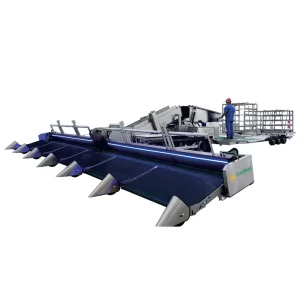
Explore our full line of pneumatic bulk feed carriers, multi-deck swine trailers, and automated live-poultry harvesters.