

Engineered specifically for agricultural integrators requiring uncompromising environmental stability, automated feed discharge, and advanced biosecurity isolation between hatcheries, feed mills, and commercial farm complexes.

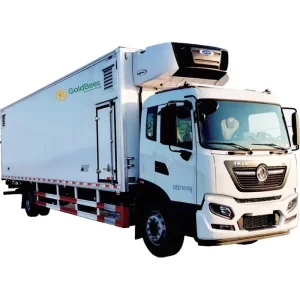




The global commercial poultry sector operates within precise biological boundaries. Day-old chicks (DOC) cannot internally thermoregulate during their initial 72 hours post-hatch, leaving them entirely reliant on external thermal equilibrium. Custom heated poultry transport vehicles have evolved from simple insulated boxes into complex thermodynamic engineering systems designed to eliminate cold-chain shocks, hypothermic stress, and metabolic dehydration.
Chicks produce roughly 2 to 4 Watts of metabolic heat per box of 100 birds, yet ambient sub-zero conditions rapidly strip ambient temperature through conductive body panel dissipation. Our dynamic hydronic and diesel-fired auxiliary heating matrices counter heat loss without hot-spot channeling, preserving steady internal box microclimates.
Maintaining temperature alone fails if high-volume fresh air exchange does not clear respiration byproducts. The vehicle ventilation infrastructure delivers between 25 and 45 CFM per 1,000 birds, continuously purging metabolic moisture while restricting carbon dioxide levels strictly below 1,500 ppm across all loading heights.
Cross-contamination across poultry integrations triggers catastrophic disease outbreaks. Factory architectures implement multi-stage MERV 16 to H14 HEPA filtration, antimicrobial structural seamless gel-coat inner shells, and internal negative/positive pressure isolation dampeners to isolate external viral loads during long-haul transits.
The intensification of high-yield broiler genetics (such as Ross 308, Cobb 500, and Hubbard) along with commercial layer parent lines requires strict transportation governance. Modern agribusiness supply chains rely on regional mega-hatcheries that service farm clusters over 800 to 1,500 kilometers away. Sub-par transportation environments create physiological stress that lowers 7-day survivability and depresses flock Uniformity Ratios throughout finishing cycles.
| Transport Methodology | Thermal Variance (ΔT) | Air Velocity at Bird Level | CO2 Concentration Range | Average 7-Day Mortality Rate |
|---|---|---|---|---|
| Passive Curtain-Sided Vans | ± 8.5°C (Unregulated) | > 2.5 m/s (High Draft Chill) | 2,800 – 4,200 ppm (Critical) | 1.80% – 3.50% (High Loss) |
| Standard Reefer Box Trucks | ± 4.0°C (Cold Pockets) | 0.8 – 1.5 m/s (Inconsistent) | 1,800 – 2,600 ppm (Moderate) | 0.95% – 1.40% (Acceptable) |
| Custom Heated & Pressurized Vehicles | ± 0.5°C (Precision) | 0.15 – 0.30 m/s (Laminar) | < 1,100 ppm (Optimal) | < 0.08% (Industry Benchmark) |
When neonatal poultry experience environmental temperatures outside the 32°C to 35°C thermal comfort envelope, their bodies burn critical yolk reserves for thermal regulation instead of developing organ systems and immune pathways. Independent field studies demonstrate that a 2°C temperature drop during a 6-hour route can suppress final broiler body weight at slaughter by up to 140 grams per bird. In an industrial integration turning 40 million head annually, that performance gap equates to millions of dollars in unrealized yield.
Commercial integrators are retiring retrofitted commercial reefer bodies in favor of custom-engineered platforms built from the chassis up for animal payloads. Precision vehicle manufacturing addresses specialized agricultural criteria: specialized floor-drain wash systems, battery backup for continuous environmental control during truck rest periods, and high-idle engine auxiliary generators integrated with multi-redundant safety loops.
Compliance in commercial livestock and day-old chick logistics extends beyond standard motor vehicle roadworthiness. Fleets must satisfy international animal welfare mandates, biological sanitation protocols, and extreme thermal operational criteria.
Fully compliant with the World Organisation for Animal Health (WOAH) Terrestrial Animal Health Code and European Council Regulation (EC) No 1/2005. Vehicles feature continuous multi-channel black-box data logging of temperature, relative humidity, and transit vibration, providing tamper-proof documentation for import and veterinary clearance.
Internal cargo bays use high-pressure clean-in-place (CIP) spray manifolds, marine-grade continuous TIG-welded aluminum decking, and hermetically sealed wiring conduits rated to IP69K. The vehicle shell tolerates hot disinfectant foaming washes followed by bake-out cycles at 65°C for thermal virus deactivation.
Export-ready chassis subframe mounting systems adapt to European, American, and Asian commercial cab-chassis interfaces (including Scania, Volvo, Mercedes-Benz, FAW, Sinotruk, and Isuzu). Subframes accommodate localized overall height limits, gross vehicle weight (GVW) regulations, and axle-load mandates without sacrificing payload capacity.
Poultry transport operates in diverse climates worldwide. Heated systems must adjust dynamically when running through sub-arctic winters or across wide day-to-night desert temperature swings.
Regions: Northern Europe, Kazakhstan, Russia, Northern China, Canadian Prairies.
Operating Environment: External temperatures down to -40°C with severe wind chill and frozen road spray.
Technical Configuration: 100mm high-density polyurethane (PU) closed-cell composite sandwich panels, heated perimeter door frames with triple rubber seals, independent dual Webasto diesel coolant preheaters, and automated thermal recirculating mix chambers to prevent sub-zero incoming air shock.
Regions: Middle East (GCC), North Africa, Central Australia, Western US.
Operating Environment: Daytime peaks of +45°C dropping rapidly to near-freezing at night.
Technical Configuration: Reversible heat pump cycles integrated with chilled-water hydronics. The computerized controller shifts automatically from heavy active refrigeration to supplemental auxiliary heating, holding interior temperatures steady at 33°C across massive ambient swings.
Regions: Southeast Asia, Central America, Equatorial Africa.
Operating Environment: Ambient 30°C to 38°C with Relative Humidity exceeding 85%.
Technical Configuration: Dedicated desiccant dehumidification loops and high-velocity laminar air distributors. This system prevents moisture condensation inside chick boxes, keeping chick down dry and reducing pathogen incubation risks during inter-island transit.
The convergence of telematics, AI microclimate modeling, and commercial electric vehicles is transforming day-old chick logistics from reactive heating setups into predictive, self-optimizing mobile habitats.
Multi-array infrared thermal cameras paired with localized wireless sensor clusters monitor chick box surface temperatures directly. Machine-learning algorithms regulate individual airflow louvers and hydronic heating loops on the fly, eliminating localized thermal pockets across multi-tier loading decks.
Transitioning away from secondary diesel engines and engine-belt driven compressors. By integrating 800V DC bus architectures with high-capacity lithium iron phosphate (LFP) auxiliary battery banks, the environmental control system runs silently with zero exhaust emissions during loading, transit, and depot waiting periods.
Vehicle-to-everything (V2X) cloud connectivity logs thermal balance, air exchange volumes, and disinfection history continuously to secure databases. System alerts notify farm reception managers of microclimate conditions prior to unloading, linking delivery data directly with flock growth metrics.
From bulk feed deliveries to cold-chain meat logistics and automated harvesting, explore our factory-direct machinery built for scalable agribusiness operations.


Detailed technical insights for fleet directors, biosecurity compliance officers, and transport operations teams specifying custom heated poultry vehicles.