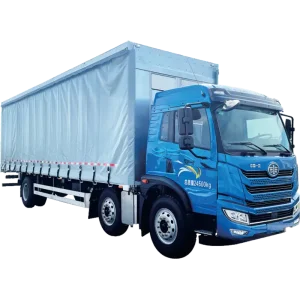
Browse our intelligent, precision-fabricated livestock transport systems manufactured by Xinbaiqin Special Vehicle Co., Ltd. for extreme biosecurity and maximum legal payload.
Analyzing the systemic transition toward bio-secure, climate-isolated semi-trailers in modern high-density animal husbandry operations worldwide.
Across North America, the European Union, Australia, and Asia-Pacific, livestock logistics is undergoing the most radical technological pivot in its history. Historically, livestock transport relied primarily on naturally ventilated, open-slat aluminum trailers. While mechanically straightforward, these legacy structures expose swine, cattle, and day-old chicks to catastrophic biosecurity breaches, ambient thermal extremes, and significant stress-induced shrinkage. In modern swine operations, an outbreak of African Swine Fever (ASF) or Porcine Reproductive and Respiratory Syndrome (PRRS) traced back to an unsealed transport vector can trigger multi-million-dollar depopulation protocols within an integrated agribusiness.
As a leading custom livestock semi-trailer factory affiliated with CP M&E (Charoen Pokphand Group), Xinbaiqin Special Vehicle has pioneered the transition toward fully enclosed, positive-pressure air filtration units. By treating the livestock semi-trailer not merely as a cargo box, but as an extended mobile biosafety compartment, industrial operators can maintain unbroken biological quarantine between breeding nucleus facilities, commercial grower farms, and slaughter processing infrastructure.
Integrating multi-stage HEPA and carbon filtration blocks external airborne viral plumes (PRRSv, PEDv, Avian Influenza) from infiltrating the animal deck during high-risk rural haulage corridors.
Automated variable-frequency ventilation combined with water-misting cooling and auxiliary floor heating maintains animals strictly within their thermal neutral zone, eliminating death loss.
Precision environmental regulation reduces animal dehydration and cortisol spikes, cutting body weight shrinkage by 1.8% to 2.4% over 800+ km transits, directly expanding meat yields.
Comprehensive factory engineering parameters designed to comply with global road transport standards (CE, DOT, ADR, GB1589).
| System Category | GoldBees Specialized Standard | Legacy Aluminum Slatted Trailers | Operational Value Advantage |
|---|---|---|---|
| Chassis & Structure | High-Strength Q960 Steel + 6061-T6 Marine-Grade Alloy | Standard Mild Steel or Single-Extrusion Al | Tare weight reduced by 18%; withstands aggressive disinfectants |
| Internal Decking | Hydraulic Lifting Decks (2, 3, or 4 levels) with Patented Grip | Manual ramps or fixed single/double floors | Loading speed doubled; prevents hoof slippage and bruising |
| Air Filtration | Positive-pressure F9 + H13 High-Efficiency HEPA Filtration | Natural ambient cross-ventilation (unfiltered) | Guaranteed interception of aerosol pathogens and viral vectors |
| Hydraulic Tailgate | Wireless Remote Control with Anti-Fall Automatic Locking Gate | Cable winch or basic manual fold-down ramps | Zero animal fallback; operator safe distance maintenance |
| Sanitation & Washdown | Integrated High-Pressure CIP Nozzles + Sloped Waste Channels | Manual hose washdown; flat floor retention | Wash and disinfection cycle reduced from 4.5 hours to 75 mins |
| Telematics & Sensing | AI IoT Deck: Temp, Humidity, CO2, NH3, Video & Weighing | Cabin temperature display only or no telemetry | Real-time compliance documentation and predictive animal welfare |
How custom livestock semi-trailer factories configure specialized running gear and environmental modules for extreme regional challenges.
Challenge: Persistent 38°C temperatures paired with 90%+ relative humidity causing fatal acute heat stress in market hogs and broilers.
Custom Setup: High-volume water evaporative wet curtains, high-static ducted blowers, auxiliary power generation (APU), and insulated roof sandwich panels.
Challenge: Sub-zero winter operations (-30°C) resulting in pig frostbite, deck icing, and corrosive chemical salt on roadways.
Custom Setup: Automated diesel floor radiant heating circuits, insulated roll-up pneumatic louvers, fully sealed IP69K stainless steel wiring harnesses, and corrosion-resistant chassis primers.
Challenge: Ultra-long distance haulage (1,500+ km) across unpaved corrugations, high vibration stress, and prolonged water fasting.
Custom Setup: Heavy-duty tri-axle air bag suspensions with auto-leveling, automated nipple water lines with 800L onboard stainless reserves, and structural reinforcement gussets.
Bridging the gap between fleet sustainability, artificial intelligence, and global food chain traceability over the 2025–2035 horizon.
Industrial scale animal producers are no longer viewing livestock trailers as passive transportation hardware. Stricter ESG reporting guidelines, heightened EU animal transportation welfare directives, and rising diesel expenditures require vehicle manufacturers to integrate multi-disciplinary systems.
By installing chassis-mounted 48V/400V lithium iron phosphate (LFP) energy storage packs and solar rooftop harvesting arrays, trailers operate high-draw hydraulic deck lifts, constant ventilation fans, and filtration equipment during tractor shut-off or staging at farm biosecurity checkpoints without idling the diesel prime mover.
High-resolution infrared computer vision cameras mounted in each compartment continuously assess animal posturing, crowding density, and distress vocalizations. Neural networks trigger immediate climate adjustments (ramping up fans or misting) if localized hotspot distress is detected, alerting the driver via in-cab telematics.
Post-unloading, modern biosecure trailers engage autonomous thermal bake-out systems (maintaining 71°C internal cabin temperatures for 30 minutes) combined with electro-atomized sanitizing chemical fogging, achieving full pathogen kill rates without requiring external staging bay heating equipment.
Every journey logs cryptographic records of compartment temperatures, relative humidity, air turnover velocities, drinking water consumption, and transit stop durations, empowering integrated meat conglomerates to provide undeniable animal welfare validation to supermarket consumers.
Critical engineering, certification, and procurement answers for livestock logistics enterprises.
Explore our full ecosystem of bulk feed augers, cold-chain logistics, and dedicated poultry transporter semi-trailers.