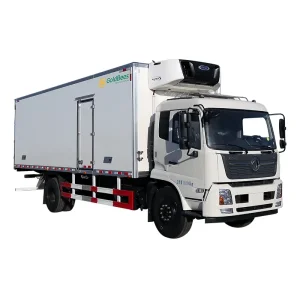
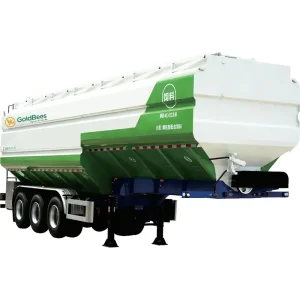
Explore our certified series of specialized livestock trailers, bulk feed carriers, and integrated automation platforms optimized for animal welfare and low operating expenditure.



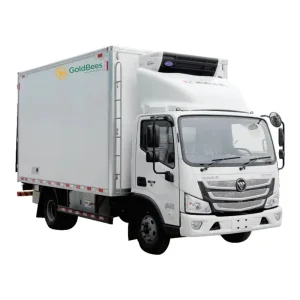
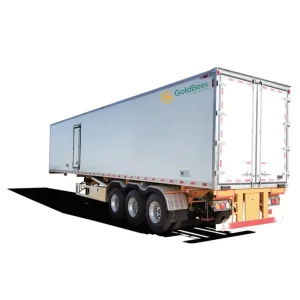

The transition from traditional open-slat haulage to sealed, microclimate-controlled mobile habitats represents a profound paradigm shift driven by stringent biosecurity mandates and animal welfare directives.
In modern industrial animal husbandry, live animal transit is recognized as the most fragile link in the entire food chain. Epidemiological crises, notably the transcontinental transmission vectors of African Swine Fever (ASF) and Highly Pathogenic Avian Influenza (HPAI), have catalyzed strict governmental restrictions regarding cross-border animal movement. In the European Union, the impending revisions to Council Regulation (EC) No 1/2005 require comprehensive structural changes: mandatory real-time thermal microclimate tracing, ceiling height expansions of up to 40% depending on pig body mass index, and non-negotiable stops for ventilation refresh cycles during trips exceeding eight hours.
Simultaneously, North American poultry and swine operations operating under USDA-APHIS standards face increasing pressure to eliminate open-air trailer haulage. Open transport directly exposes herds to airborne atmospheric viral loads along interstate highway corridors. As a premier original equipment manufacturer (OEM), Xinbaiqin Special Vehicle (operating under the GoldBees commercial trademark in partnership with CP M&E) designs livestock superstructures engineered with HEPA-grade inlet filtration, negative-pressure positive-displacement HVAC modules, and automated biocide aerosol dosing systems to mitigate bio-exclusion risks.
Sealed atmospheric compartmentalization prevents viral shedding from escaping during transport through urban corridors, safeguarding regional biosecurity clusters against cross-contamination.
Sensors dynamically regulate ventilation arrays and water-misting cooling lines, keeping internal relative humidity below 75% and thermal variation within ±1.5°C across every tier.
Advanced aerospace-grade 6000-series structural aluminum profiles lower tare chassis mass by 22% relative to standard galvanized steel bodies, maximizing legal livestock biomass payload.
Operational conditions differ sharply across world regions. We tailor our vehicle superstructures to distinct geographic, legislative, and biological requirements.
In equatorial markets such as Thailand, Vietnam, the Philippines, and Brazil, high relative ambient humidity (often >85%) paired with ambient temperatures above 38°C creates lethal heat stress for swine and parent breeding stock. Under these conditions, passive natural ventilation fails to prevent suffocation.
Our localized solution integrates high-capacity water-evaporative cooling banks paired with forced-air positive-pressure induction plenums. Water consumption is metered through automatic temperature-humidity index (THI) calculation algorithms, maintaining internal temperatures 6°C to 10°C below ambient conditions while preventing puddling that causes slipping and hoof injury.
Long-distance winter routes across the northern US Midwest, Canada, and Northern Eurasia pose the opposite hazard: hypothermia, frostbite, and cold-shock mortalities. Day-old chicks require stable core temperatures between 32°C and 35°C; exposure to freezing cross-drafts halts gut development and leads to systemic flock loss.
For these regions, GoldBees builds thermally broken polyurethane sandwich panel superstructures with automated auxiliary diesel/electric heating arrays. Proportional air recirculators cycle internal heat through ducting with continuous fresh oxygen replenishing, keeping carbon dioxide (CO2) below 2,500 ppm and ammonia (NH3) under 10 ppm.
| Operational Parameter | Standard Market Specification | GoldBees / Xinbaiqin Custom Engineered Spec | Strategic Operational Advantage |
|---|---|---|---|
| Internal Microclimate Control | Manual side louvers / basic passive ventilation | Automated closed-loop multi-zone HVAC with VAV fan control | Eliminates weather exposure; reduces live shrink loss by up to 1.8% |
| Deck Structural Alloy | Q235 Structural Carbon Steel (Galvanized) | Aircraft-grade 6061-T6 Extruded Aluminum Alloy | Reduces chassis curb weight by 2,200–3,500 kg; fuel savings >8% |
| Deck Lifting Actuation | Cable-winch or direct hydraulic multi-ram system | Hydraulic cylinder array with mechanical anti-drop interlocks | Ensures stable tier ascension; protects handlers and livestock |
| Drinking & Hydration Infrastructure | Gravity-fed line with exposed, unheated nipple valves | Pressurized ring-main with auto-dosing & trace-heating | Prevents frozen lines in winter and microbial stagnation in summer |
| Disinfection & Wash-down Rating | Standard truck wiring; exposed conduit routing | IP69K hermetic silicone seals; chemical-resistant fluoropolymer wiring | Resists caustic detergents and high-pressure hot water spray down |
Operating from Cixi, Zhejiang—at the center of the Yangtze River Delta manufacturing corridor—Xinbaiqin leverages an integrated industrial network to balance structural precision with competitive production cycles.
Unlike standalone contract coachbuilders that assemble bought-in kits with limited operational testing, Xinbaiqin operates in close coordination with CP M&E, the engineering subsidiary of Charoen Pokphand Group. Every trailer profile, auger flighting pitch, and hydraulic manifold undergoes testing across commercial production centers housing millions of layers, massive broiler grow-out cycles, and multi-thousand sow herds. This provides a direct engineering feedback loop that standalone manufacturers cannot replicate.
Our 66,667 m² Cixi manufacturing complex utilizes automated robotic fiber-laser gantry cutters, computerized tandem press brakes, and semi-automated submerged-arc welding tracks. By sourcing prime virgin alloy directly from state-owned high-purity aluminum smelting facilities and matching it with internationally certified hydraulic valve groups (Danfoss, Rexroth compatible), we deliver equipment that meets rigorous European engineering standards at competitive total costs.
Chassis components interface seamlessly with prime movers from Scania, Volvo, Mercedes-Benz, MAN, Sinotruk, and FAW. Running gear utilizes BPW, SAF-Holland, or FUWA axles equipped with electronic braking systems (EBS) and roll stability support (RSS).
Our localized supply chain cluster provides standardized prototype-to-delivery windows of 35 to 45 business days. This enables rapid fleet scale-up for expanding agricultural projects compared to European build backlogs of 9 to 14 months.
Every chassis completes a 36-point structural ultrasound weld analysis, continuous 120-minute shower leak testing at 150 kPa water pressure, and full-load hydraulic descent simulation testing before export release.
Modern agtech logistics requires intelligent data telemetry alongside heavy-duty mechanical engineering. Our multi-year development roadmap focuses on zero emissions, biosecurity automation, and operational intelligence.
Integration of real-time multi-spectral camera feeds, acoustic squeal stress pattern algorithms, and ambient ammonia/CO2 sensors reporting to fleet management portals via 4G/5G cellular modules.
Transition from diesel-driven auxiliary hydraulic generators to 800V high-density lithium-iron-phosphate (LFP) battery packs. Enables quiet, zero-emission parking lot ventilation while trucks rest at farm bio-gates.
Integration of robotic wash nozzles embedded along internal ceiling tracks. Delivers automated detergent foaming, high-pressure rinsing, and misted paracetic acid sanitization without requiring handlers to step inside contaminated compartments.
AI-driven airflow mapping utilizing computational fluid dynamics (CFD) that automatically adapts ventilation baffle pitch in response to real-time trailer highway velocity, ambient wind shear, and animal bio-heat release rates.
Exporting complex specialized commercial vehicles requires rigorous alignment with local vehicle architecture codes, braking compliance, electrical directives, and regional homologation protocols.
Vehicles are engineered to satisfy stringent certification requirements across multiple jurisdictions:
To reduce import tariffs and ocean freight costs, we provide Semi-Knocked-Down (SKD) and Completely-Knocked-Down (CKD) manufacturing options supported by on-site factory assembly supervision and comprehensive weld jigs.
We maintain regional inventories of critical wear parts—including hydraulic solenoid seals, electronic sensors, ventilation impellers, and suspension bushings—supported by factory-direct technical dispatch channels.
Comprehensive answers to key procurement, engineering, and biosecurity considerations when evaluating custom livestock transport vehicles.
Review our specialized configurations for automated bird harvesting, multi-temperature cold chain trailers, and hydraulic auger delivery units.