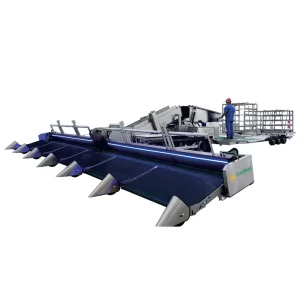
Explore intelligent machinery and custom special vehicles engineered under CP M&E and Xinbaiqin manufacturing standards for enhanced biosecurity and optimal transport payloads.



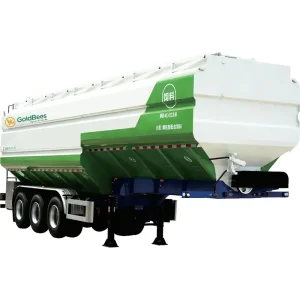


Poultry egg transport constitutes the most delicate logistics operation in agricultural supply chains. Moving hatching eggs from breeder houses to hatcheries and commercial shell eggs to retail distribution nodes demands strict bioclimatic equilibrium and mechanical stabilization.
Hatching eggs contain living biological entities that require an uninterrupted dormancy stage known as physiological zero (approx. 18°C - 21°C). Ambient fluctuations trigger premature, unstable cell division or condensation sweating that introduces Salmonella through porous shells, irreversibly degrading hatchability percentages.
For fresh consumption, egg yolk membranes (vitelline membrane) degrade rapidly when exposed to road vibration frequencies above 5–15 Hz. Custom air-ride suspensions and cushioned flooring architectures prevent internal air cell dislodgement and microscopic structural hairline shell fractures during regional multi-drop logistics.
Global avian influenza (HPAI) risks have forced industrial farms to adopt impenetrable border controls. Transport bodies require hermetic isolation between driver cabs and cargo modules, mirror-finish stainless or food-grade FRP interiors, and waterproof harness routing capable of withstanding corrosive thermal chemical disinfection.
With over 15 years of industry experience and a 66,667 m² advanced manufacturing facility in Cixi, Zhejiang, we leverage CP M&E’s industrial scale to deliver customized poultry vehicles with superior total cost of ownership (TCO).
Situated in the heart of the Yangtze River Delta automotive manufacturing cluster, our factory manages laser cutting, cold stamping, robotic GMAW welding, electrophoretic primer coating, and box-sandwich polyurethane vacuum bonding in a synchronized single-facility footprint.
Whether configuring for right-hand drive (RHD) tropical operations in Southeast Asia or heavy insulated wall structures for North American winter transit, our engineering team tailors wheelbases, PTO connections, deck locking channels, and hydraulic trolley tail-lifts without excessive re-tooling lead times.
By producing over 2,000 special vehicle units annually, raw material purchasing power allows us to integrate world-leading components (Thermo King / Carrier refrigeration units, BPW air-suspensions, Siemens programmable logic controllers) at competitive capital expenditure rates.
Every egg transport body undergoes extreme simulation testing: full-load static structural deflection checks, dynamic 3-axis vibration resonance profiling, multi-directional high-pressure water impermeability audits, and 12-hour thermal loss profiling inside climate validation bays.
Different points along the poultry and layer value stream impose distinct mechanical constraints. Our engineering division creates targeted vehicle configurations tuned to specific operation mandates.
Engineered for high-density egg buggy/trolley roll-in loading. Equipped with automated pneumatic floor-locking clamps that anchor entire trolley rows instantly, floor-recessed load cells, and gentle ramp geometry to protect against shell stress during farm-to-hatchery movements.
Tri-axle semi-trailers designed for high-tonnage inter-provincial commercial egg logistics. Features multi-temperature division bulkheads allowing simultaneous transport of processed liquid egg containers, palletized cartoned eggs, and ambient dry poultry supplies.
Engineered for Southeast Asian, Latin American, and African equatorial routes. Upgraded with dual-condenser refrigeration systems, dehumidification channels to eliminate shell sweating during loading in high relative humidity, and UV-stabilized exterior body panels.
The poultry engineering sector is evolving from passive insulated boxes into interconnected, intelligent logistics nodes driven by regulatory pressure, ESG commitments, and precision biology.
Modern fleets require sensor nodes tracking temperature, humidity, carbon dioxide concentrations, and shock G-forces across the front, middle, and rear sectors. Cloud telemetry alerts drivers to refrigeration compressor drift before thermal boundaries trigger embryonic cell death.
Rising carbon taxes and factory zero-emission goals drive the adoption of New Energy Vehicle (NEV) electric bulk trucks and battery-driven refrigeration units. Pure electric auxiliary power units (E-APU) sustain internal climates during long ferry crossings or farm biosecurity gate quarantines.
As poultry packing sheds integrate automated guided vehicles (AGVs) and robotic egg arm loaders, internal cargo tracks, tie-down systems, and tailgate geometries must conform to exact millimetric industrial tolerances to enable human-free, contactless egg loading cycles.
Procurement directors and fleet operations managers evaluate special vehicle manufacturing partners through key functional capabilities that determine operational continuity and lifecycle ROI.
Global fleets run diverse power units—Isuzu, Hino, Scania, Mercedes-Benz, Sinotruk, and Foton. Xinbaiqin engineers design standardized subframes and modular mounting plates to ensure seamless body integration regardless of regional chassis sourcing channels.
Exporting to the EU, Middle East, Australia, or the Americas requires compliance with localized road codes, lighting regulations, brake standards, and CE / ISO9001 certifications. We provide turnkey export packaging, CAD layouts, and weight-distribution documentation.
A vehicle down during egg collection represents catastrophic supply disruption. We furnish standardized wearable parts packages (seals, sensors, hydraulic solenoids, conveyor belts) with fast-response international dispatch.
Answers to key engineering, bioclimatic management, and manufacturing questions for enterprise fleet operators.
Explore our full line of specialized poultry machinery, bulk feed carriers, and biosecure logistics platforms engineered for modern agricultural value chains.