Explore factory-direct commercial refrigerated trailers, livestock transporters, and integrated feed mill vehicles built with stringent ATP, biosecurity, and structural benchmarks.
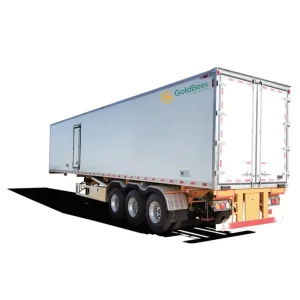
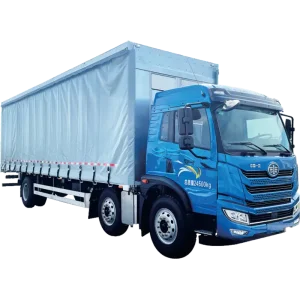
The intercontinental perishable cold chain is undergoing radical restructuring. Stringent international food safety standards, volatile fuel prices, and aggressive global net-zero targets demand an evolution from basic insulated reefers to high-efficiency, multi-zone, telematics-driven semi-trailers.
Traditional polyurethane foam sandwich panels are transitioning toward nano-porous aerogel composites and fiber-reinforced polymer (FRP) skin structures. By decreasing the heat transfer coefficient (K-factor) to below 0.35 W/m²·K, operators reduce refrigeration unit compressor load by up to 34%, eliminating thermal bridges entirely.
Decoupling from high-maintenance secondary diesel generators, next-generation refrigerator semi-trailers deploy high-voltage 400V–800V battery architectures, kinetic energy recovery axles (e-axles), and flexible solar roof matrices that harvest 1.8kW–3.2kW of continuous photovoltaic energy on line-haul routes.
Dynamic cold-chain operations require simultaneous transportation of deep-frozen meats (-20°C), chilled pharmaceuticals (+2°C to +8°C), and fresh agri-produce (+12°C). Modern trailers employ motorized thermal bulkheads paired with real-time IoT air circulation louvers, eliminating cargo temperature degradation.
In standard line-haul operations, auxiliary refrigeration units consume between 2.2 to 3.8 liters of diesel per running hour. Over a 300,000-kilometer five-year life cycle, an inferior trailer envelope experiencing panel outgassing or micro-delamination incurs up to $38,000 USD in unnecessary fuel expenditure and over 14 metric tons of excess CO2 emissions per vehicle.
Procurement directors and cold-chain fleet engineers evaluate custom refrigerator semi-trailers across three critical vectors: structural durability, thermal efficiency certification, and tare-weight minimization.
| Evaluation Parameter | Standard Industry Specification | GoldBees High-Performance Benchmark | Operational Impact & ROI |
|---|---|---|---|
| Thermal Transmittance (K-Value) | 0.40 – 0.45 W/m²·K (Class FNA) | ≤ 0.35 W/m²·K (Class FRC Heavy ATP) | Reduces compressor run cycles by 28%; cuts thermal losses in +45°C ambient zones. |
| Chassis Structural Steel Grade | Q235B / Q345 Standard Carbon Steel | High-Tensile T700 / Q690E Alloy Beam | Lowers tare weight by 850 kg, enabling higher legal payload and resisting road torsional fatigue. |
| Core Insulation Material | 35 kg/m³ Open-Mold Polyurethane | 45-48 kg/m³ High-Pressure Injected Hydrophobic XPS/PUR | Zero water vapor absorption; prevents panel saturation which commonly adds 400+ kg over 3 years. |
| Sub-Floor Airflow Architecture | Flat Aluminum Sheet or Wood Ply | Extruded Heavy-Duty T-Profile Duct Sub-Floor | Provides 360-degree reverse return airflow underneath pallet bases, preventing hot spots. |
| Biosecure Interior Lining | Standard Riveted GRP Sheeting | Monolithic Seamless Food-Grade FRP Anti-Microbial Gelcoat | Withstands 95°C high-pressure caustic steam disinfection without resin micro-cracking. |
Full e-coating (electrophoretic deposition) combined with robotic plasma welding guarantees chassis integrity through de-icing salts and coastal port transit.
Certified for continuous perishable cargo transport where temperatures remain stable between -20°C and +12°C in ambient extremes exceeding +30°C.
Utilizing high-strength aluminum floor pans and lightweight composites ensures maximize revenue-generating payload within strict axle-weight regulations.
Reinforced bulkhead front walls pre-configured for seamless integration with Carrier Transicold, Thermo King, and Daikin refrigeration units.
Xinbaiqin Special Vehicle (CP M&E GoldBees) integrates extensive animal husbandry, feed logistics, and food processing heritage directly into specialized custom refrigerator semi-trailer designs.
Fresh slaughter meat and chilled broiler transport demand rigorous sanitization tolerance and zero temperature spikes. Our semi-trailers incorporate internal stainless-steel cargo tracks, overhead hanging meat rail systems with anti-sway locks, and floor drains with air-seal check valves to safeguard biosafety protocols.
For large-scale agricultural cooperatives transporting fresh milk, butter, and horticultural produce across long regional corridors, our high-cube semi-trailers deliver up to 88 m³ internal capacity. Reinforced sidewall scuff bands defend against forklift scuffs during rapid pallet transfer.
Meeting European Good Distribution Practice (GDP) standards, pharmaceutical variants deliver continuous multi-point temperature mapping (32 wireless internal probe sensors), pneumatic door locking with geofence-triggered authorization, and redundant standalone backup cooling circuits.
Operating across differing transport jurisdictions requires strict engineering adaptation to dimensional envelopes, kingpin loadings, braking protocols, and environmental standards.
Configurations adapted to 53-ft high-cube lengths, California Air Resources Board (CARB) zero-emission TRU mandates, slider tandem air-ride suspensions, and integrated roll stability support (RSS).
Full adherence to 4.0m maximum height restrictions, rear underrun protection (ECE R58 Rev 3), EBS electronic brake management, steerable axles for tight metropolitan roundabouts, and certified FRC insulation.
Reinforced thermal envelopes featuring UV-reflective exterior topcoats, sand-sealed electrical conduit harnesses, heavy-duty tropicalized condenser coils, and high-impact mechanical suspension setups.
From our modern 66,667 m² facility in Cixi, Zhejiang, Xinbaiqin offers complete CBU (Completely Built Up) delivery, as well as high-precision flat-packed CKD (Completely Knocked Down) and SKD formats. Our modular snap-and-glue sandwich box lamination ensures rapid local assembly in overseas target markets without compromising certified thermal insulation performance.
Anticipating regulatory changes and technological leaps, GoldBees by Xinbaiqin invests heavily in sustainable, zero-emission thermal transport architectures.
Commercialization of recyclable bio-resin exterior panels and localized vacuum insulated panels (VIP) targeting K-values under 0.28 W/m²·K.
Standardized integration of dual 50kW e-motor generator axles that capture downhill braking inertia to supply 100% of refrigeration power off-grid.
Deployment of auxiliary micro proton-exchange membrane (PEM) fuel cells running on zero-emission green hydrogen for continuous 120-hour cross-border refrigerated runs.
AI-driven predictive shelf-life routing, autonomous load atmosphere regulation (controlled CO2/nitrogen levels for delayed produce ripening), and remote maintenance self-diagnostics.
Clear, authoritative technical answers to assist fleet executives, operations directors, and logistics buyers in making informed sourcing choices.
We employ a proprietary multi-lip co-extruded EPDM rubber gasket system with internal air chambers. The rear frame structure is constructed from thermal-break grade 304 stainless steel with composite polymer inserts, eliminating cold bridging and preventing frost accumulation on outer door edges during deep freeze runs (-25°C).
Our automated high-pressure continuous polyurethane and extruded polystyrene injection uses high-density microcellular blowing agents that achieve over 95% closed-cell structure. Accelerated aging tests substantiate a thermal retention decay rate below 1.2% per year, ensuring full ATP Class FRC certification remains valid across a 10-to-12-year working lifecycle.
Yes. We install roof-recessed secondary evaporator wiring and refrigerant lines paired with longitudinal ceiling guide tracks. Operators can select between longitudinal split thermal dividers, bi-fold transverse bulkheads with balanced gas-strut lift assists, or motorized vertical partition curtains to segregate dry, chilled, and frozen compartments.
Vehicles are delivered with comprehensive export documentation, including CE compliance certifications, ISO 9001 quality audits, ATP certification documents, ADR road transport validation where applicable, and complete technical chassis engineering load distribution calculations for local DMV registration.
Depending on regional buyer preference, we equip our trailers with internationally serviceable premium components: BPW, SAF-HOLLAND, or FUWA axles, JOST landing gear and kingpins, WABCO EBS/ABS brake systems, and Michelin or Bridgestone low-rolling-resistance commercial trailer tires.
As part of the Charoen Pokphand Group electromechanical and vehicle manufacturing division, our vehicle designs are continually verified against millions of operational ton-kilometers inside one of the world's largest agribusiness and food processing supply chains. This real-world operational feedback eliminates theoretical engineering flaws before series production.
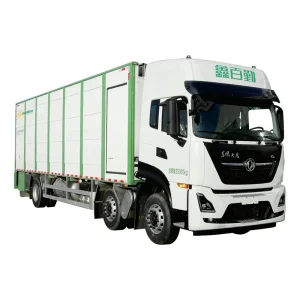
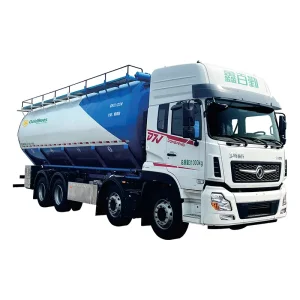
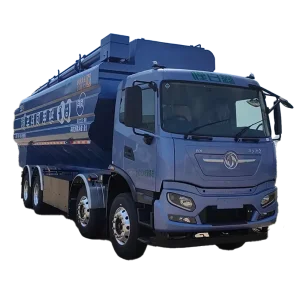
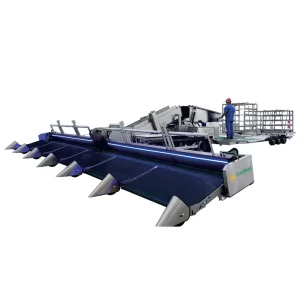
Broaden your fleet capability with intelligent bulk feed transport systems, NEV electric solutions, and precision poultry catching vehicles engineered to the same rigorous commercial quality standards.
Contact our senior automotive and thermal engineering team today. We provide full project scoping, custom chassis calculations, K-factor thermal mapping, and comprehensive factory-direct export proposals tailored to your operating territory.
