Explore precision-engineered rolling stock deployed globally across intensive pig fattening networks, commercial hatcheries, and bulk animal feed logistics terminals.

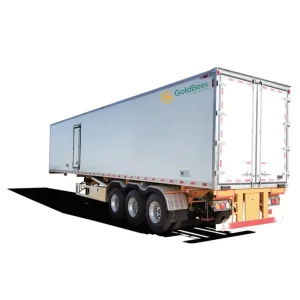



The transformation from bagged feed handling to automated bulk pneumatic and mechanical semi-trailers is driven by biosecurity imperatives, labor optimization, and feed pellet integrity.
In the contemporary global animal protein supply chain, the transportation of finished compound feed from high-throughput feed mills to mega-scale livestock farms is no longer considered a simple freight exercise. Instead, it serves as a critical biological and chemical conduit that dictates whole-chain biosecurity, operating margins, and nutritional fidelity. Industrial integrators worldwide—including operations across Southeast Asia, the Americas, Europe, and the Middle East—face mounting structural pressure to eliminate cross-contamination pathways such as African Swine Fever (ASF), Porcine Epidemic Diarrhea virus (PEDv), and High Pathogenicity Avian Influenza (HPAI). Traditional sacked feed transport, characterized by heavy manual handling, compromised bag seals, and prolonged yard exposure, has rapidly given way to sealed, multi-compartment bulk feed transport semi-trailers.
As a specialized engineering subsidiary working within the electromechanical equipment ecosystem of Thailand's Charoen Pokphand Group (CP M&E), Xinbaiqin Special Vehicle Co., Ltd. (GoldBees) leverages over 15 years of concentrated R&D from its modern 66,667 m² facility in Cixi, Zhejiang, China. Producing over 2,000 units annually, GoldBees bridges the gap between mechanical durability and biological engineering. In this technical white paper, we explore how cutting-edge metallurgy (structural aluminum alloys vs. high-yield steels), hydraulic auger articulation, low-pressure dense-phase pneumatic conveyancing, and CAN-bus telematics converge to minimize the Total Cost of Ownership (TCO) while securing uncompromised nutritional delivery to farm silos.
Standard commercial freight bodies harbor microbial reservoirs within exterior ribs, unsealed fastener tracks, and mechanical seams that degrade under caustic chemical washing. GoldBees bulk feed semi-trailers integrate continuous robotic seam welding, self-draining sloped tank perimeters, IP69K-rated sealed wiring harnesses, and specialized anti-corrosion treatments capable of enduring daily hot-water high-pressure washdowns, chlorite foaming, and automated thermal baking cabins (65°C for 30 minutes) without component fatigue.
A rigorous comparative breakdown of discharge methodologies: balancing pellet durability, unloading velocity, vertical reach, and structural payload weight.
Utilizing high-tensile segmented flighting within an articulated steel or aluminum boom tube. Unloading is powered by a high-efficiency electro-hydraulic power pack or heavy-duty transmission PTO. Offers high volume throughput (60–90 m³/h) with near-zero acoustic impact on livestock.
Engineered for elevated farm silos (up to 25 meters). Pressurized oil-free screw blowers introduce regulated air at 0.15–0.2 MPa, fluidizing the feed through flexible non-abrasive food-grade lines. Perfect for terrains where physical boom arm deployment is impeded by overhead high-voltage lines.
Pellet Durability Index (PDI) represents direct profitability. High friction causes pellet fragmentation into dusty fines that animals reject. GoldBees auger troughs incorporate low-pitch, high-clearance progressive screws and ultra-smooth electro-polished internal walls to restrict fines generation below 0.8%.
| Evaluation Parameter | Electric/Hydraulic Auger Semi-Trailer | Intelligent Pneumatic Pressure Semi-Trailer | Conventional Dump/Tipper Feed Trailer |
|---|---|---|---|
| Unloading Discharge Rate | 1.2 – 1.8 Tonnes / minute | 0.8 – 1.2 Tonnes / minute | Variable (Dependent on external hopper) |
| Discharge Elevation Ceiling | Standard 8.5m – 11.5m (Articulated Boom) | Up to 28m (Pneumatic riser hose) | Ground-level hopper only (<1.5m) |
| Pellet Breakdown Rate (Δ Fines) | Extremely Low (<0.6% at optimized RPM) | Low to Moderate (0.8% – 1.5% at bend elbows) | High (Impact drop in dump chutes) |
| Compartment Partitioning | 4 to 8 Fully Isolated Hoppers | 3 to 6 Pressurized Conical Chambers | Single or Dual Open Tub (Cross-contamination risk) |
| Acoustic Decibel Output at Silo | Low (<68 dB with electric drive motor) | Moderate (78–84 dB with rotary blower) | Hydraulic Noise & Gate Slamming |
| Biosecure Disinfection Clearance | Flawless (Sealed pipe, auto clean-out) | Flawless (Completely airtight pressurized system) | Poor (Open tarpaulin seals, perimeter seams) |
A systematic framework for fleet procurement managers: calculating payload tare-weight ratios, fuel burn efficiency, drivetrain resilience, and depreciation velocity.
By leveraging 5454-H32 / 6061-T6 structural aluminum and BS700MC high-strength micro-alloy steels, GoldBees reduces trailer deadweight by 1,200 to 1,800 kg compared to standard carbon steel. This expands legal feed cargo by 6% to 9% on every trip, saving tens of thousands of kilometers annually.
GoldBees semi-trailers incorporate independent 380V/440V 3-phase electric drive motors alongside secondary hydraulic lines. Drivers simply plug into the farm's utility grid during silo filling, cutting diesel engine idling, reducing engine maintenance hours, and slashing site CO2 emissions to zero.
Every semi-trailer chassis is integrated with internationally serviceable components: BPW or FUWA heavy-duty air suspension axles, JOST landing legs and kingpins, and WABCO dual-line Electronic Braking Systems (EBS) with Roll Stability Support (RSS), ensuring 1,000,000+ km structural endurance.
How enterprise integrators deploy GoldBees intelligent trailers across automated supply routes.
Sealed overhead feed mill discharge into isolated compartments via pneumatically actuated slide roofs. Anti-dust extraction cuffs eliminate fine emissions.
GPS and CAN-bus sensors monitor compartment temperature, hatch lock integrity, and route geofences to verify zero unauthorized road stops.
Wireless remote-controlled auger rotation and elevation to farm silo port. Automated variable frequency auger speed ensures minimum friction and zero pellet damage.
Vehicle enters decontamination station. High-pressure alkaline wash, organic acid misting, and thermal cabin dryout with zero electrical corrosion risk.
Tailored structural configurations adhering strictly to axle-weight formulas, dimensional envelopes, and safety standards across major global agrarian corridors.
Engineered to comply with Federal Bridge Gross Weight Formula B. Outfitted with heavy-duty tandem/tri-axle air ride, 12-volt dual-filament lighting, roll-over prevention systems, and kingpin placements tailored for standard North American conventional day-cab tractors.
Full conformance with EU Directive 96/53/EC governing maximum allowable dimensions and gross vehicle weight (40/44 tonnes). Integrated with rear underrun protection (UN/ECE R58), lateral side guards, smart EBS braking (UN/ECE R13), and steering axle configurations for tight rural roadways.
Reinforced cooling packs for hydraulic oil circuits operating continuously under ambient temperatures surpassing +50°C. UV-stabilized polyurethane coatings prevent external degradation, and sealed air-intake filtration prevents desert dust contamination inside pneumatic silos.
The next frontier in agribusiness logistics involves the convergence of commercial electric chassis, automated boom-to-silo docking, and real-time feed quality telemetry.
As illustrated by the pioneering GoldBees NEV Electric Bulk Feed platform, high-density LFP (Lithium Iron Phosphate) battery packs supply continuous power for transit and silent, zero-emission unloading. Eliminating idling engines directly lowers farm gate sound emissions, reducing stress in nearby livestock sheds.
Next-generation auger booms incorporate LiDAR and optical machine vision sensors at the discharge nozzle. The operator initiates docking via an in-cab touchscreen; the boom autonomously navigates overhead farm obstacles, aligns precisely with the silo hatch, opens the lid, and initiates discharge without manual climbing.
Multi-spectral sensors embedded inside each hopper analyze feed moisture content, temperature variations, and particle distribution during transit. Instant alerts warn mill nutritionists of mold risks or segregation before the feed enters the silo, ensuring livestock always receive uncompromised rations.
Review our specialized automated transport vehicles, day-old chick climate modules, intelligent harvesters, and high-efficiency auger feed truck configurations.



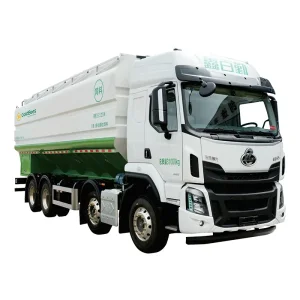
Comprehensive answers addressing high-intent engineering, operational, and commercial queries from agricultural fleet procurement teams.
GoldBees trailers are engineered with physically isolated, hermetically sealed internal hoppers (typically 4 to 8 compartments per semi-trailer). Each hopper is equipped with independent pneumatic slide gates and dedicated low-clearance clean-out sweepers. Furthermore, the base discharge auger trough features a dual-slope V-bottom geometry with reversible self-cleaning auger cycles, ensuring zero residual cross-contamination when switching between medicated, nursery, and finisher feeds.
Standard GoldBees hydraulic auger systems achieve an unloading rate of 60 to 90 cubic meters per hour (approximately 1.0 to 1.5 tonnes per minute, depending on feed bulk density). The heavy-duty articulated top discharge auger provides 360-degree continuous rotation, reaching working vertical discharge heights of up to 11.5 meters and horizontal reaches of up to 8.5 meters, enabling safe silo filling even over physical farm fences and biocontrol moats.
Our full 6000-series structural aluminum alloy feed semi-trailers (45–65 m³ capacity) achieve tare weights of approximately 7,800 to 9,200 kg including auger booms. In contrast, high-strength BS700MC steel models range between 9,600 and 11,000 kg. While aluminum commands an initial capital premium of roughly 18–25%, it provides an extra 1.5 to 2.0 tonnes of legal payload per haul, allowing high-utilization commercial operators to amortize the cost delta within 14 to 18 operating months.
Yes. All semi-trailers are built to universal ISO kingpin standards (2.0-inch or 3.5-inch exchangeable JOST pins) with dual-height fifth-wheel coupling capabilities (1,150 mm to 1,350 mm). The trailers are fully compatible with European (Scania, Volvo, Mercedes-Benz, MAN), American (Freightliner, Kenworth), and Asian (Sinotruk, FAW, Shacman, Foton, Isuzu) 4x2, 6x2, and 6x4 tractor units.
All critical electronics, hydraulic manifolds, proportional valves, and control consoles are housed within IP69K stainless steel enclosures. Electrical wire harnesses are jacketed in chemical-resistant cross-linked polyethylene (XLPE) protected inside flexible conduits. The trailers withstand continuous exposure to high-pressure hot water (80°C at 150 bar), quarternary ammonium biocides, glutaraldehyde foams, and forced-air thermal drying bays up to 70°C.
Standard builds require 30 to 45 business days from final engineering sign-off. For international maritime shipping, GoldBees utilizes dedicated Roll-on/Roll-off (Ro-Ro) vessels or flat-rack open-top containers. Critical mechanical components and painted chassis perimeters are treated with salt-spray marine protective wax to guarantee pristine condition upon arrival at global ports across North America, the EU, South America, Africa, and Australia.
