CP M&E Engineering Standard · E-E-A-T Certified

Famous Chicken Farm Equipment Suppliers & Company

Pioneering Next-Generation Automated Poultry Infrastructure, Biosecure Cold-Chain Logistics, and Smart Industrial Bulk Feed Engineering Worldwide.

15+
Years of EPC & Engineering
Backed by Charoen Pokphand Group (CP M&E) tech integration
66k+
Square Meters Facility
High-precision Cixi smart production & fabrication campus
2,000+
Annual Unit Deployment
Bulk feed transporters & poultry climate-controlled rigs
99.8%
Day-Old Chick Survival Rate
Achieved via algorithmic positive-pressure microclimates
Global Market Architecture

Global Landscape of Industrial Poultry Equipment & Logistics

The transition from fragmented agrarian facilities to mega-scale, biosecure vertical poultry ecosystems is reshaping equipment procurement globally.

The Macro Paradigm Shift: Biosecurity, Density, and Animal Welfare

The contemporary poultry production industry faces an unprecedented convergence of commercial and biological pressures. Across North America, Europe, Southeast Asia, and Latin America, commercial integrations are grappling with virulent epizootic vectors, predominantly Highly Pathogenic Avian Influenza (HPAI). In this high-stakes environment, the definition of a famous chicken farm equipment supplier has expanded beyond internal barn climate controls (feed pans, nipple drinkers, ventilation tunnels) to encompass the complete critical external supply chain: high-capacity bulk feed logistics, hermetic chick transit, and trauma-free harvest automation.

Industrial chicken farms no longer operate as isolated entities. A 3-million-bird broiler complex requires a minimum intake of 180 to 250 metric tons of compound feed per day, paired with synchronized cycles of day-old chick (DOC) replenishment and finished broiler haulage. Modern suppliers are measured by their ability to prevent cross-contamination across farm boundaries while driving down operational expenditure per kilogram of live-weight yield.

Hermetic Feed Logistics

Pellet disintegration generates dust, alters nutritional uniformity, and promotes fungal proliferation. Modern feed trailers utilize electro-hydraulic slow-revolution augers and enclosed pneumatic transfer systems to protect pellet integrity from mill discharge to farm silo.

  • Zero cross-compartment formula contamination
  • High-tensile aluminum tare weight reduction
  • Integrated pneumatic dust mitigation

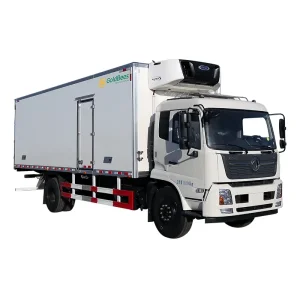
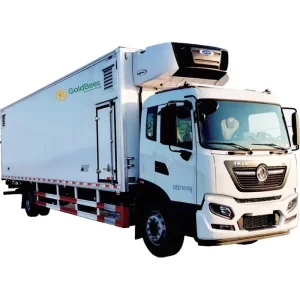
DOC Microclimate Control

Day-old chicks are poikilothermic, lacking autonomous thermoregulatory biological pathways. Transport over long trans-provincial distances requires specialized insulated vehicles with sub-degree temperature stratification and laminar airflow profiles.

  • Real-time multi-sensor telemetry (CO2, RH, Temp)
  • Redundant auxiliary diesel power units
  • HEPA bio-exclusion air intake filters

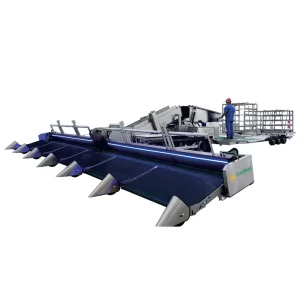
Automated Harvest Robotics

Manual chicken catching represents one of the highest casualty vectors in poultry farming, causing subdermal hematomas, skeletal fractures, and biosecurity violations. Mechanical chicken harvesters achieve gentle gathering at industrial scale.

  • Soft vulcanized gathering fingers
  • Handling speeds exceeding 6,000 birds/hour
  • Total reduction of in-house personnel vector risk
Innovation Trajectory

Industry Evolution & Technological Roadmap

Key technological shifts guiding equipment design from mechanical reliability to intelligent, carbon-neutral automation.

PHASE 1: CURRENT

Electrified Powertrains

Replacement of mechanical PTO shafts with independent electric brushless drives, drastically minimizing fuel idle costs during silo discharge.

PHASE 2: 2025-2026

IoT Autonomous Telemetry

Cloud-tethered sensor arrays streaming vibration, compartment temperature, bird welfare metrics, and pathogen-seal integrity in real time.

PHASE 3: 2027-2028

Robotic Sanitization Pods

Automated thermal wash-down and aerosolized disinfectant cycle robotics built into high-risk vehicle docking terminals.

PHASE 4: 2029+

Zero-Emission Fleets

Commercial deployment of hydrogen-fuel-cell and heavy NEV bulk transporters engineered specifically for large agrarian rural operating radii.

Global Engineering Matrix

Localized Applications & Climatological Engineering

Custom-engineered solutions adapted to diverse operating environments, road regulations, and ambient climate challenges.

Tropical High-Humidity Belts

Engineered for Southeast Asia, Sub-Saharan Africa, and Northern Latin America where ambient temperatures exceed 40°C with 95% relative humidity. Features high-tonnage multi-zone refrigeration, high-volume cross-flow ventilation, and condensate diversion systems.

  • Closed-circuit chilled heat exchange
  • Anti-fungal composite interior surfaces

Sub-Zero Continental Regimes

Configured for Northern Europe, Canada, and Central Asian steppes where winter logistics contend with -30°C conditions. Rigs utilize polyurethane insulated sandwich panels, heated hydraulic lines, automated shutter pre-heaters, and engine block warming couplings.

  • Auxiliary fuel heating integration
  • Zero-freeze auger gate designs

Strict Regulatory Road Standards

Engineered for compliance across EU and DOT weight regulations. Employs lightweight 5083/6061 aviation-grade aluminum alloys, EBS braking stability control, and customized chassis bolt patterns compatible with Scania, Volvo, MAN, and FAW platforms.

  • Maximized legal payload margins
  • Multi-market chassis mounting flexibility
Procurement Guide

Evaluating a Reliable Chicken Farm Equipment Supplier

Industrial chicken farm equipment sourcing is a capital-intensive decision that directly impacts operational profitability, livestock mortality, and feed conversion ratios (FCR) over a 10-to-15-year lifecycle. Global procurement heads prioritize the following core operational metrics:

1. Biosecurity Decontamination Resiliency Wiring, electronic controllers, and structural joins must withstand high-pressure wash-down (150+ bar) at 70°C and industrial acid/alkali disinfectants without electrical ingress or oxidation.
2. Pellet Integrity Preservation Auger flight clearances, pitch configurations, and internal delivery paths must limit fines generation below 1.5%, protecting nutrient balance and feed conversion.
3. Structural Longevity & Tare Optimization High-yield weld joints and finite element analysis (FEA) testing prevent chassis stress-cracking across demanding farm-to-mill gravel road profiles.
Frequently Asked Questions

Engineering, Procurement & Operational FAQ

Authoritative technical answers to common integration questions for fleet managers and agrarian enterprise directors.

What core features distinguish GoldBees poultry logistics equipment from standard commercial transport?
GoldBees vehicles, developed within the engineering framework of CP M&E (Charoen Pokphand Group), are purpose-built for the physiological requirements of live animals and biological cargo. Unlike standard commercial vans or dump trailers, our equipment incorporates positive-pressure microclimate ventilation, automated carbon dioxide exhaust purge channels, multi-stage HEPA bio-filtration, and sealed electronic harnesses engineered to endure routine chemical washdowns. In bulk feed units, custom variable-pitch augers reduce pellet abrasion and fracture rates to below 1%, protecting feed nutritional balance.
How do electric-hydraulic auger bulk feed semi-trailers maintain compound feed nutritional stability?
Mechanical vibration and friction can cause delicate broiler and layer pelleted diets to fracture into powder ("fines"). When birds consume powdered feed rather than formed pellets, feed intake drops and selective feeding unbalances nutritional intake. GoldBees electric/hydraulic auger systems utilize lower RPM rotations matched with higher volumetric displacement, lined with abrasion-resistant alloy liners. This design prevents frictional heat buildup and mechanical crushing, ensuring that feed arrives at farm silos with its original pellet structure and nutritional profile intact.
What biosecurity safeguards prevent vehicles from serving as disease vectors between farm clusters?
Biosecurity design focuses on eliminating biological hiding points. GoldBees vehicles feature continuous robotic laser welding, seamless interior transitions, and IP69K-rated sealed electrical enclosures. Surfaces are treated with non-porous fluorocarbon coatings that resist aggressive disinfectant washdowns (such as glutaraldehyde and peracetic acid). Undercarriage assemblies, wheel wells, and chassis transitions are streamlined to facilitate fast, complete drainage during terminal wash station cycles.
Can equipment specifications be customized for regional chassis brands and weight regulations?
Yes. As a primary manufacturer operating out of a 66,667 m² facility in Cixi, Zhejiang, we design customized upper structures and sub-frames compatible with major global chassis manufacturers including Volvo, Scania, Mercedes-Benz, MAN, Isuzu, FAW, Sinotruk, and Foton. Tank volumes, compartment divisions, axle counts (2-axle, 3-axle, 4-axle with lift capabilities), Kingpin heights, and electrical voltages (12V/24V/380V auxiliary systems) are tailored to match local transport regulations and road bridge formula laws worldwide.
What after-sales, technical training, and spare parts support are provided for international clients?
We provide comprehensive English documentation including full exploded-view parts manuals, electrical wiring diagrams, and hydraulic schematic walk-throughs. Our international technical sales team offers remote diagnostics, video technician training, and critical spare parts package integration (seals, sensors, hydraulic motors, and electronic control boards) shipped with vehicle consignments to minimize downtime in remote agricultural areas.