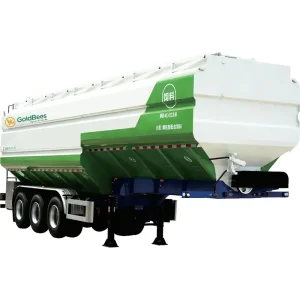
Engineered for high payload utilization, absolute zero-cross-contamination biosecurity, and long-range durability across intensive commercial livestock systems.



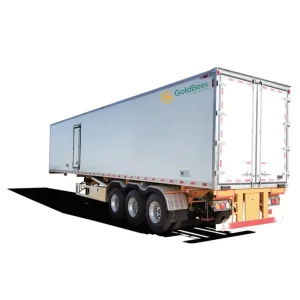

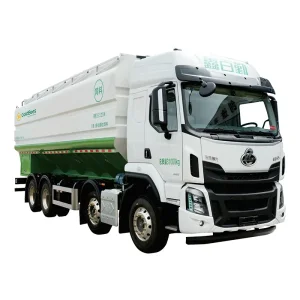

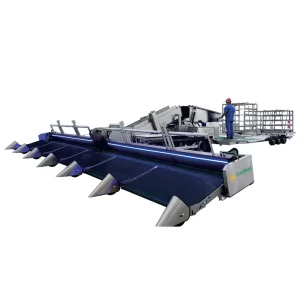
How the structural consolidation of agro-industrial integrators is accelerating the transition from bagged handling to intelligent, biosecure bulk transfer systems.
The global commercial compound feed industry delivers in excess of 1.35 billion metric tonnes annually. In advanced farming territories across North America, the European Union, East Asia, and Latin America, the logistics model linking centralized milling plants to intensive commercial farms has undergone a decisive shift. The historic reliance on 25-50 kg poly-woven bagged feed has been largely replaced by sealed, automated bulk feed transport vehicles. This transition is not merely a labor-saving initiative; it represents a comprehensive structural necessity driven by three non-negotiable operational pressures: strict viral biosecurity, feed conversion ratio (FCR) optimization, and statutory axle-weight payload maximization.
Modern agro-industrial groups—such as Charoen Pokphand (CP Group), DBN, New Hope, Tyson Foods, and BRF—operate multi-tier production architectures. High-volume computerized feed mills produce specialized nutritional matrices: micro-pellets for neonatal broilers and piglets, expanded crumble for layers, extruded aquatic formulations, and high-density mash feeds. Transporting these delicate products requires specialized logistics. Mechanical crushing, friction heat, and moisture ingress during transport degrade the Pellet Durability Index (PDI). A drop of just 5% in PDI leads to fine particle segregation at farm silos, causing uneven feed intake, increased digestive morbidity, and measurable economic losses.
Selecting the optimal discharge dynamics, structural metallurgy, and power take-off (PTO) systems to balance throughput speed against nutritional preservation.
The global workhorse for high-capacity transfer. Utilizes progressive screw flights (horizontal tank auger, vertical transition auger, and 360-degree hydraulically articulated discharge boom auger) to convey up to 1.5–2.5 metric tonnes per minute.
Designed for long-distance pneumatic line transfer without moving mechanical screws. Operates under low-pressure, high-velocity air streams (Roots blower or on-board screw compressor) to fluidize feed and convey it via flexible food-grade hoses.
The frontier of green agro-logistics. Built upon heavy-duty commercial battery-electric vehicle (BEV) chassis, pairing high-density LFP battery packs with dedicated electric power take-off (e-PTO) motors for silent, zero-emission farm deliveries.
| Performance Parameter | Electric / Hydraulic Auger Transporter | Intelligent Pneumatic Tanker | NEV Pure Electric Feed Truck |
|---|---|---|---|
| Discharge Velocity | 1,200 – 2,400 kg / min | 800 – 1,500 kg / min | 1,000 – 2,000 kg / min (e-PTO) |
| Pellet Degradation (Fines Δ) | < 1.2% (with speed compensation) | < 0.5% (gentle low-velocity air) | < 1.0% (variable-frequency drive) |
| Maximum Delivery Height | Up to 11.5 meters (hydraulic arm) | Up to 25.0 meters (pneumatic piping) | Up to 10.5 meters (modular boom) |
| Clean-In-Place (CIP) Washout | Manual washout + cleanout trapdoors | Pressurized air purge + conical drain | Anti-microbial internal coating + trapdoors |
| Payload Tank Metallurgy | Al-Mg 5083 Alloy / High-Yield Q345 | Pressure Vessel Grade Al 5182 / Carbon Steel | Aviation Al 6061-T6 Ultra-Light Alloy |
| Noise at Farm Boundary | 72 – 78 dB(A) (electric mode) | 76 – 82 dB(A) (enclosed acoustic cab) | < 62 dB(A) (whisper-quiet electric drive) |
The transformation of bulk feed transporters from isolated mechanical hauling units into connected, autonomous, cloud-integrated agro-assets.
Real-time feed compartment weight tracking via integrated chassis load-cell sensors. Data streams synchronize directly with feed mill ERP (SAP/Oracle) and farm silo inventory systems via 5G telemetry, automatically updating delivery weights, silo allocations, and billing records without human paperwork.
To prevent pathogen transmission (such as African Swine Fever and Highly Pathogenic Avian Influenza), modern GoldBees bodies are built to endure automated thermal baking wash stations: 30 minutes of continuous hot-air drying at 70°C+ without compromising wire seals, hydraulic gaskets, or telemetry enclosures.
Utilizing finite element analysis (FEA) alongside 5083-H111 aluminum alloy extrusions and Swedish Strenx high-strength steels reduces tare weight by 1,200–1,800 kg compared to legacy units. This saves fuel on empty return runs and raises legal payload capacity within highway limits.
Computational fluid dynamics (CFD) modeling of silo and hopper geometries has introduced internal anti-segregation baffles. These prevent micro-ingredient, vitamin, and mineral migration caused by vehicle vibrations on rough rural roads, ensuring feed arrives nutritionally uniform.
Adapting feed mill transport engineering to diverse geographical, regulatory, and infrastructural environments worldwide.
Tailored to strict axle weight laws, Federal Bridge Formulas, and stringent EU animal transport directives.
Designed for extreme ambient heat and frequent tropical downpours across Southeast Asia, Brazil, and equatorial markets.
Heavy-duty configurations engineered for unpaved farm access roads, mountain passes, and variable rural power supplies.
Detailed technical, operational, and commercial answers for agricultural integrators and transport procurement teams.
Heavy-duty, high-volume logistics solutions for large-scale meat processing plants, distribution terminals, and feed milling complexes.