Explore commercial units engineered by Xinbaiqin and CP M&E, delivering industrial-scale farm automation, poultry transfer, and sensitive biological refrigeration.




Analyzing respiration rates, transpirational mass loss, and temperature abuse across long-haul agricultural corridors.
According to the FAO, between 35% and 48% of harvested fresh fruits and leafy vegetables are lost before reaching retail shelves due to inadequate in-transit temperature and relative humidity management.
Fresh vegetables remain living organisms post-harvest. Transporters must continuously dissipate metabolic heat, buffer ethylene accumulation, and maintain an oxygen-carbon dioxide equilibrium inside the cargo chamber.
Sub-optimal chilling and moisture condensation on vegetable leaves trigger rapid sporulation of Botrytis cinerea and Erwinia carotovora. Consistent vapor pressure deficit control is critical.
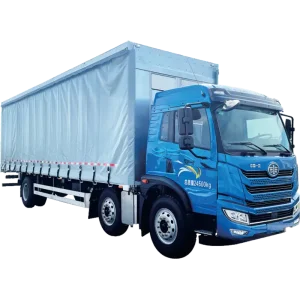
Historically, commercial refrigerated trucks relied on brute-force refrigeration units that merely blew chilled air across the top surface of pallets, causing severe top-freezing while center pallets retained field heat. Modern agricultural leaders demand active floor-ducted airflow, variable-speed inverter compressors, continuous relative humidity (RH) control at 90-95%, and localized ethylene scrubbing. Leading builders like Xinbaiqin Special Vehicle (operating in close engineering alignment with CP M&E of Charoen Pokphand Group) have bridged industrial vehicle bodybuilding with biotechnology-grade climate chambers, safeguarding fresh produce over 3,000+ kilometer intermodal transits.
Technical benchmarks for commercial purchasing teams sourcing refrigerated transporters from premier manufacturers.
Procurement directors verify that box insulation achieves an overall heat transfer coefficient (K-value) below 0.35 W/m²·K. This relies on high-density polyurethane (PU) or vacuum-insulated panels (VIP) laminated under high-pressure vacuum presses.
Industrial vegetable haulage rarely moves mono-crops. Leafy greens (spinach, lettuce) require 0°C to 1°C at 98% RH, while solanaceous vegetables (tomatoes, peppers) suffer chilling injury below 8°C. Movable bulkheads with dual climate units are essential.
Regulatory bodies mandate strict sanitization between trips to prevent soil-borne nematodes and Listeria monocytogenes. Inner linings must feature food-grade seamless FRP panels, stainless-steel kick plates, and sealed drain valves.
A rigorous engineering comparison highlighting structural insulation, airflow geometry, telematics, and energy efficiency.
| Performance Dimension | Legacy Commercial Transporters | GoldBees / Xinbaiqin Precision Units | Strategic Enterprise Impact |
|---|---|---|---|
| Insulation & K-Factor | Cut-and-glued EPS/standard PU 0.48 W/m²·K |
Monolithic wet-on-wet vacuum bonded VIP + high-density cyclopentane PU 0.28 W/m²·K |
35% compressor run-time reduction; zero condensational cold-bridges. |
| Internal Air Distribution | Free-blow ceiling discharge with uneven perimeter velocity | Aerodynamic extruded aluminum T-profile duct floor + ceiling plenum recirculation | Eliminates hot pockets; guarantees continuous bottom-up pallet ventilation. |
| Humidity Management | Passive condensation loss leading to vegetable desiccation | Ultrasonic fine-mist active humidification (85%–98% RH variable control) | Prevents leafy green shrinkage, maintaining crispness and commercial weight. |
| Atmospheric Control | Standard ambient air intake; rapid ethylene buildup | Controlled Atmosphere (CA) ready: catalytic ethylene scrubbers + N2 flush ports | Extends perishable shelf-life by 2.5x to 3x on multi-day transit routes. |
| Biosecurity Sanitization | Exposed mechanical fasteners; moisture entrapment risks | Full perimeter hot-air welded food-grade FRP; multi-point auto-draining traps | Instant CIP (Clean-In-Place) pressure wash without structural panel rot. |
Deployment frameworks customized for regional climatic extremes, highway regulatory weight limits, and cross-border trade agreements.
US & Canada intermodal arteries (Salinas Valley to East Coast) prioritize 53-foot high-cube trailers with lightweight structural skins to maximize legal payload under Federal Bridge Gross Weight formulas while running FSMA-compliant continuous data-logging.
Strict UNECE ATP Class FRC certification requires trailers to maintain -20°C in +30°C ambient conditions. Operations focus on whisper-quiet acoustic damping (PIEK standard) for night-time urban vegetable hub deliveries.
High ambient heat (+42°C) combined with 90% humidity challenges standard units. Tropicalized configurations utilize oversized condensers, dual-circuit generators, and anti-corrosive hydrophilic aluminum cooling fins.
The progression of cold-chain vehicle development toward intelligent, low-carbon post-harvest preservation systems.
Adoption of carbon-reinforced structural panels and low drag coefficient rear boat-tails, slicing parasitic tractor fuel draw by up to 14% on open expressways.
Electric trailer axles (e-Axles) capturing kinetic deceleration energy to recharge high-voltage battery packs, powering the refrigeration unit with zero direct diesel consumption.
IoT edge nodes monitoring real-time vegetable respiration metrics (CO2 & ethylene spikes) to feed route optimization engines, re-routing trailers to closer distribution hubs if premature ripening occurs.
Transitioning away from high GWP synthetic HFC refrigerants to natural R744 systems, delivering non-flammable, non-toxic cooling with a Global Warming Potential of exactly 1.
How institutional manufacturing rigor and direct engineering support protect capital investments across ten-year lifecycles.
Every GoldBees refrigerated vehicle built by Xinbaiqin is engineered to satisfy global regulatory frameworks: CE Machinery Directives, US DOT safety guidelines, Australian ADR road standards, and ATP Class FRC thermal certifications. Bodies undergo extreme structural shake-table testing, water intrusion validation, and thermal imaging verification before port delivery.
While initial acquisition cost is an enterprise consideration, fuel and thermal losses constitute over 68% of a refrigerated transporter’s 8-year operational expense. By maintaining zero thermal moisture absorption through closed-cell polyurethane foam and utilizing aerodynamically sculpted body profiles, GoldBees units yield measurable savings: up to $14,200 annually per semi-trailer in reduced refrigeration cycling and diesel conservation.
In-depth responses from our chief refrigeration and bodybuilding engineering teams for cross-border buyers.
Frozen cargo merely requires keeping ambient temperatures below -18°C without air exchange. Fresh vegetables are living tissue that consume oxygen and release carbon dioxide, water vapor, and heat (e.g., sweet corn can generate over 10,000 BTU/ton/day). Transporters must feature continuous CFM airflow across pallet cores rather than simple boundary cooling.
Our custom refrigerated boxes and trailers integrate seamlessly with leading European, Japanese, and American prime movers including Scania, Volvo, Mercedes-Benz, Isuzu, FAW, and Sinotruk. We tailor mounting sub-frames, PTO hydraulic loops, and CAN-bus telematics interfaces per vehicle model.
Conventional rivets and pin joints allow humid ambient air into foam cavities, expanding ice crystals and destroying thermal integrity. Xinbaiqin utilizes seamless automated vacuum pressing with hydrophobic closed-cell polyurethane (98% closed-cell density), preventing water absorption over the entire lifespan.
Our International Sales Division provides full turnkey documentation including Certificate of Origin (CO, Form E, Form A), ATP Certification reports, Bill of Lading, commercial invoices, and tailored Ro-Ro (Roll-on/Roll-off) or flat-rack container shipping worldwide.
Advanced bulk feed transport, climate-regulated chick carriers, and high-volume cold chain semi-trailers manufactured for rigorous enterprise duties.




