Engineered by Xinbaiqin Special Vehicle (CP M&E) with patented constant-pressure air handling, automated bio-washdown capabilities, and multi-tier climate payloads.


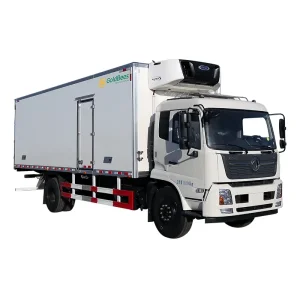
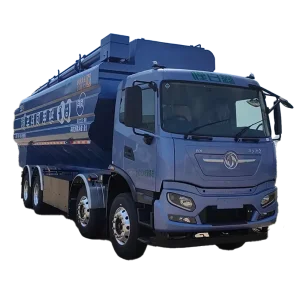
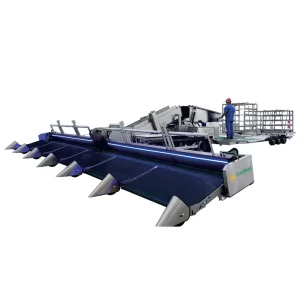

In modern industrial egg production and commercial layer breeding, the transit phase represents the most statistically critical vulnerability window for biological assets. Transporting commercial pullets (16 to 18 weeks of age), end-of-lay hens, and day-old parent stock layers requires far more than rudimentary flatbed trucking. The global transition toward high-density aviary systems, cage-free housing, and biosecure multi-site production networks has elevated layer transport vehicles into sophisticated mobile life-support capsules.
Historically, poultry logistics accepted in-transit shrinkage and mortality rates between 1.5% and 3.2% as unavoidable operational overhead caused by thermal stress, dehydration, vibrational fatigue, and carbon dioxide pooling. However, under modern agricultural margins and stringent animal welfare mandates—such as the European Union’s EFSA guidelines, US Five Freedoms standards, and Asian animal husbandry quality frameworks—such losses decimate farm profitability. A single transit cycle carrying 45,000 started pullets represents hundreds of thousands of dollars in capitalized genetics, feed inputs, and labor. Exposure to thermal shock or airborne pathogens during a 600-kilometer transit run does not merely trigger direct transport losses; it compromises flock uniformity, delays point-of-lay by up to three weeks, and depresses peak egg lay curves over the bird's entire biological lifespan.
"Modern layer transport engineering is not a branch of general trailer fabrication; it is an integrated discipline of thermodynamics, computational fluid dynamics (CFD), structural biomimicry, and virological isolation. As integrators scale from 500,000 to 10,000,000 layers, fleet reliability dictates biosafety barriers." — CP M&E Engineering Council
As the international poultry industry confronts recurrent Highly Pathogenic Avian Influenza (HPAI) strains, traditional open-curtain trucks and naturally ventilated crates are becoming legally obsolescent and biosecurity liabilities. Leading agricultural conglomerates demand fully enclosed, mechanically conditioned, positive/negative pressure filtered vehicles that ensure zero airborne contact with wild migratory bird populations while sustaining optimal core temperatures regardless of whether the vehicle navigates sub-zero winter routes or humid tropical corridors.
Leveraging deep industrial clusters in Cixi, Zhejiang, and the agricultural legacy of CP M&E (Charoen Pokphand Group) to deliver world-class agricultural rolling stock.
Our 66,667 m² Cixi manufacturing complex unites high-tensile 6061-T6 aluminum extrusion, precision laser profiling, automated robotic welding, and intelligent bus-harness assembly within a unified 50-kilometer industrial supply perimeter.
By replacing heavy steel trussworks with patented structural aerospace alloys, GoldBees bodies shed up to 28% of tare deadweight, allowing global integrators to maximize legal bird payload capacities under strict axle-load weight ceilings.
Every vehicle features internal stainless steel high-pressure spray rails, smooth flush-riveted internal panels, and anti-microbial floor textures designed to survive harsh chemical sanitizers (glutaraldehyde, peracetic acid) and 85°C thermal baking.
Pioneering the commercialization of New Energy Vehicle (NEV) electric platforms and independent zero-emission auxiliary battery packs, enabling 100% active in-cabin HVAC operation during loading, border crossing, and staging without diesel idling.
Custom-engineered thermal profiles and mechanical geometries adapted to regional biomes and logistics infrastructures.
Challenge: Ambient desert operating temperatures exceeding 48°C and intense particulate sandstorms.
Solution: High-sensible-heat refrigeration packages, multi-stage cyclonic air pre-filtration, dual backup generators, and insulated 60mm polyurethane sandwich bodywork delivering constant 23°C core interior climates.
Challenge: Relative humidity above 90% combined with high ambient heat that renders standard natural evaporative cooling useless.
Solution: Dehumidification bypass air-mixing matrices and high-velocity laminar air jets that disrupt microclimate heat halos around densely stacked layer transport crates.
Challenge: Arctic cold snaps down to -35°C during cross-state pullet replenishment journeys.
Solution: Dynamic auxiliary hydronic heating loops powered by engine waste-heat recovery, intelligent modulated exhaust shutters, and multi-tier carbon dioxide dissipation dampers.
From algorithmic microclimate balancing to autonomous loading linkages, special vehicle engineering is transitioning to full bio-telemetry autonomy.
The layer logistics sector is undergoing a profound paradigm shift, driven by three converging drivers: algorithmic bio-monitoring, stringent global ESG governance, and automated end-to-end handling. Suppliers who merely manufacture mechanical boxes are being rapidly replaced by engineering partners providing end-to-end digital life-support monitoring.
GoldBees fleets integrate up to 64 multi-spectral sensors per trailer, transmitting real-time interior zone temperatures, relative humidity, static pressure differentials, and CO₂ concentrations to farm ERP systems via satellite telemetry.
Eliminating manual crate lifting to minimize bird bruising and stress. Modern vehicle beds integrate self-leveling hydraulic tail lifts and automated chain conveyors synchronized with automated multi-tier house harvesting equipment.
With major egg processors committing to Science Based Targets initiatives (SBTi), our zero-tailpipe electric chassis and solar-augmented trailer roofs supply auxiliary power, reducing fleet carbon intensity by up to 42% per ton-kilometer.
In addition, biosecurity validation has moved from visual spot checks to automated thermal trace logging. Fleet operators can furnish receiving veterinary health officers with cryptographic sensor verification demonstrating that vehicle internal air handling stayed within safe biological parameters and zero unauthorized door opens transpired throughout international or inter-provincial transits.
Essential technical parameters and factory audit criteria for agricultural corporate procurement teams.
Verify that total fan displacement produces a minimum volumetric cabin turnover of 60 to 90 complete air changes per hour (ACH) under full static crate resistance, guaranteeing CO₂ levels remain securely below 2,500 ppm across all levels.
Ensure vehicle HVAC and ventilation systems feature dual-drive capability: PTO-driven or chassis-coupled generators paired with an automated auxiliary diesel/battery genset that kicks in within 1.5 seconds of primary power fault.
Inspect internal cable runs, sensor housings, and door gaskets for IP69K ingress protection ratings. Body seams must feature continuous laser robotic beads or robotic chemical seals to avoid pathogen retention pockets.
Demand documented finite element analysis (FEA) proving structural longevity under cyclic twist and vibration while validating tare curb weights that maximize legal net bird stocking densities.
Comprehensive operational, design, and regulatory guidance directly from our special vehicle engineering bureau.
Standard trailers suffer from thermal pooling where birds stacked in the center experience severe heat stress while perimeter birds suffer wind-chill. GoldBees resolves this through CFD-engineered positive-pressure ceiling plenums and dual return floor ducts. Air is forced through perforated ducting along the entire length of the cabin at controlled velocities (0.5 to 1.2 m/s directly over bird backs), stripping away metabolic boundary heat without producing draft stress.
Yes. As an OEM and ODM manufacturing leader, Xinbaiqin does not build rigid cookie-cutter boxes. We custom-engineer the internal bay width, vertical clear span, tie-down track locations, and pneumatic floor lock latches to accommodate standard international transport crate brands (e.g., Marel, Linco, Anglia Autoflow) or customized farm cart dimensions.
Our enclosed layer transporters feature triple-stage filtration modules consisting of G4 coarse dust pre-filters followed by F9 or optional true HEPA H13/H14 particulate filters capable of arresting 99.97% of bio-aerosols down to 0.3 microns. Negative or positive cabin pressurization prevents unfiltered ambient roadway air from entering around door perimeters, and internal UV-C germicidal air irradiators can be configured in return duct loops.
GoldBees vehicles incorporate automatic tripartite power systems. When road driving, high-output engine alternators or hydraulic PTO drives power the blowers and compressors. The moment engine RPM drops to zero, an automated transfer switch (ATS) kicks on our onboard sound-attenuated diesel auxiliary generator or lithium-iron-phosphate (LFP) energy storage pack within milliseconds, ensuring uninterrupted ventilation for up to 18 hours without main truck engine operation.
GoldBees manufactures specialized superstructures compatible with all major global commercial truck chassis platforms, including Volvo, Scania, Mercedes-Benz, MAN, Isuzu, Hino, Sinotruk, and FAW. Superstructures and semi-trailers carry full CE homologation, ECE component certifications, ISO 9001 quality compliance, and meet regional road-width limits (2,500mm to 2,600mm) and kingpin/bogie load distributions across Europe, North America, Australia, the Middle East, and Latin America.
Explore our specialized feed conveyance, temperature-regulated cold chain trailers, and mechanized harvesting platforms.




