Explore high-performance biosecure transport solutions, pneumatic bulk handling, and automated catching technology engineered by certified manufacturers.
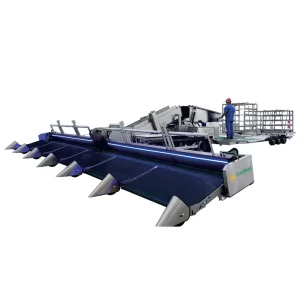

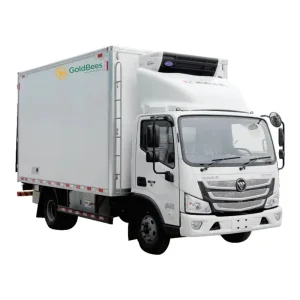
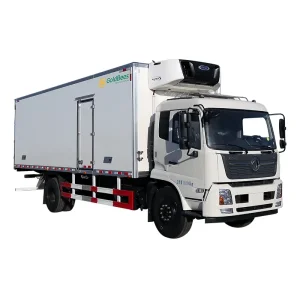

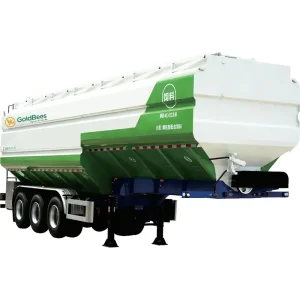

Within modern industrial poultry production, the link connecting commercial hatcheries to broiler rearing facilities or layer pullet farms constitutes the most volatile vulnerability in the entire supply chain. Day-Old Chicks (DOC) possess zero homeothermic capability during the initial 72 hours post-hatch; their survival and subsequent 7-day brooding livability depend entirely on external environmental regulation. A temperature fluctuation as narrow as 2.5°C or an accumulation of carbon dioxide exceeding 1,500 ppm results in irreversible immunosuppression, impaired feed conversion ratios (FCR), and elevated flock mortality.
Consequently, the engineering of a modern Poultry Chicks Van Truck has transitioned from basic insulated reefer van conversion into a sophisticated aerospace-adjacent microclimate control capsule. As commercial integrators consolidate operations globally—operating centralized mega-hatcheries with single-site incubation capacities surpassing 100 million eggs per annum—transit radii have expanded from localized 50-kilometer hops to cross-border journeys spanning 1,500 kilometers across diverse climatic corridors. Global procurement teams evaluate manufacturers not merely on vehicular chassis specifications, but on thermodynamic modeling, positive-pressure air exchange, biosecurity sterilization durability, and redundant automated failsafes.
A rigorous comparative analysis of regional vehicle architectures, HVAC thermodynamic philosophies, and total cost of ownership (TCO) matrices across European, North American, and Chinese specialized builders.
Pioneering animal welfare standards, European manufacturers emphasize low-energy variable air volume systems and lightweight sandwich paneling. However, their systems are frequently constrained by extreme initial capital expenditure (CAPEX), prolonged fabrication lead times exceeding 10 months, and high replacement part premiums when operating in emerging markets across South America, Central Asia, and Africa.
Focusing predominantly on heavy-duty, long-haul semi-trailer configurations, North American fabricators utilize rugged aluminum extrusions paired with high-output diesel-driven generator sets. While mechanically durable on extensive interstate highways, their integration of precision computerized microclimate sensing often lags behind, resulting in higher longitudinal temperature gradients between front and rear bulkheads.
Leveraging deep industrial synergy through agro-industrial parent organizations like CP M&E (Charoen Pokphand Group), top-tier Chinese manufacturers unite end-to-end farm operations insight with agile, precision fabrication. By producing in-house composite structures, self-developed CAN-bus electrical networks, and modular HVAC systems, Chinese builders offer unparalleled price-to-payload performance, flexible chassis adaptation (Dongfeng, Foton, Sinotruk, Isuzu, Volvo, Scania), and rapid delivery turnarounds.
Why Tier-1 poultry integrators are standardizing their global live-haul logistics fleet on advanced smart manufacturing hubs in Zhejiang and eastern China industrial clusters.
| Evaluation Parameter | Traditional European Fabricators | GoldBees / Top Chinese Modern Plants | Operational Strategic Impact |
|---|---|---|---|
| Chassis Integration Flexibility | Primarily limited to native European chassis (Scania, MAN, Mercedes-Benz). | Universal body design; easily engineered for Scania, Volvo, Isuzu, Hino, Sinotruk, or FAW. | Enables local fleet standardization and accessible regional maintenance mechanics worldwide. |
| Production Turnaround (Lead Time) | 36 - 48 Weeks (Sub-assembly outsourcing bottlenecks). | 8 - 14 Weeks (Integrated 66,667 m² industrial campus with in-house laser cutting & panel assembly). | Allows integrators to scale up fleets dynamically in lockstep with new hatchery commissioning. |
| HVAC Redundancy Architecture | Single heavy unit with auxiliary standby fan packs. | Independent dual-system parallel refrigeration/heating with automatic failover generators. | Zero biological cargo loss in event of mechanical primary engine failure during remote transit. |
| Biosecure Washdown Resilience | Standard marine-grade interior coatings. | IP67/IP69K sealed harnesses, seamless food-grade FRP/stainless walls, integrated chemical flush ports. | Withstands 80°C hot-water high-pressure terminal disinfection protocols without electrical shorting. |
| Total Cost of Acquisition & Maintenance | Premium CAPEX, high proprietary spare parts markups. | Competitive direct-from-factory pricing with worldwide standardized modular components. | Reduces capital outlay by 35% - 48% while lowering lifetime maintenance overhead per chick delivered. |
A rigorous examination of positive-pressure CFD airflow geometry, multi-stage biosecurity filtration, and automated biological life-support mechanisms.
Conventional cargo reefer boxes create destructive vortices and localized asphyxiation zones when loaded with 80,000 to 150,000 day-old chicks. A purpose-built poultry chicks van truck utilizes a perforated ceiling pressurization chamber combined with a sub-floor extraction plenum. Conditioned fresh air is driven downward at a laminar speed of 0.35 m/s directly through stacked chick crates, dissipating metabolic heat evenly without chilling delicate feathers.
Biosecurity vectors represent an existential hazard to poultry integrators. Leading Chinese factories integrate multi-stage air intake systems consisting of coarse pre-filtration, synthetic particulate filtration, and optional medical-grade HEPA filters. Integrated inline UV-C sterilization chambers treat incoming ambient air, neutralizing airborne pathogens such as Infectious Bronchitis (IB), Newcastle Disease (ND), and Avian Influenza before ambient air contacts the chicks.
Advanced cabin telematics continuously gather telemetry from 24 to 48 distributed PT100 temperature probes, relative humidity sensors, and optical non-dispersive infrared (NDIR) CO₂ monitors. Automated algorithms dynamically modulate variable-speed ventilation dampers, water-glycol heating matrixes, and refrigeration compressors in real-time, transmitting full situational telemetry to farm operations via satellite/cellular 4G/5G links.
Customizing mechanical body engineering and thermodynamic performance to excel across regional extreme operating conditions.
In arid desert conditions, high external ambient heat threatens instantaneous flock hyperthermia. Bodies feature 100mm high-density polyurethane (PU) closed-cell foam insulation, reflective gel-coat composite skins, heavy-duty auxiliary standby generators, sand-inertial centrifugal air pre-cleaners, and evaporative cooling assist nozzles that maintain an internal sanctuary below 34°C.
Monsoon climates produce relative air humidity exceeding 90%, neutralizing a chick's natural panting heat dissipation. Precision dehumidification reheat circuits extract moisture from intake air before directing it into the crate racks, preventing dangerous high-temperature, high-humidity metabolic stagnation.
In high-latitude winter operations (Kazakhstan, Northern China, Eastern Europe, Canada), primary dangers involve hypothermic thermal shocking during highway traversal. Independent diesel hydronic warm-air heaters circulate 25 kW to 60 kW of thermal energy through finned underfloor convectors, guaranteeing full cabin pre-heating prior to hatchery dock loading.
A strategic framework for procurement directors, engineering heads, and fleet executives evaluating manufacturer submissions.
When issuing tenders for dedicated poultry chicks van trucks or high-capacity semi-trailers (capacities exceeding 100,000 birds), sourcing teams must avoid judging submissions solely on volume and base chassis horsepower. The following four operational vectors determine true five-year Total Cost of Ownership (TCO) and biological risk mitigation:
Technical clarifications and design considerations answered by specialized agro-transport mechanical engineers.
Standard refrigerated cargo boxes are engineered for inert, non-respiring dead freight. They simply recirculate interior air to maintain thermal equilibrium without exhausting massive metabolic moisture, body heat, and carbon dioxide. Loading 100,000 live chicks into a standard reefer causes rapid CO₂ asphyxiation, high-humidity heat stagnation, and extreme mortality within 45 minutes.
Capacity is determined by chassis configuration and crate footprint. Rigid 4x2 light/medium trucks typically transport 30,000 to 65,000 chicks; heavy 6x2 or 8x4 rigid trucks hold 80,000 to 120,000 chicks; while customized 13.6-meter semi-trailers achieve payloads between 140,000 and 220,000 day-old chicks while maintaining strict microclimate stability.
Top Chinese plants such as Xinbaiqin (GoldBees) engineer fully modular subframe interfaces. Clients can ship regional chassis (Mercedes-Benz, Scania, Volvo, MAN, Isuzu, Hino, UD) directly to manufacturing docks, or opt for completely built-up (CBU) export units on premium Chinese chassis (Sinotruk, Dongfeng, Foton) certified for local Euro VI, Euro V, or EPA emissions compliance.
The interior architecture features seamless, chemical-resistant fiberglass panels, drain ports equipped with check-valves, and water-tight wiring conduits rated to IP69K. This allows full thermal misting, chemical foam disinfection, and terminal ozone or hydrogen peroxide vapor fumigation between cycles without degrading electrical sensors or interior lining.
From NEV electric bulk feed logistics to high-volume multi-deck livestock semi-trailers, inspect our industrial manufacturing capabilities.





