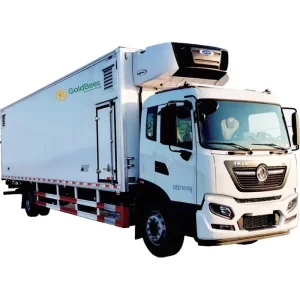
Discover high-efficiency transport vehicles manufactured under rigid quality frameworks for poultry, livestock, and critical cold-chain routes.
An analytical overview of evolving temperature-controlled logistics, clean-energy adoption, and stringent regulatory demands driving modern vehicle engineering.
International cross-border movements of meat, poultry, and pharmaceutical actives mandate continuous validation under the ATP treaty. Modern bodies utilize vacuum insulated panels (VIP) and high-density polyurethanes achieving overall heat transfer coefficients (K-values) below 0.38 W/m²K.
To comply with global zero-emission urban delivery zones, fleet owners transition toward New Energy Vehicle (NEV) platforms and electric standby compressor systems, cutting diesel consumption during static dwell and urban drop-offs by up to 64%.
Legacy thermal data loggers are displaced by real-time IoT gateways tracking air circulation, humidity, multi-zone differential temperature, and compressor RPM. Continuous cloud telemetry preempts mechanical failures, preventing catastrophic cargo spoilage.
Evaluating total cost of ownership (TCO), thermal stability, payload optimization, and structural longevity across challenging geographic territories.
High-tensile steel subframes combined with lightweight composite sandwich panels allow maximum legal cargo weight without compromising torsional rigidity during full gross vehicle weight operations.
Seamless gel-coat food-grade fiberglass walls, anti-corrosive aluminum chevron flooring, and IP69K-rated electrical wiring harnesses withstand aggressive hot-water pressure washdowns and sterilants.
Moveable insulated transverse bulkheads and independent secondary evaporators allow dual-temperature zoning (-18°C frozen alongside +4°C chilled produce) inside a single long-haul transport trip.
Extensive road-simulation stress testing, anti-racking rear door hinges, dual-seal perimeter EPDM rubber gaskets, and reinforced kingpins ensure over 1,000,000 km structural service life.
Direct structural and thermodynamic comparisons validating empirical performance gains in industrial logistics environments.
| Performance Dimension | Standard Market Specification | GoldBees / Xinbaiqin Special Vehicles | Information Gain & Enterprise Benefit |
|---|---|---|---|
| Insulation Core Material | Cut EPS / Traditional Polyurethane Foam | High-Density High-Pressure Polyurethane (45 kg/m³) | Superior thermal resistance; eliminates thermal bridge degradation over 10 years. |
| Thermal Transmission (K-Value) | 0.45 – 0.55 W/m²K | ≤ 0.36 W/m²K (Certified Class FRC ATP) | Reduces refrigeration engine duty cycle by 18-24%, saving fleet fuel expenses. |
| Floor Construction | Standard welded aluminum sheets | Integrated welded T-subfloor + Anti-skid surface | Enhances under-cargo airflow while resisting intensive pallet-jack puncture forces. |
| Sealing Architecture | 3-lip standard EPDM gaskets | Multi-chamber 5-lip vulcanized thermal barrier | Prevents condensation frost accumulation and ambient hot-air infiltration at door seals. |
| Telematics Integration | Passive post-route data download | Real-time IoT cloud sensor integration & GPS alerts | Audit-ready HACCP records and real-time remote deviation intervention. |
Modern 66,667 m² plant in Cixi Modern Agriculture Industrial Park
Low thermal conductivity meeting rigorous international cold storage codes
End-to-end multi-point moisture, structural, and electrical testing
Leveraging synergies with Charoen Pokphand Group (CP M&E) to supply seamless field-to-table transportation workflows.
A biological transport ecosystem begins with dust-free sealed bulk feed trucks ensuring pathogen-free nutrition, transitioning to climate-managed day-old chick and breeding stock transporters with continuous air filtration.
Following processing, carcasses and packaged meats transfer into multi-temperature refrigerated trailers and city-distribution trucks engineered to maintain tight temperature bands during multiple daily retail door openings.
Beyond vehicles, Xinbaiqin delivers complete feed mill systems and livestock automated sorting stations, linking upstream production facilities directly to distribution logistics via harmonized telematics.
Engineered to conform with national gross axle weight ratings, ADR hazard rules, and localized veterinary health guidelines across 6 continents.
Bodies and semi-trailers interface seamlessly with major global heavy chassis platforms including Scania, Volvo, MAN, Mercedes-Benz, Sinotruk, FAW, and Isuzu, adapted to right- or left-hand drive road regulations.
Features smooth internal radii, bacteriostatic composite resins, and integrated floor drainage sumps that prevent environmental discharge during transit, satisfying strict USDA, EU-EFSA, and Asian veterinary standards.
Standardized spare parts catalog, modular sub-assemblies, and global dispatch partnerships minimize vehicle downtime, backed by remote troubleshooting engineers and dedicated regional service hubs.
Anticipating the technological disruptions that will reshape refrigerated transport efficiency and environmental compliance through 2030.
Ultra-thin aerodynamic flexible solar arrays integrated into the vehicle roof skin deliver continuous supplementary power to auxiliary electric refrigeration units and tail-lifts, reducing engine alternator drag.
Active transition toward natural R744 (Carbon Dioxide) and low global warming potential (GWP < 150) refrigerants, fulfilling stringent F-Gas reduction mandates across the European Union and North America.
Self-learning algorithmic thermal regulation correlates road gradient, ambient forecast, and door open frequency to pre-cool zones strategically, eliminating temperature spikes before they occur.
Research into bio-derived core panels and easily recyclable resin matrices aimed at lowering the manufacturing carbon footprint of composite vehicle superstructures by up to 40% at end-of-life.
Clear, definitive answers addressing manufacturing capabilities, international logistics, thermal certifications, and custom body configurations.
GoldBees vehicles are engineered and manufactured by Xinbaiqin Special Vehicle Co., Ltd. located in Cixi, Zhejiang, China. Operating within the industrial ecosystem of CP M&E (the electromechanical manufacturing arm of Charoen Pokphand Group), the company combines over 15 years of practical animal husbandry, livestock logistics, and refrigerated transport vehicle manufacturing experience.
Our refrigerated superstructures utilize continuous vacuum-bonded composite panels insulated with high-density polyurethane (45 kg/m³) with zero thermal bridges. Aerodynamic interior ceiling ducts and heavy-duty extruded aluminum T-flooring ensure continuous 360-degree air convection, avoiding localized warm pockets even during prolonged ambient exposure exceeding +40°C.
Yes. We deliver both completely built-up (CBU) vehicles on leading international truck chassis (such as Scania, Volvo, MAN, Sinotruk, and Isuzu) and completely knocked-down (CKD) or semi-knocked-down (SKD) body kits with customized subframe mounting kits engineered specifically for local bolt-hole layouts and gross vehicle weight ratings.
Our manufacturing processes comply with ISO9001 and ISO14001 quality systems. Refrigerated trailers and bodies can be configured and certified to European ATP standards (Class FRC for deep freeze), alongside CE electrical safety, ADR compliance for electrical harnesses, and comprehensive biosecurity cleaning approvals.
Our day-old chick, layer, broiler, and swine transport vehicles feature fully sealed multi-tier aluminum decks, non-porous antimicrobial interior gel-coats, and IP69K sealed waterproof wiring. High-output fresh air ventilation with multi-stage HEPA filtration blocks external airborne viral pathogens, while integrated washing drains facilitate rapid complete disinfection between farm cycles.
Standard semi-trailers and refrigerated truck bodies generally require 25 to 40 days from final technical drawing sign-off. Highly customized orders involving multi-temperature partition systems, specialized pneumatic discharge systems, or NEV electric integrations are completed within 45 to 60 days, followed by strict road trial testing prior to maritime export containerization.
Examine our certified temperature-sensitive refrigerated trailers, specialized poultry haulers, and smart swine transport equipment.