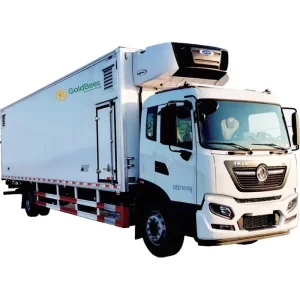
Explore our factory-direct refrigerated, livestocks, and feed logistics equipment built to international food safety and animal welfare standards.




Navigating high-density urban cold corridors, strict pharmaceutical stability margins, and decarbonized supply chains through next-gen commercial vehicle manufacturing.
With urban zero-emission zones (ZEZ) expanding across the EU, North America, and Tier-1 Asian capitals, the transition from diesel-auxiliary refrigeration units (TRUs) to all-electric, high-voltage battery-integrated chillers is no longer optional. Modern factory engineering pairs lithium-iron-phosphate (LFP) energy architectures with intelligent power-take-off (e-PTO) inverters, allowing refrigeration compressors to operate seamlessly on pure grid power during terminal staging and regenerative brake capture during transit.
Logistics networks are converging mixed-cargo deliveries into single multi-stop routes. Cutting-edge refrigerated superstructures integrate longitudinal and transverse movable insulated bulkheads, micro-channel air delivery plenums, and dual-evaporator architectures. This allows precise concurrent management of frozen animal proteins (-18°C), chilled poultry/dairy (+2°C to +4°C), and fresh farm produce (+8°C to +12°C) inside a single semi-trailer or medium-duty truck body.
The integration of continuous 4G/5G telematics, cloud-synced digital data loggers, door-cycle microswitches, and automated defrost algorithms has revolutionized cargo security. Fleet operators receive millisecond-accurate alerts on thermal drift, defrost efficiency, refrigerant pressure leakage, and unauthorized bay access, satisfying the most stringent digital audit trails required by international pharmaceutical and cold-chain regulators.
What institutional fleet buyers, agricultural conglomerates, and 3PL enterprises evaluate when qualifying refrigerated transportation truck manufacturers.
Acquisition price accounts for less than 24% of lifecycle expenses over 8 years. Enterprise procurement weights thermal insulation retention, aerodynamic drag reduction, and parasitic auxiliary fuel consumption.
For animal protein, chick hatchery, and dairy logistics, vehicle bodies must withstand continuous pressurized chemical wash-down (pH 2 to pH 12 detergents) and thermal baking disinfection at 70°C.
Tier-1 manufacturers engineer flexible sub-frame mounting systems that seamlessly adapt to global major chassis brands (Volvo, Scania, Mercedes-Benz, MAN, Isuzu, Hino, FAW, Foton, Dongfeng).
Refrigerated trucks carry high-perishability cargo where an 8-hour breakdown can result in hundreds of thousands of dollars in cargo loss. Manufacturers must back hardware with global rapid-response support.
How high-pressure vacuum injection, hydrophobic polyisocyanurate (PIR) cores, and continuous fiberglass skins achieve world-class thermal barrier indices.
Traditional refrigerated truck bodies built with spliced metal posts and mechanically riveted skins suffer from chronic thermal bridging, seam micro-cracks, and moisture ingress over repeated freeze-thaw cycles. Moisture accumulation within insulation foam can increase box tare weight by up to 1,200 kg and double the box K-value within 36 months.
Modern factory engineering utilizes whole-panel vacuum hot-pressing technology. Sandwich panels are constructed using high-density (42-48 kg/m³) closed-cell polyurethane (PU) or extruded polystyrene (XPS) insulated cores laminated between food-grade fiberglass reinforced plastics (FRP). Structural adhesives cure under uniform negative pressure, creating a rigid, continuous, self-supporting monolithic body with zero mechanical fasteners penetrating the thermal core.
Furthermore, critical high-stress interfaces—such as rear door frames and refrigeration unit bulkheads—are fabricated from precision laser-cut 304/316 stainless steel with composite thermal breaks, eliminating condensation sweats and frost accumulation.
Insulation Core: High-performance Polyisocyanurate (PIR) / Rigid Polyurethane with > 95% closed-cell structure and zero ODP/low GWP blowing agents.
Floor System: Heavy-duty integral anti-slip inverted-T aluminum floor with welded perimeter kickplates, designed to support 5.5-ton dynamic forklift axle loads without delamination.
Door Gasket Architecture: Multi-lip co-extruded EPDM rubber door seals with low-temperature elasticity down to -40°C, maintaining positive air pressure sealing under continuous highway vibration.
Airflow Optimization: Aerodynamic bulkhead front air chutes and recessed ceiling distribution ducts ensuring uniform airflow circulation (> 60 air changes per hour) across all pallet positions.
Engineered strictly compliant with WHO GDP, EN 12830, and FDA 21 CFR Part 11 requirements. Features multi-point calibrated Pt100 temperature sensors, secondary independent power backups, automated humidity control, and biometric tamper-evident door security.
Equipped with ceiling-reinforced galvanized or stainless steel rail slide tracks designed to endure severe dynamic center-of-gravity shifts during road transit. Includes floor drainage siphons, grease traps, and antimicrobial interior resin coatings.
Addresses specialized biological requirements through positive-pressure HEPA fresh air filtration, continuous CO2 concentration monitoring, automated radiant heating grids, and emergency evaporative fogger cooling to prevent chick transit mortality.
Navigating diverse continental transport mandates, environmental restrictions, and roadworthiness legal frameworks across destination markets.
| Regulatory Body / Standard | Applicable Region | Mandatory Performance Requirements | Factory Engineering Compliance Solutions |
|---|---|---|---|
| ATP UN-ECE Agreement Class FRC / FNA |
European Union, CIS, Central Asia | Insulation K-coefficient ≤ 0.40 W/m²·K (FRC class) for deep-frozen transport (-20°C) at +30°C ambient external conditions. | 85mm–100mm seamless vacuum-foamed sandwich box walls with composite thermal barrier subframes; type-approved test tunnel certification. |
| FDA Food Safety Modernization Act (FSMA) | United States & North America | Sanitary transportation rules; prevention of cross-contamination, pre-cooling validation, continuous verifiable digital temp logging. | USDA/FDA non-porous antimicrobial interior liners; clean-in-place (CIP) drainage systems; cloud-based electronic data records. |
| EU Stage V / EPA Tier 4 / CARB TRU | Europe, USA (California), Developed Metros | Strict particulate matter (PM) and NOx emissions for auxiliary diesel refrigeration engines operating at transport depots. | Zero-emission electric standby units; battery-buffered hybrid TRUs; smart dual-fuel and all-electric direct-drive refrigeration units. |
| ADR Hazardous Goods Transport | International / Pan-European | Specialized insulation and electrical safety compliance for vehicles hauling temperature-sensitive chemicals or flammable bio-cargo. | Explosion-proof blower motors, ATEX-rated zone wiring conduits, chassis spark arrestors, and heavy-duty battery isolator switches. |
| GCC GSO Road Standards | Middle East & High-Heat Markets | Extreme ambient durability up to +55°C road heat; solar radiation reflection; high particulate dust and sandstorm sealing. | UV-stabilized gelcoat finishes; oversized condenser coils; cyclonic air pre-cleaners; heavy-duty tropicalized refrigeration packages. |
To significantly lower ocean freight shipping costs and circumvent prohibitive built-up vehicle import tariffs, our factory delivers complete Complete-Knock-Down (CKD) and Semi-Knock-Down (SKD) kits. Pre-wired modular sandwich panels, roof assemblies, and subframes pack efficiently into standard high-cube shipping containers, accompanied by comprehensive factory assembly jig guides and training videos.
Our international vehicle engineering department runs detailed 3D CAD weight distribution simulations for every chassis model, calculating exact kingpin loads, rear axle bridge stresses, and turning radii to meet regional Ministry of Transport guidelines across Europe, Australasia, Latin America, and Southeast Asia without costly post-import retrofits.
Comprehensive technical documentation, interactive schematic wire diagrams, and on-site factory training programs empower enterprise logistics operations and local dealers. We support fleet operators with scheduled maintenance schedules, rapid spare-part dispatch SLAs, and dedicated technical hotline engineering.
Leading the transition toward ultra-low GWP refrigerants, solar-photovoltaic auxiliary tops, and autonomous predictive fleet dynamics.
Integrating ultra-thin, flexible monocrystalline photovoltaic layers directly into the curved composite roof skin. Generating 1.2 kW to 3.5 kW of auxiliary power continuously replenishes the telematics and standby battery bank, reducing alternator load and saving up to 8% in fuel consumption.
Phasing out high-GWP hydrofluorocarbons (R404A / R452A) in response to the Kigali Amendment. Implementing transcritical CO2 (R744, GWP=1) and propane (R290, GWP=3) high-pressure cooling loops, achieving extreme thermodynamic performance even in elevated summer temperatures without greenhouse gas liabilities.
Embedding nanoporous silica core Vacuum Insulation Panels (thermal conductivity < 0.005 W/m·K) into high-risk heat-load zones (ceiling, front bulkhead, rear doors). Thinner panel profiles increase interior volumetric loading capacity by up to 6.5% while outperforming traditional foam thermal insulation.
Machine-learning controllers calculate route topography, ambient weather forecasts, traffic congestion, and door-opening frequency to dynamically modulate compressor speed. Pre-cooling intervals initiate automatically during downhill regenerative braking zones to store thermal inertia efficiently.
In-depth technical and operational answers to aid procurement committees, transport directors, and fleet engineers in making informed acquisition decisions.
Conventional injection involves pumping liquid polyurethane into a pre-built metal hollow cavity. This often leads to hidden air voids, inconsistent density gradients (ranging from 28 to 45 kg/m³), and weak skin adhesion. Vacuum hot-press lamination cures high-density, pre-calibrated continuous foam boards under uniform pressure alongside fiberglass skins and structural adhesives. This guarantees uniform thermal resistance, zero internal air pockets, superior peel strength (> 1.5 MPa), and eliminates future water absorption that typically degrades vehicle performance over time.
Uniform airflow is achieved through balanced aerodynamic engineering: a customized front-bulkhead air return chute prevents cargo obstruction of evaporator air return; heavy-duty extruded aluminum T-profile subfloors act as negative-pressure return channels underneath pallets; and durable flexible fabric ceiling discharge air ducts distribute cooled air uniformly to the rear doors. This air velocity balancing eliminates common hot-spots near the rear door seals and ensures temperatures remain within ±1.0°C of setpoint throughout the cargo bay.
Yes. We supply fully engineered body-on-frame kits and custom subframes specifically designed for your vehicle chassis wheelbase, cab-to-axle dimensions, frame rail widths, and gross vehicle weight ratings (GVWR). Our engineering department routinely provides custom integration drawings for European, American, Japanese, and domestic Chinese chassis platforms, ensuring correct axle load distributions and mechanical mounting compliance.
Under normal operating conditions and recommended maintenance intervals, our monolithic composite refrigerated bodies deliver a structural service life exceeding 10 to 12 years. Because our closed-cell hydrophobic insulation foam is fully encapsulated by non-permeable fiberglass reinforced plastic and sealed with marine-grade structural adhesives, the annual insulation decay rate (K-value degradation) is held below 1.5% per annum—far lower than the 4% to 7% annual thermal degradation typical in riveted sheet-metal structures.
Our livestock, day-old chick, and meat logistics superstructures are engineered specifically for biosecurity. All interior corners feature smooth radius coves (no sharp 90-degree dirt traps), flooring is fully sealed and leakproof with high-capacity drainage check valves, and all internal electrical components, cameras, and sensor enclosures are IP69K rated. This enables aggressive high-pressure hot water disinfection, foaming quaternary ammonium wash-downs, and thermal drying cycles up to 70°C without risk of panel delamination or electrical short-circuits.
For volume fleet orders, we offer Semi-Knocked-Down (SKD) and Completely-Knocked-Down (CKD) packing in standardized 40ft High Cube sea containers. A single 40ft HC container can transport up to 3 to 4 complete truck bodies in kit form, significantly lowering ocean freight costs compared to Roll-on/Roll-off (RoRo) shipping. We provide specialized assembly fixtures, pneumatic clamping tools, step-by-step video manuals, and can dispatch field assembly engineers to supervise local plant operations.
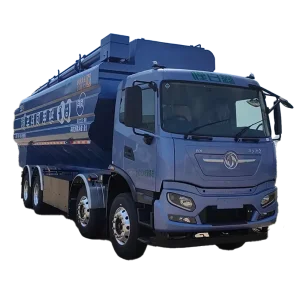
From climate-managed day-old chick transporters to high-capacity pneumatic bulk feed tankers, discover our proven special vehicle solutions.