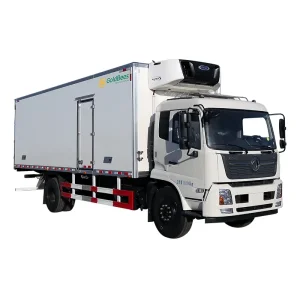
Direct factory configurations engineered for strict biosecurity, zero chemical degradation, and high payload survival rates.





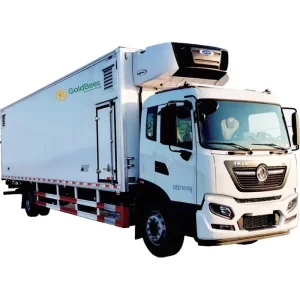
Why modern industrial poultry production requires an absolute departure from standard commercial box trucks to specialized, chemical-immune transport systems.
Poultry excretion generates aggressive levels of anhydrous ammonia (NH3) and concentrated uric acid. In high-density transit, the internal relative humidity spikes above 85%, accelerating metal oxidation at five times the standard atmospheric rate. Rust-resistant body engineering is no longer an optional upgrade; it is an existential structural requirement for biological safety.
Modern farm-to-slaughter biosecurity mandates rigorous Clean-In-Place (CIP) thermal decontamination. Transport vehicles are exposed daily to 150-bar pressurized hot water, chlorinated alkaline foams, peracetic acid, and phenolic sanitizers. Conventional coatings peel and corrode within months, creating micro-fissures where pathogens such as Salmonella enterica and Campylobacter thrive.
International regulatory frameworks, including EU Regulation 1/2005 and global GAP certifications, strictly prohibit rough, rusty, or structurally degraded surfaces that can cause bruising, wing breakage, or carcass contamination. Modern rust-proof alloys ensure hygienic mirror finishes and fluid drainage profiles that protect bird welfare throughout multi-hour journeys.
How top-tier agricultural conglomerates evaluate corrosion-resistant fleet hardware across a ten-year operational lifecycle.
In high-throughput poultry processing networks, a single fleet vehicle travels over 120,000 kilometers annually, transporting between 4,000 and 15,000 birds per trip. Unplanned maintenance resulting from structural rust, deck floor collapse, or electrical failure due to chemical ingress can lead to massive bio-containment failures, cross-contamination, and slaughterhouse downtime costing upwards of $10,000 per hour.
Consequently, chief technical procurement officers at global protein producers such as CP Group, Tyson Foods, JBS, and BRF demand verifiable metallurgical documentation, automated climate control telemetry, and certified wash-down electrical systems before issuing requests for proposal (RFPs).
| Evaluation Parameter | Legacy Steel / Painted Bodies | Advanced Rust-Resistant GoldBees Alloy | Integrator Economic Impact |
|---|---|---|---|
| Metallurgical Base | Carbon Steel Q235B with wet paint finish | Aviation-Grade 6005A-T6 Anodized Aluminum + 304 Stainless Subframe | Immune to uric acid pitting; prevents structural failure |
| Disinfection Resistance | Coating blisters within 18 months under caustic wash | Cathodic electrophoretic e-coat + passivated alloy surface | Eliminates biosecurity failure vectors and annual recoating downtime |
| Tare Weight Impact | Heavy tare limits bird cage loading quantity | 28% to 35% lighter structural tare weight | Increases legal bird payload per trip; lowers diesel consumption by ~11% |
| Sanitary Washout Speed | Rough pitted steel catches feather sludge and bacteria | Laser-welded seamless radius joints with mirror finish | Reduces vehicle wash turnaround time from 90 min to 35 min |
| 10-Year Residual Value | Less than 15% (Often sold for scrap metal) | Above 52% of initial capitalized expenditure | Significantly superior balance-sheet asset performance |
How Xinbaiqin Special Vehicle (CP M&E) integrates advanced robotics, digital twin modeling, and vertical supply chains in Cixi, Zhejiang.
Our 66,667 m² production base utilizes CNC high-precision fiber laser cutting systems and robotic multi-axis welding arms. This delivers continuous, zero-gap penetration welds along structural alloy frames, eliminating the open seams where moisture and uric acid typically lodge to trigger electrolytic degradation.
All structural sub-assemblies undergo an 18-stage chemical pre-treatment, including zinc-nickel phosphating followed by complete immersion cathodic electrophoresis. This creates a dense 25-micron hermetic barrier across every internal cavity, achieving over 1,500 hours of ASTM B117 salt spray endurance without rust creep.
Unlike third-party truck builders who operate purely on conceptual blueprints, Xinbaiqin operates in direct coordination with Charoen Pokphand Group's worldwide broiler complexes, layer hatcheries, and feed processing centers. Every ventilation louver, drainage gutter, and deck latch is validated against millions of live birds transported across real-world routes.
Custom tailored containment architectures matching unique biological challenges across volatile climate envelopes.
Features micro-climate HVAC units delivering non-draft positive-pressure micro-filtered air, continuous CO2 scrubbers, independent auxiliary generators, and thermal sandwich wall panels (R-value > 25) preventing thermal shock between 30°C to 34°C hatch temperature thresholds.
Engineered with open-slat variable-speed electric shutters, hydraulic tail lifts for multi-tier modular crate loading, integrated waste retaining troughs to avoid public highway effluent discharge, and marine-grade stainless fasteners ensuring zero structural looseness over rugged farm roads.
Equipped with wear-resistant auger screws and pneumatic discharge manifolds that eliminate cross-contamination between medicated and non-medicated feed formulas, while sealing the dry grain completely away from external rain, moisture, and pest vectors.
In-depth technical answers addressing fleet integration, chassis compatibility, material certifications, and export logistics.
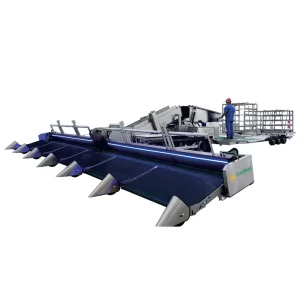
Continuous biosecure fleet integration from automated catching machines to heavy livestock semi-trailers.