Direct supply from state-of-the-art manufacturing lines engineered for complete biosecurity and maximum thermal stability.



Live pig transport represents the most vulnerable vector in modern animal farming. Discover how advanced thermal management, negative-pressure filtration, and robotic manufacturing prevent cross-contamination.
Traditional slatted swine carriers expose pigs to airborne biological risks and variable climates. Modern Chinese swine transport factories engineer multi-stage filtration chambers equipped with high-efficiency particulate air (HEPA) systems, negative-pressure airflow induction, and integrated UV-C sterilization chambers that eliminate airborne pathogens prior to cabin ingress.
Thermal stress severely degrades swine vitality, leading to transport loss, weight shrinkage, and meat quality degradation (PSE). Smart swine trucks incorporate multi-sensor telemetry managing localized HVAC systems, variable-speed fan exhausts, dynamic water-misting cooling arrays, and insulated sandwich panel walls to sustain internal temperatures between 18°C and 24°C.
Utilizing high-tensile 5083/6061 corrosion-resistant aluminum alloy, modern swine carriers dramatically reduce tare weight compared to carbon steel. This structural optimization ensures compliance with highway axle-load constraints, lowers operational fuel expenditures, and withstands aggressive high-pressure thermal decontamination cycles exceeding 70°C.
Combining mega-scale precision vehicle clusters, electromechanical synergies, and automated continuous welding lines.
Chinese specialized vehicle manufacturers, such as Xinbaiqin Special Vehicle (associated with CP M&E of Charoen Pokphand Group), benefit from rapid component access. Hydraulic tailgate lifters, custom extrusions, pneumatic valves, and smart control PLC interfaces are all engineered within local industrial clusters, drastically lowering lead times.
By leveraging automated robotic welding stations and modular assembly jigs, Chinese factories deliver livestock trailers and rigid trucks with a 30% to 45% lower capital expenditure profile compared to Western European counterparts—without compromising biosecurity certifications or structural payload density.
Unlike prototype manufacturers, top Chinese swine transport suppliers engineer bodies tested within China's intensive multi-story pig-raising mega-facilities. These transport trucks run continuous routes handling breeding sows, suckling piglets, and market hogs under harsh sub-zero northern winters and tropical southern monsoons.
Comparison of specialized body structures engineered for breeding stock, weaners, and finished slaughter hogs.
| Performance Feature | Breeding Stock (Gilt/Boar) Transporter | Commercial Finishing Swine Carrier | Multi-Tier Weaner & Piglet Semi-Trailer |
|---|---|---|---|
| Enclosure Architecture | Fully enclosed, negative pressure, HEPA filtration | Configurable louver vents + automated curtains | Fully insulated sandwich body, constant temp |
| Deck Construction | 2 to 3 hydraulic leveling decks (Anti-skid alloy) | 3 to 4 modular aluminum slatted levels | 4 to 5 high-density lightweight tiers |
| Hydraulic Tailgate Capacity | 2,500 kg remote-control vertical lift | 3,000 kg heavy-duty multi-stage elevator | 2,000 kg precision anti-shake tail lift |
| Drinking & Feeding System | Nipple drinkers + pressurized fresh water tank | Continuous trough lines + electrolyte dosing | Low-pressure infant drinking nipples per stall |
| Welfare Monitoring System | Internal infrared night-vision CCTV + CO₂/NH₃ telemetry | Digital cabin temperature matrix + cabin alarms | Full IoT gateway with real-time telematics |
| Decontamination Rating | Baking station compliant (70°C for 60 min) | High-pressure caustic washdown rated (IP69K) | Complete foam wash & thermal drying compatible |
Adapting specialized transport engineering to solve biological bottlenecks across diverse geographical climates.
Transferring high-health breeding gilts and boars across regional borders carries immense financial risk. Our high-spec enclosed swine trucks establish an airtight protective capsule. Filtered intake air, secondary heating arrays for harsh winters, and on-board waste collection tanks stop leachate from dripping onto public expressways, eliminating biological vectoring.
Minimizing weight loss and preventing mortality during pre-slaughter transport directly impacts slaughterhouse margins. Hydraulic loading decks eliminate human handling aggression, allowing hogs to walk calmly onto elevator platforms. Constant airflow eliminates suffocation hot-spots, ensuring meat quality meets export-grade grading requirements.
Weaned piglets have delicate thermoregulatory systems and vulnerable immune reserves. GoldBees automated microclimate vehicles ensure draft-free warm floor environments with thermostatically controlled warm-air circulation. This guarantees that newly weaned piglets arrive without respiratory compromise or post-weaning diarrheic shock.
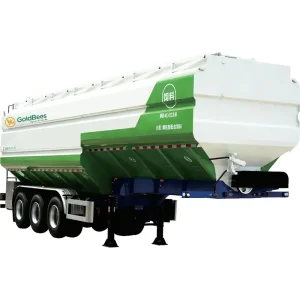
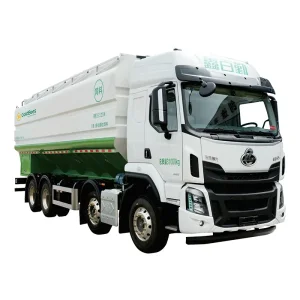
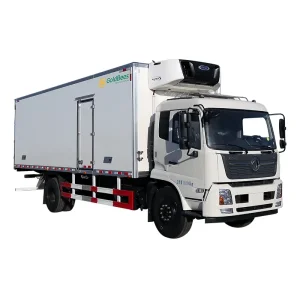
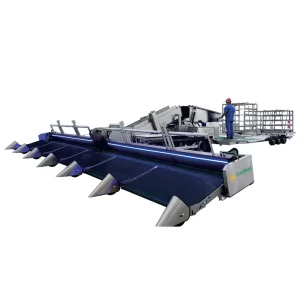
Collaborating with parent industrial titan CP M&E, Xinbaiqin delivers complete farm-to-fork hardware ecosystems. Beyond standalone swine trucks, we provide matched bulk feed delivery semi-trailers, automated chicken harvesters, and cold-chain refrigerated vehicles, ensuring uniform maintenance standards and unified fleet management software.
Engineered for high-throughput livestock production, feed logistics, and continuous cold chains.


Key technical parameters multinational pork integrators must evaluate prior to factory contracting.
Factory-built swine transport bodies must integrate seamlessly with prominent global chassis manufacturers such as Scania, Volvo, Mercedes-Benz, FAW, Dongfeng, and Sinotruk. Sourcing teams must ensure subframe mounting points, hydraulic power take-off (PTO) outputs, and 24V auxiliary electric circuits conform to regional motor transport safety homologation standards.
Swine urine and fecal slurry generate high concentrations of ammonia and organic acids. Global buyers must mandate 100% seal-welded aluminum decking, stainless steel (SUS304/SUS316) fastener hardware, and automated internal water-flushing pipelines. Inferior spot-welded or electroplated steel frameworks lead to structural degradation within 24 months of heavy field operation.
The total cost of ownership (TCO) of livestock trucks relies on payload ratio and route uptime. Modern units feature smart telemetry consoles transmitting cabin humidity, temperature, vehicle speeds, and door interlock statuses to cloud servers. This granular monitoring provides complete biological tracking and proof-of-welfare across consumer audit chains.
Technical guidance covering biosecurity compliance, hydraulic systems, and factory customization options.
Our swine trucks feature negative-pressure air filtration, primary G4 coarse filtration, F9 secondary micro-barrier screens, optional HEPA filters, internal cabin UV-C lamps, and completely sealed manure containment tanks that prevent road runoff and external airborne virus ingress.
Yes. Xinbaiqin engineers specialized subframes and bracket kits tailored for major European, American, and Asian commercial truck chassis including Scania, MAN, Volvo, Mercedes Actros, ISUZU, FAW, and Sinotruk, ensuring precise axle balance and strict adherence to local road regulations.
The hydraulic tailgate features dual-cylinder vertical lifting with safety auto-locking catches. Swine enter the platform at ground level, which then raises smoothly to individual deck levels (up to 4 tiers), eliminating steep internal ramp climbing and significantly lowering animal stress and heart failure rates.
All body panels, seals, electrical harnesses, and sensors are engineered to withstand prolonged post-wash disinfection baking procedures, tolerating continuous temperatures between 65°C and 75°C for over 60 minutes to neutralize persistent pathogens.
Standard custom orders require 30 to 45 business days from 3D CAD schematic sign-off. Bulk orders for corporate integrator fleets are managed through staged production lines supported by our 66,667 m² modern industrial facility.
Vehicles include comprehensive export documentation packages: Certificate of Origin (COO), CE compliance documentation (where applicable), chassis integration schematics, maintenance protocols, electrical wire diagrams, and pressure vessel certificates.
