

Best GoldBees China Refrigerated Cold-Chain Transport Semi-Trailer: Innovative Solutions from Trusted Suppliers and Factory Suppliers, Manufacturer
View Specifications
Engineered to strict ISO9001 and bio-safety protocols, these vehicles represent GoldBees' core manufacturing prowess for international poultry integrators and transport enterprises.
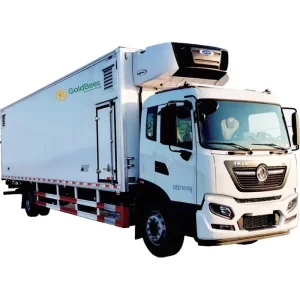

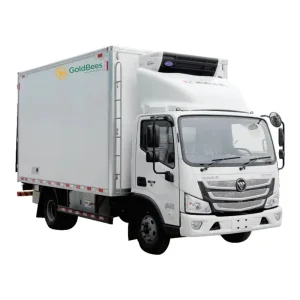

From commercial genetics hubs to brooder houses, modern poultry vertical integration requires millimeter-precision thermodynamic management to safeguard flock livability and 7-day mortality metrics.
In modern industrial poultry farming, the post-hatch phase represents one of the most operationally delicate transit stages. Day-old chicks (DOC) cannot thermo-regulate their body core temperatures effectively during the initial 72 hours of life. When transported in ambient environments or rudimentary naturally-ventilated haulers, fluctuations exceeding ±1.5°C trigger systemic physiological distress: acute dehydration, yolk sac absorption delays, omphalitis risks, and irreversible gut-barrier breakdown. In industrial commercial farming, flock value is dictated by the 7-Day Mortality Rate and the Feed Conversion Ratio (FCR) at harvest. Studies across global tier-1 integrators reveal that up to 35% of early batch mortality can be traced directly to improper in-transit ventilation, carbon dioxide (CO₂) poisoning, and micro-climatic thermal stratification within hauler boxes.
Consequently, the transition toward mechanically enforced, multi-channel Ventilated Day-Old Chick Transport Vehicles is no longer an optional upgrade; it has transformed into a mandatory biological shield for large-scale integrators across the Americas, the European Union, Southeast Asia, and Africa. Xinbaiqin GoldBees has spearheaded this engineering transition by synthesizing agricultural thermodynamics with heavy commercial automotive engineering.
Every commercial vehicle body constructed for Day-Old Chick distribution must fulfill complete interior thermal isolation, continuous active pressure differentials (preventing exhaust gas infiltration), and total washability under high-pressure, chemical sanitization cycles without corroding electrical wire conduits or electronic sensor nodes.
Across regional genetics operations—including grandparent stock (GP) and parent stock (PS) distribution—transit distances often stretch between 300 to over 1,500 kilometers across diverse terrain and hostile climate zones. Conventional box trucks suffer from severe "thermal pockets", where chicks positioned at the center or top stack overheat while those positioned near fresh-air vents experience chilling shock. GoldBees vehicles overcome this through engineered laminar airflow distribution, driving tempered, conditioned air through dedicated floor plenums and extracting heated air laden with metabolic humidity and CO₂ via automated roof-mounted exhaust turbines.
Xinbaiqin Special Vehicle (CP M&E) leverages deep vertical supply networks in Cixi, Zhejiang, delivering unmatched customizability, rapid iteration, and superior structural durability.
Our insulated sandwich panels utilize high-density polyurethane (PU) foam with fiberglass-reinforced polyester (FRP) surfaces. Hot-vacuum pressed under high tonnage, this construction eliminates thermal bridging, reduces tare weight by 18%, and maximizes the structural rigidity needed on gravel rural access roads.
Leveraging Chinese automotive component clustering, GoldBees delivers custom climate-controlled chassis conversions at approximately 30% to 45% lower capital expenditure (CAPEX) compared to European competitors, without sacrificing mission-critical components like Carrier/Thermo King compressors or Schneider PLC systems.
As the specialized vehicle engineering unit aligned with CP Group (Charoen Pokphand), our designs are not computer-simulated theories. They are continuously refined across millions of operational bird-miles in our proprietary feed-mill, breeding farm, and processing networks across Asia.
Every poultry ecosystem presents unique meteorological and logistical hurdles. Our vehicle designs adapt seamlessly across varying geopolitical and geographical terrains.
Where ambient temperatures regularly spike above 48°C, metabolic heat rejection becomes paramount. GoldBees implements oversized dual-independent condenser arrays, secondary diesel auxiliary generators, and reflective exterior topcoats to maintain internal cabin temperatures at a steady 26°C to 29°C.
Cold conditions demand active, reliable heating rather than cooling. Our vehicles integrate fuel-efficient Webasto hydronic heating elements paired with automated fresh-air pre-heating louvers, preventing frosty drafts from striking sensitive hatchlings while keeping relative humidity (RH) balanced at 50%–65%.
High ambient humidity suppresses the natural evaporative cooling mechanisms of young poultry. GoldBees incorporates active dehumidification cycles, multi-point atmospheric moisture sensors, and accelerated variable-speed air extractors to ensure rapid clearing of humid, ammonia-tainted air pockets.
Integration of real-time IoT telematics, predictive AI climate management, and New Energy Vehicle (NEV) architecture is redefining agricultural logistics.
Cloud-synchronized micro-climate trackers constantly upload temperature, humidity, static pressure, and CO₂ concentration directly to farm managers' dashboards via 4G/5G sat-com.
Machine-learning controllers calculate future in-cabin thermal build-up based on highway elevation gradients, traffic delays, and real-time solar load forecasts, dynamically tuning air exchanges.
Zero-emission battery-electric platforms (BEV) eliminate exhaust fumes entirely, preventing harmful hydrocarbons and toxic particulates from polluting delicate hatchery loading bays.
With heightened global risks from Highly Pathogenic Avian Influenza (HPAI), multi-stage filtration units integrate certified HEPA H13/H14 filters with UV-C germicidal air-stream sterilization.
Procurement audits conducted by top agribusiness groups prioritize quantifiable performance metrics over superficial body aesthetics.
Corporate procurement analyses focus heavily on fuel burn per chick transported, corrosion resistance against industrial foaming cleaners, and availability of standardized, off-the-shelf mechanical parts across global distributor networks.
International buyers require custom vehicle superstructures capable of being mounted onto regional commercial truck platforms without voiding OEM chassis warranties (e.g., Mercedes-Benz Actros, Scania, Volvo, Isuzu, FAW, or Sinotruk).
Full compliance with European Council Regulation (EC) No 1/2005 on the protection of animals during transport, North American GAP animal welfare audits, and ISO 22000 food supply-chain safety traceability.
Clear, engineering-grounded responses covering vehicle capacities, airflow management, redundancy, and export logistics.
Our capacity ranges from light 4x2 commercial chassis accommodating 30,000 to 50,000 chicks for local branch farm dispatch, up to full-scale 3-axle semi-trailers capable of safely carrying 150,000 to 220,000 day-old chicks across interstate routes. Each vehicle is custom-engineered around your specific chick basket/crate dimensions, trolley configurations, and wheel track requirements.
Unlike basic ventilated trucks that rely on vehicle forward momentum for ram-air flow, GoldBees systems utilize positive forced mechanical ventilation driven by an autonomous auxiliary diesel generator or PTO-driven hydraulic system. Digital NDIR CO₂ sensors continuously monitor gas levels; if concentrations exceed 1,500 PPM, the system automatically dials fan extraction rates to maximum speed, completely purging and replacing cabin air volume every 60 seconds.
Every long-haul GoldBees unit is equipped with a dual-circuit emergency architecture. This includes twin independent cooling compressors, dual auxiliary generator circuits, and emergency automatic pneumatic ventilation dampers that swing open to exterior airflow immediately if internal control systems detect complete electrical or thermal bus interruption, sounding an instant alarm in the driver cab and transmitting SOS telemetry to the operations hub.
Yes. The entire interior shell is fabricated from seamless, food-grade antimicrobial FRP sheets and anodized aluminum decking. All internal electrical conduits and LED illumination bars are IP67/IP69K water-sealed, enabling full wash-down with boiling pressurized water (up to 90°C), caustic detergents, and formaline/glutaraldehyde fumigation agents without degradation.
We support fully-built-unit (CBU) exports via RORO or Flat-Rack shipping, as well as Semi-Knocked-Down (SKD) and Completely-Knocked-Down (CKD) configurations designed to minimize local customs tariffs and ocean freight costs. Our engineering support teams provide on-site assembly supervision, calibration, driver training, and standard 12-to-24 month comprehensive structural and HVAC component warranties.
Explore our extended industrial lineup encompassing specialized animal transport, bulk pneumatic feed tankers, automated catching machinery, and turnkey farm logistics.



