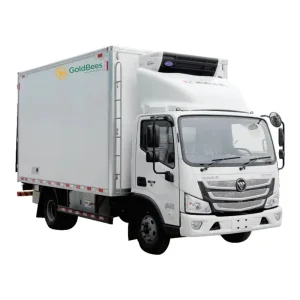
Engineered for high biosecurity, maximum legal payload, and seamless automated discharging across integrated farming and agricultural networks.
Transforming global bulk haulage through high-tensile 5083/5182 aluminum alloys, automated robotic weldments, and next-generation aerodynamic structural profiles.
In the heavy-duty transportation and logistics sector, the engineering transition from traditional carbon steel tankers to premium aluminum alloy tanker structures represents one of the most significant paradigm shifts in modern industrial distribution. As fleet operators face mounting regulatory pressures regarding axle-load enforcement (such as the Federal Bridge Gross Weight Formula in North America and European 96/53/EC directives), structural lightweighting is no longer merely an option—it is a core determinant of commercial viability.
High-end aluminum alloy tankers, particularly those engineered for bulk agricultural feed, sensitive liquid fertilizers, petrochemical dry powders, and temperature-controlled food supplies, rely heavily on advanced 5000-series and 6000-series alloys. The integration of Al-Mg (Aluminum-Magnesium) alloys like 5083-H111 and 5182 delivers exceptional yield strength, remarkable fatigue endurance under high cyclical load frequencies, and near-zero susceptibility to atmospheric oxidation.
| Technical Characteristic | Standard Carbon Steel Tanker | Standard Stainless Steel Tanker | GoldBees High-Tensile 5083 Aluminum Tanker |
|---|---|---|---|
| Specific Density (g/cm³) | 7.85 | 7.93 | 2.68 (approx. 66% lighter) |
| Internal Corrosion Resistance | Prone to rust; requires epoxy lining | High chemical resistance; very heavy | Self-passivating oxide barrier; ideal for feed & liquids |
| Payload Factor (40T Gross) | Approx. 23.5 Tonnes | Approx. 21.0 Tonnes | Approx. 27.5–28.5 Tonnes |
| Thermal Expansion & Dissipation | Low dissipation; rapid heat entrapment | Moderate dissipation | Superior thermal dispersion; reduces condensation |
| Scrap & Residual Value | Low (10–12% of virgin material) | Moderate (30–35%) | High (70–80% scrap recycling value) |
How varying regional road geometries, environmental emissions treaties, and agricultural scale dictate tanker engineering globally.
In the United States and Canada, freight operators operate under stringent DOT-406/407 and Bridge Formula restrictions. The focus is squarely on gross vehicle weight (GVWR) optimization. Aluminum alloy dry bulk pneumatic tankers and bulk feed semi-trailers dominate interstate feed logistics, where fleet operators leverage lightweight chassis to maximize legally hauled feed tonnage into remote mega-dairies and concentrated animal feeding operations (CAFOs).
The European market demands strict adherence to ADR hazardous/non-hazardous transport guidelines, low axle noise thresholds, and uncompromising microbiological biosecurity. Aluminum alloy feed tankers and livestock vehicles require integrated automated high-pressure Clean-in-Place (CIP) sanitization manifolds, HEPA/filter ventilation systems, and zero dead-leg compartment geometry to halt pathogen vectors like African Swine Fever (ASF) and Avian Influenza.
Across Southeast Asia, China, and Latin America, the consolidation of livestock producers into integrated mega-hubs has triggered an explosion in multi-compartment electric/hydraulic auger tankers and pneumatic transporters. Road conditions range from modern multi-lane expressways to challenging rural gravel arteries, requiring aluminum alloy tankers with reinforced torsion-resistant sub-frames, heavy-duty air suspensions, and localized chassis adaptations.
Pioneering the next decade of intelligent, zero-emission, automated bulk discharge solutions.
Transitioning from traditional MIG/TIG pulse welding to full longitudinal automated Friction Stir Welding. FSW delivers pore-free, parent-metal-strength seam bonds with zero thermal distortion, eliminating leak risks along tank stress paths.
Real-time vessel sensory feedback tracking interior chamber temperature, moisture, unloading flow rate, and center-of-gravity shifts. Cloud gateways interface with fleet ERPs for predictive maintenance of auger bearings and blowers.
Direct integration with battery-electric commercial vehicle (BEV) and hybrid chassis. Electric auxiliary PTOs (e-PTO) drive pneumatic compressors and hydraulic discharge screws quietly without idling the truck engine, eliminating yard emissions.
Interior passivation using hydrophobic and antimicrobial titanium-oxide thin films. These microscopic coatings reduce bulk feed wall adhesion, limit fungal growth in humid climates, and accelerate washdown cycles by up to 50%.
How the Xinbaiqin & CP M&E production ecosystem delivers world-class industrial tankers with unmatched precision and speed.
At the core of the global competitiveness of GoldBees aluminum alloy tankers lies the industrial manufacturing campus located in Cixi, Zhejiang Province, China. Spanning over 66,667 square meters and boasting an annual output capacity exceeding 2,000 specialized heavy vehicles, the manufacturing facility combines precision mechanical engineering with a robust domestic industrial supply chain.
As an integral equipment manufacturing partner aligned with the global industrial footprint of Thailand’s Charoen Pokphand Group (CP M&E), the design principles of Xinbaiqin tankers are directly forged by real-world operational challenges. Unlike generic bodybuilders who design vehicles purely from engineering blueprints, every compartment angle, auger pitch, and ventilation louvre is refined through millions of operating kilometers across large-scale commercial poultry complexes, swine breeding installations, and multi-thousand-ton feed mills.
Direct supply partnerships with primary aluminum rolling mills guarantee certified aviation- and marine-grade 5083/5182 sheets. Raw material traceability with metallurgical mill test reports (MTR) ensures compliance with structural tensile requirements.
12,000-watt large-format fiber laser cutting systems and automated rolling machines ensure dimensional tolerances within ±0.5mm. Precision robotic seam tracking minimizes heat-affected zones (HAZ) during assembly.
Non-destructive radiographic (X-ray) weld testing, hydraulic hydrostatic vessel leak validation, and salt-spray environmental chamber assessments ensure every trailer withstands 15+ years of corrosive farm washdowns.
Engineered to adapt to distinct operational terrains, climatic variations, and biosecurity mandates.
Equipped with intelligent pneumatic air-conveying or multi-section hydraulic auger systems that reach storage silos up to 14 meters in height. Compartment gates isolate grain formulas to eliminate cross-contamination and minimize pellet fines.
Aluminum livestock bodies designed for live breeding pigs, broilers, and day-old chicks. Features multi-deck hydraulic lifting floors, positive-pressure air filtration, internal water misting systems, and automated feeding troughs for long-distance animal welfare.
Polyurethane sandwich insulation paired with high-reflectivity aluminum skin plates. Designed for multi-temperature zone cargo containment, maintaining steady 0°C to -18°C temperatures for meat, dairy, and farm-fresh produce distribution.
Corrosion-immune aluminum alloy tanks configured with hydraulic centrifugal pumps and GPS-guided precision application spreaders. Delivers high operational reliability under the chemical attack of raw liquid organic manures and bio-digestate.
Meeting regional transport certifications, electrical standards, and rigorous sanitary washing cycles.
Chassis and pressure tanks can be custom engineered to fulfill localized homologation frameworks, including European Whole Vehicle Type Approval (WVTA), ADR regulations for dry and liquid transport, North American FMVSS/DOT guidelines, and GCC Middle East standards. Axle spacing and kingpin positioning are tailored to your destination country's road code.
Agricultural tankers are exposed to aggressive disinfection chemicals, caustic sodium hydroxide foams, and high-pressure steam washers (up to 85°C at 100 bar). All GoldBees electrical harnesses, junction enclosures, hydraulic valves, and sensor nodes feature IP69K sealing to prevent moisture ingression and electrical shorts.
Global engineering support via international hubs across Southeast Asia, Europe, and Latin America. We maintain critical spare inventories—including specialized screw flighting, hydraulic orbital motors, pneumatic rotary valves, and silicone food-grade gaskets—dispatched with priority air courier services.
Detailed technical, compliance, and procurement clarifications to streamline your supplier selection process.
Explore our extended series of NEV electric feed transport solutions, produce-sorting units, and high-efficiency agricultural haulage trailers.