Pre-engineered configurations built with aircraft-grade aluminum alloy, biosecure wash-down architecture, and multi-tier hydraulic loading decks.

CE Certification China Suppliers GoldBees Broiler Transport Truck – Ensuring Safety, Comfort, and Durability for Poultry Transport Factory, Products
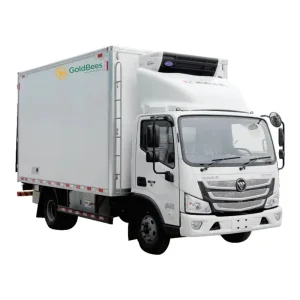
China China Suppliers' Fresh Produce Sorting & Transport Vehicle - Factory Engineered for Freshness, Capacity & Efficiency Suppliers, Factory

China China Suppliers Factory GoldBees Electric Hydraulic Auger Bulk Feed Transport Truck with Wireless Remote Control Factories, Products

High-Quality China GoldBees Livestock Transport Truck: Smart Guardian by Leading Suppliers and Factory for Pig Safety Manufacturers, Manufacturer

Best GoldBees China's Livestock Transport Semi-Trailer: A Smart Guardian by Leading Suppliers and Factory Companies, Products
ODM China GoldBees Livestock Transport Semi-Trailer - Smart Guardian for Livestock Safety by Leading Suppliers and Factory Supplier, Product

Best China Suppliers of Intelligent Poultry and Livestock Farming Equipment & Feed Mill Factory Solutions Factory, Company

Best China Suppliers' Factory Liquid Organic Fertilizer Spreader: Boost Efficiency in Precision Agriculture Suppliers, Factory
Global animal protein integrators are phasing out legacy galvanized and mild steel bodies in favor of marine-grade extruded aluminum superstructures driven by decarbonization, animal mortality mitigation, and strict international biosecurity mandates.
Operating weight directly dictates ton-kilometer operational profitability. Utilizing heat-treated 5083-H111 and 6061-T6 aluminum alloys reduces tare weight by 32% to 45% compared to galvanized steel alternatives. This structural weight dividend enables commercial integrators to maximize legal livestock payload capacity within strict 40-tonne to 44-tonne Gross Vehicle Weight (GVW) limits, eliminating excess runs and reducing fleet diesel consumption by up to 14.8 liters per 1,000 km in unladen return legs.
Modern livestock trailers must endure persistent chemical assault. Porcine Epidemic Diarrhea Virus (PEDv) and African Swine Fever (ASF) protocols require daily washdowns with caustic peracetic acid, glutaraldehyde, and sodium hypochlorite solutions followed by thermal baking cycles up to 70°C. Non-ferrous aluminum extrusions eliminate micro-pitting, corrosion-induced flaking, and bacterial harboring sites, ensuring sterile surfaces and reducing biosecurity cycle turnaround times by 35%.
Regulatory standards, including the European Union’s Regulation (EC) No 1/2005 and North American livestock transit guidelines, impose strict thermal limits. High-spec aluminum superstructures integrate automated variable-speed extraction fans, insulated sandwich roofs, continuous positive-pressure HEPA filtration, and ultrasonic drinking systems, actively controlling internal temperatures between 15°C and 25°C regardless of external ambient heatwaves or sub-zero winters.
A multi-dimensional economic comparison demonstrating why institutional fleet buyers evaluate lifetime maintenance, residual trade value, and chemical resilience over initial capital expenditure.
| Technical & Commercial Metric | Traditional Galvanized Steel Trailer | Standard Composite Panel Body | Aircraft-Grade GoldBees Aluminum |
|---|---|---|---|
| Unladen Chassis & Hull Tare | 11,200 kg – 13,500 kg Heavy | 9,800 kg – 10,800 kg Average | 6,900 kg – 7,800 kg Ultra-Light |
| Ammonia & Urine Corrosion Resistance | Rapid oxidation within 36-48 months | Fair (joint delamination risk at seams) | Non-reactive 5083 alloy passivated surface |
| Disinfection & Thermal Bake Tolerance | Rust blooming at weld seams; paint peel | Limited to <55°C to prevent debonding | Withstands >85°C high-temperature dry cycles |
| Deck Load Capacity per Tier | Fixed floors; high structural deflection | Fiberglass flex limits live payload | Patented interlocking extrusions; 1.5t/m² dynamic |
| 10-Year Depreciated Residual Value | 12% – 18% scrap value | 20% – 25% due to core degradation | 52% – 60% high alloy trade-in liquidity |
| Microclimate IoT Integration | Manual analog flaps; high heat conduction | Basic ventilation slots without sensors | Real-time CO2, RH%, and thermal automated fans |
In heavy fleet operations covering 140,000 kilometers annually, removing 3,500 kilograms of permanent tare weight generates quantifiable bottom-line savings. Commercial operational models show an average fuel reduction of 2.9L/100km when deadheading and rolling unladen. Over an operational lifecycle of 10 years, an aluminum livestock semi-trailer delivers over $48,000 USD in diesel fuel savings alone, accompanied by an 18% reduction in drive-axle tire casing wear and lower brake rotor heat stress on mountainous routes.
International fleet tenders demand rigid third-party validation. GoldBees by Xinbaiqin subjects every chassis and multi-deck structure to full 3D Finite Element Analysis (FEA) vibration modeling, simulated 1.8G dynamic braking loads, and waterproof pressure chamber tests at 250 kPa. All pressure vessels, hydraulic cylinders, and electrical looms meet CE Machinery Directives (2006/42/EC), ADR hazardous transit safety standards, and strict global biosecurity body-wash seals.
Inside Xinbaiqin Special Vehicle’s 66,667 m² advanced manufacturing campus in Cixi, Zhejiang—integrating European multi-deck engineering with agile, fully integrated Chinese supply networks.
Conventional Metal Inert Gas (MIG) welding introduces high localized thermal stress, causing micro-distortion and annealing weakness in aluminum joints. Xinbaiqin utilizes automated Friction Stir Welding (FSW) gantries to fuse floor and side-wall extrusions without melting the parent alloy. This solid-state joining process retains 92% of original structural tensile strength, yields hermetically sealed zero-porosity joints, and eliminates moisture retention channels that cause internal joint corrosion.
Every structural gusset, bulkhead, and ventilation flap is cut using 30,000-watt fiber laser and 5-axis 3D plasma processing stations with precision tolerances within ±0.2mm. Sub-assemblies achieve seamless modular interchangeability across chassis models. Structural bolting utilizes zinc-nickel coated Huck fasteners and isolated Dacromet-treated stainless hardware, ensuring strict galvanic isolation between dissimilar metals to permanently prevent galvanic corrosion.
Situated in the Yangtze River Delta industrial automotive cluster, Xinbaiqin maintains deep vertical integration with world-class hydraulic component producers, heavy-duty axle manufacturers (BPW, SAF-Holland, FUWA), and leading aluminum extrusion smelters. With an annual capacity exceeding 2,000 specialized heavy vehicles, client orders achieve predictable 45-day fabrication schedules without being vulnerable to the supply chain bottlenecks seen in boutique European coachbuilders.
Livestock logistics operate under radically divergent geographic, climatic, and legal constraints. Discover how GoldBees platforms adapt to localized transport mandates worldwide.
Engineered to bridge US DOT Federal Bridge Gross Weight Formula constraints with Canadian inter-provincial winter operations. Features heavy-duty tri-axle air suspensions with automatic lift-axles, anti-corrosive magnesium-alloy winter road salt barriers, and high-volume punch-hole slotted side walls designed with drop-in winter closure panels for sub-zero Midwest transits.
Configured with fully independent multi-tier hydraulic lifting floors allowing operators to load adult swine across 3 or 4 decks without steep ramp inclines. Includes GPS-synchronized temperature data loggers, automated pressure-fed nipple drinkers with spill-catch basins, and sealed biological effluent containment tanks that eliminate road leakage.
Reinforced to withstand the brutal cyclic torsional stresses of Type 1 and Type 2 Road Train configurations (up to 53.5m length). Featuring reinforced kingpin plates, heavy-duty cattle impact gates with cam-action locks, high-clearance trailing arm suspensions, and anti-bruising smooth interior side walls for long-distance unpaved transit.
Optimized for large-scale bovine export and integrated swine complexes across Brazil, Argentina, and Mexico. Features high-velocity roof extraction fan systems, deep-groove slip-resistant extruded floors, and anti-algae anodized surface treatments to withstand equatorial humidity and monsoonal wash cycles.
Customized for multinational integrators like CP Group. Hermetically insulated sandwich walls with integrated cooling water evaporative pads and auxiliary diesel generator backups, ensuring sensitive day-old chicks (DOC) maintain constant 32°C body temperature across humid tropical inter-island transfers.
Livestock species exhibit vastly different respiratory rates, center-of-gravity shifts, stress responses, and loading behaviors. Our transport engineering reflects these critical biological nuances.
Pigs lack sweat glands and are highly susceptible to acute heat exhaustion and transport-induced Porcine Stress Syndrome (PSS). GoldBees multi-deck swine trailers employ positive-pressure ventilation fans moving up to 48,000 m³/h of air. Decks are segmented into low-density pens with individual automated sprinklers and stainless drinking nipples. Hydrolift decks descend flat to ground level, eliminating ramps steeper than 12° to reduce cortisol and heart rates during loading.
Transporting 600 kg to 900 kg mature cattle demands extraordinary dynamic torsional rigidity and impact resistance. Walls are fabricated with reinforced 6061 heavy-gauge hollow extrusions that absorb lateral shifting during high-speed highway cornering. Floor planks feature continuous cross-ribbed diamond traction grips that prevent slips, falls, and severe pelvic injuries, while heavy steel subframes distribute concentrated point loads safely across the chassis.
Poultry haulage is characterized by hyper-dense loads and rapid carbon dioxide and metabolic heat accumulation. Our modular broiler and chick transport superstructures feature enclosed composite or aluminum insulated bodies equipped with active auxiliary HVAC chillers, HEPA intake filtration, and variable-speed exhaust arrays. This controlled internal environment protects day-old chicks and mature broilers from heat asphyxiation and chilling hypothermia.
Direct engineering and commercial answers for agricultural procurement directors, fleet operators, and logistics engineers evaluating custom livestock transport equipment.
Explore the remainder of our engineered portfolio, spanning precision cold chain semi-trailers, automated bulk feed augers, and industrial farm automation systems.

ODM China Goldbees Cold-Chain Transport Semi-Trailer: Reliable, Intelligent Solutions from Leading Suppliers and Factory Manufacturers, Manufacturer
China Transform Your Poultry Operations with Intelligent Automation: Top China Suppliers & Factory Solutions for Efficiency Suppliers, Factories
China China Fresh Produce Sorting & Transport Vehicle - Efficient Logistics Solutions from Trusted Suppliers & Factory Manufacturers, Factory
Famous China GoldBees Broiler Transport Truck for Poultry - Safe, Comfortable, Durable | Top Suppliers & Factory Supplier, Product
High-Quality CP M&E Poultry/Livestock Farming Equipment & Feed Mill Equipment Suppliers, Manufacturers

China GoldBees Electric/Hydraulic Auger Conveyor Bulk Feed Transport Semi-Trailer ---Advanced Efficiency & Durability Suppliers, Factories

Famous China's Leading Suppliers: GoldBees Intelligent Pneumatic Bulk Feed Truck - Redefining Factory Standards Suppliers, Manufacturer
Custom China GoldBees Electric/Hydraulic Auger Bulk Feed Transport Truck - Suppliers of Innovative Factory Solutions Factory, Products
