Factory-certified transport systems engineered by Xinbaiqin Special Vehicle (GoldBees · CP M&E) to fulfill rigorous veterinary and biosecurity mandates.
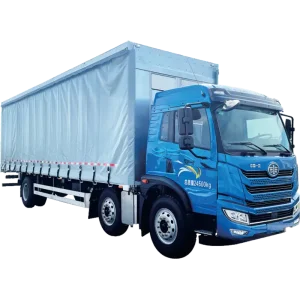
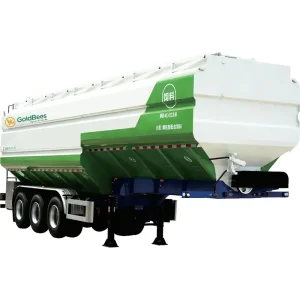
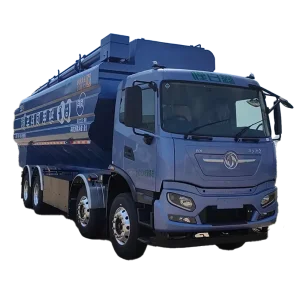
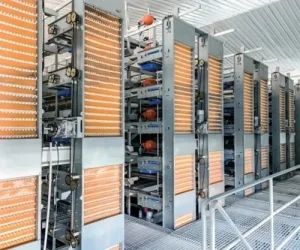
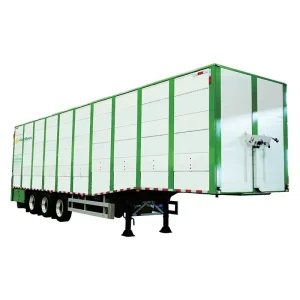
From passive ventilation trucks to hermetically controlled, biosecure mobile incubators: how modern genetics demand precision thermodynamic equilibrium on wheels.
In modern industrial poultry farming, the transport of Day-Old Chicks (DOC) from the commercial hatchery to the grow-out house represents one of the most economically sensitive links in the integrated supply chain. Modern high-yield broiler genetics (such as Ross 308, Cobb 500, and Hubbard) and high-performance commercial layer stock possess accelerated metabolic rates. These neonatal birds lack functional homeothermic self-regulation during their first 96 hours post-hatch, rendering them extraordinarily vulnerable to thermal variance, dehydration, and carbon dioxide narcosis.
Historically, poultry logistics relied on basic ventilated box trucks that depended entirely on dynamic ram-air induction generated by vehicle momentum. Under extreme exterior ambient variations—ranging from -25°C northern winters to +45°C tropical summers—these legacy setups suffered catastrophic microclimate stratifications. Cold spots induce hypothermia and irreversible yolk-sac retention, while heat pockets cause dehydration, metabolic acidosis, and elevated transport mortality. Consequently, global poultry integrators are standardizing on closed-loop, actively regulated mobile incubation transports.
Replacing unreliable passive louvers with independent HVAC modules, automated auxiliary power generators (APUs), and inverter heat pumps ensuring uninterrupted temperature control even when idling in border crossings or rural loading docks.
Combating transboundary epizootic threats such as Highly Pathogenic Avian Influenza (HPAI) and virulent Newcastle Disease via multi-stage F9/HEPA intake filtration, positive-pressure air curtains, and fully sealed, non-porous box composites.
Real-time edge sensor arrays transmitting crate-level temperature, relative humidity (RH%), airflow velocity (m/s), and CO2 concentration (ppm) to cloud management platforms with autonomous HVAC throttle actuation.
Evaluating high-density baby chick transport vehicles through the lens of Total Cost of Ownership (TCO), FCR optimization, and biological risk mitigation.
Large-scale poultry conglomerates—such as CP Group, Tyson Foods, JBS, and regional agribusiness leaders—evaluate chick transport equipment not merely as standard freight vehicles, but as critical biological infrastructure. The procurement decision rests upon five fundamental operational parameters:
| Procurement Vector | Legacy Ventilated Trucks | GoldBees Smart Mobile DOC Carriers | Commercial Impact on Integrator ROI |
|---|---|---|---|
| Microclimate Stability | Thermal variance of ±4.5°C across load planes; frequent thermal pockets | Precision dynamic airflow maintains ±0.5°C throughout the entire cargo bay | Eliminates yolk sac solidification; safeguards 7-day brooding livability above 99.5% |
| CO2 & Airflow Management | Relies on forward driving speed; static air pockets form during stops (>3,500 ppm CO2) | Forced positive pressure delivering 25–40 m³/h fresh conditioned air per 1,000 chicks (<1,200 ppm CO2) | Prevents pulmonary edema, lethargy, and suppressed immune response in neonatal chicks |
| Thermal Insulation | Standard polyurethane foam with thermal bridges; U-value > 0.65 W/m²·K | Vacuum bonded composite fiberglass panels, zero-metallic thermal bridging; U-value ≤ 0.32 W/m²·K | 40% lower auxiliary refrigeration fuel burn; fail-safe holding capacity during mechanical stops |
| Sanitization & CIP | Exposed fasteners, structural rivets, and porous joints trap bio-organic detritus | Seamless gel-coat food-grade interior walls, coved floor corners, automated high-pressure CIP drain channels | Reduces vehicle turnaround time by 50%; ensures certified decontamination against Salmonella and Avian Influenza |
| Power Redundancy | Single chassis PTO drive; total system shutdown during engine failure | Dual-system architecture: Chassis PTO + onboard diesel generator + 380V external dock plug-in | Zero risk of cargo suffocation during transit breakdowns or border quarantine holds |
Uncompromising thermal fluid dynamics and mechanical execution from Xinbaiqin Special Vehicle (CP M&E).
Standard truck cabins suffer from the "short-circuiting" of air, where supply vents blow over the top crates while lower tiers suffocate. GoldBees incorporates ceiling false-plenum micro-apertures that force conditioned air downward in a laminar sheet through every crate level, evacuating via floor-level exhaust manifolds to guarantee 100% volumetric circulation without stagnant zones.
Neonatal chicks release significant metabolic sensible heat (~0.24W per bird) along with substantial moisture. During high-density haulage of 100,000 birds, this generates 24 kW of thermal energy and over 35 liters of water vapor hourly. The GoldBees climate unit combines high-capacity evaporators, modulating hot-water reheat coils, and digital expansion valves to prevent condensation and keep relative humidity strictly within 55%–65%.
Constructed in our 66,667 m² Cixi manufacturing base, the body uses high-pressure polyurethane cores encased in high-strength glass fiber reinforced polymer (FRP) laminates. Panels are vacuum-bonded with seamless antibacterial food-grade gel coats. The lack of structural metallic framing eliminates thermal conduction bridges, providing structural rigidity while lowering tare weight to increase legal payload.
Engineered to align with international animal welfare doctrines, cross-border sanitary standards, and extreme operating terrains.
Every GoldBees vehicle is fully engineered to meet and exceed CE Machinery and Low Voltage directives, ATP (Agreement on the International Carriage of Perishable Foodstuffs) Class FRC criteria, and the World Organisation for Animal Health (WOAH/OIE) live animal welfare standards. Comprehensive documentation packages simplify regional DMV chassis homologation worldwide.
Biosecurity is designed into the vehicle structure. Electrical harnesses are sealed to IP69K standards, tolerating aggressive chemical washdowns and high-temperature thermal disinfection cycles (>65°C baking protocols). Smooth, flush floor-to-wall interfaces eliminate organic debris traps, drastically reducing bacterial harborage between transport runs.
Our engineering team designs superstructure kits compatible with leading European, Japanese, and American chassis manufacturers, including Scania, Volvo, Mercedes-Benz Actros, MAN, Isuzu, Hino, and Sinotruk/FAW. We support both completely built-up units (CBU) and completely knocked-down (CKD) kits for localized assembly to minimize tariff overheads.
Strategic technological evolutions underway at the Xinbaiqin & CP M&E Research Center.
Multi-sensor crate arrays monitoring temperature, CO2, and airflow in real time. Automated cloud telemetry dispatch alerts drivers and fleet headquarters before microclimatic variances affect bird welfare.
Transitioning from auxiliary diesel generators to dedicated high-voltage lithium battery power packs (LFP). Enables continuous, zero-emission climate regulation during urban staging, loading, and unloading.
Machine-learning models that forecast thermodynamic requirements based on GPS route elevations, ambient weather forecasts, and bird metabolic maturity, dynamically optimizing airflow paths in transit.
Full integration between automated hatchery packing lines, autonomous AGV crate loaders, and specialized docking portals, achieving zero human contact from hatching tray to brooding facility.
Authoritative technical and procurement guidance for fleet directors, biosecurity officers, and agricultural engineers.
The optimal air temperature inside the cargo body must be maintained strictly between 24.0°C and 27.0°C, which equates to a microclimate temperature within the chick boxes of 30.0°C to 32.0°C. This guarantees that the chicks maintain their biological cloacal temperature between 40.0°C and 40.5°C (104.0°F – 104.9°F). Relative humidity must be regulated between 55% and 65% to avoid respiratory dehydration, while air velocity over the birds should not exceed 0.2 m/s to prevent wind-chill stress.
GoldBees uses a pressurized ceiling plenum combined with engineered perforated diffusion nozzles. Rather than pushing air from the front bulkhead to the rear doors, conditioned air is forced vertically through each column of chick boxes under controlled static pressure. Air return ducts integrated into the floor extrusions pull stale, CO2-rich air from beneath the pallets, preventing turbulent dead zones and ensuring thermal consistency from the bottom tier to the top.
GoldBees vehicles integrate an automatic, triple-redundant electrical control architecture. In the event of chassis engine failure, an integrated auxiliary diesel generator (APU) starts automatically within 8 seconds via a high-speed ATS (Automatic Transfer Switch). In addition, all critical ventilation fans feature dual 24V DC battery backups capable of maintaining positive-pressure airflow for up to 180 minutes, providing ample time to initiate emergency procedures.
Yes. Xinbaiqin Special Vehicle designs and manufactures semi-trailers, rigid truck bodies, and completely modular sub-frame superstructures compatible with global commercial vehicle interfaces. We supply turnkey CAD mounting sub-frames for Mercedes-Benz, Scania, Volvo, MAN, Isuzu, and UD Trucks, complete with ISO-standard sub-frame anchoring, hydraulic interfaces, and CAN-bus bridge modules.
The transport body utilizes airtight sandwich panels with antimicrobial gel-coat linings that are chemically resistant to commercial quaternary ammonium and glutaraldehyde sanitizers. Intake air passes through multi-stage F9 pre-filters with optional HEPA H14 filtration, eliminating airborne contaminants. The entire interior can undergo thermal disinfection baking (up to 70°C) without delaminating panels or damaging internal electronics, fully neutralizing high-consequence pathogens.
Standard lead times for custom-engineered chick transport superstructures range from 45 to 60 days, depending on capacity and specific chassis integration requirements. Backed by our 66,667 m² production campus and an annual capacity exceeding 2,000 special-purpose vehicles, Xinbaiqin routinely coordinates Ro-Ro, breakbulk, and containerized CKD shipments globally, fully backed by international factory engineering support.
Explore the complete range of animal husbandry logistics solutions engineered by Xinbaiqin Special Vehicle (GoldBees · CP M&E).
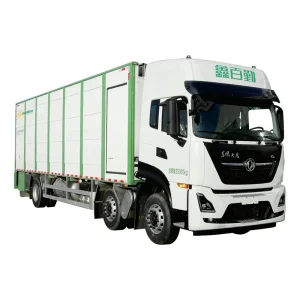
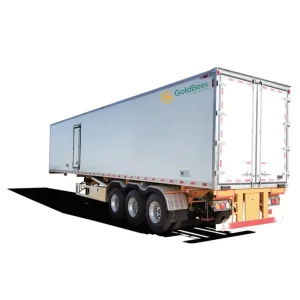
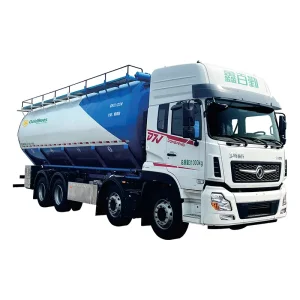
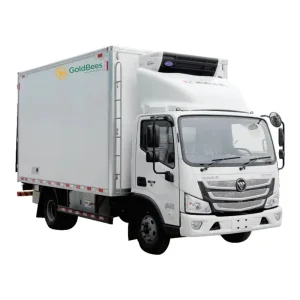
Speak directly with the GoldBees engineering team at Xinbaiqin Special Vehicle (CP M&E). Receive tailored thermodynamic models, chassis interface blueprints, and complete commercial quotation files tailored to your regional biosecurity demands.
